
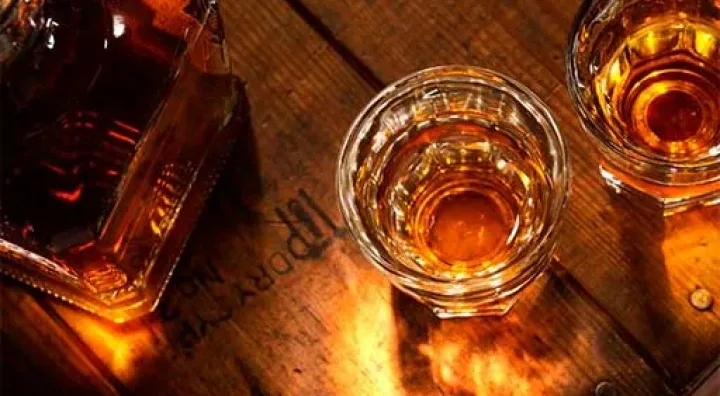
We explain the difference between rye whiskey and bourbon, and where Tennessee whiskey fits in
Newcomers to the world of whisky often wonder what sets bourbon whiskey apart from rye whiskey. After all, both brown spirits often smell and taste fairly similar, they can be used interchangeably in many cocktails, and it is impossible to tell them apart by sight alone.
There are significant differences between bourbon whiskey and rye whiskey that shape their flavour and, ultimately, the way a drinker may enjoy them. Here is what you need to know about the two main styles of American whiskey, how they are similar and how they differ.
What is bourbon?
First things first: contrary to what the know-it-alls at whisky tastings may tell you, bourbon whiskey does not have to be made in Kentucky. It can be made anywhere in the United States, even in U.S. territories such as Puerto Rico, although nobody has done so yet.
Bourbon must be made from a fermented mash —that is, cooked grains mixed with yeast— containing at least 51% corn. The rest of the mash can be any other type of cereal grain, but it is most commonly a combination of malted barley, rye and/or wheat.
It must be distilled to no more than 80% alcohol by volume and “proofed down” —in other words, diluted— with water so that it enters the barrel at no more than 62.5% alcohol by volume.
Bourbon has to be aged in a new charred oak container, but there is no minimum ageing requirement: it could spend a day there, or even just a minute or two. However, to be labelled “straight”, a bourbon must be at least two years old. If it is younger than four years, the label must state its age.
Bourbon must be bottled at a minimum strength of 40% ABV, although lower strengths may be found in some export markets, such as Australia, for tax reasons.
What is rye whiskey?
Rye whiskey can be made anywhere in the world, but to be labelled as such in the United States it must meet certain rules: it has to be made from a fermented mash of at least 51% rye grain, with the remainder made up of other cereals.
Like bourbon, it must be distilled to a maximum of 80% ABV and prepared so that it goes into the barrel at no more than 62.5% ABV. It must mature in new charred oak containers and be bottled at a minimum of 40% alcohol.
How are bourbon and rye whiskey similar?
Bourbon and rye whiskey have plenty in common, including the maximum distillation strength and ageing in new charred oak barrels. Both are usually made in column stills, although this is not a strict requirement.
Many bourbon brands, such as Jim Beam, Wild Turkey and Woodford Reserve, have a rye whiskey sibling made at the same distillery, although not always: Bulleit Rye, for example, comes from the MGP distillery in Indiana, while all of the brand’s bourbon is made in Kentucky.
Bourbon whiskey and rye whiskey can taste quite similar depending on their mash bills. If you compare a bourbon with 49% rye in the mash to a rye of a similar age with 49% corn in the mash, you may find the two almost indistinguishable in flavour.
 Jack Daniel’s Rye, Jack Daniel’s rye whiskey expression
How do bourbon and rye whiskey differ?
Bourbon can only be made in the United States, while rye whiskey can —and does— come from all over the world: Canada, the Netherlands, Germany, the United Kingdom and even Australia.
Nothing may be added to bourbon other than water, whether or not it is labelled “straight”.
For rye whiskey, the rules are a little different. Straight rye whiskey cannot contain additives, but if it is not labelled as straight, or if it is a blend of straight rye whiskeys, up to 2.5% of the volume may consist of “harmless colouring/flavouring/blending materials”. Since these additives do not have to be disclosed, it is impossible to know which whiskies may include them, although Templeton Rye is a well-known example.
In terms of flavour, bourbon tends to be sweeter and more rounded on the palate than rye whiskey, thanks to its high corn content. Common bourbon aromas include vanilla, caramel, nuts, oak, dark fruit, chocolate and gentle spice.
The flavour profile of rye whiskey can vary considerably depending on its total rye content. A whiskey with the minimum 51% rye, like those traditionally made by the major Kentucky distilleries, will taste fairly similar to bourbon. But 100% rye —a style often associated with Canada— tends to show rich spicy and herbal notes, lifted by barrel-ageing flavours such as vanilla and oak.
What about Tennessee whiskey?
Tennessee whiskey is a type of bourbon. It meets all the requirements for bourbon, with the added step of being filtered through sugar maple charcoal before barrel ageing and, of course, it must be made and aged in Tennessee.
When should you use each type of whiskey?
The best-known whiskey cocktails, the Old Fashioned and the Manhattan, can be made with either bourbon or rye whiskey, depending on the drinker’s preference, as can the Whiskey Sour, the Hot Toddy, the Boulevardier and its cousin, the Old Pal.
Some cocktails specifically call for one or the other. The Mint Julep, for example, is always made with bourbon, while the Sazerac is strictly based on rye whiskey, unless you follow the old-school approach and use only cognac.
 Some cocktails, such as the Sazerac, are made with rye whiskey
When deciding which whiskey to use, bear in mind that rye is usually drier than cognac.
When deciding which whiskey you need, remember that rye usually makes for a drier cocktail, while bourbon’s oily mouthfeel can add body to the drink. Whatever you choose, make sure the whisky’s strength is appropriate: too strong and it will overpower the other ingredients, while at just 40%, it could get lost.
Whiskies between 43% and 46% ABV tend to hit the sweet spot for most cocktails.