
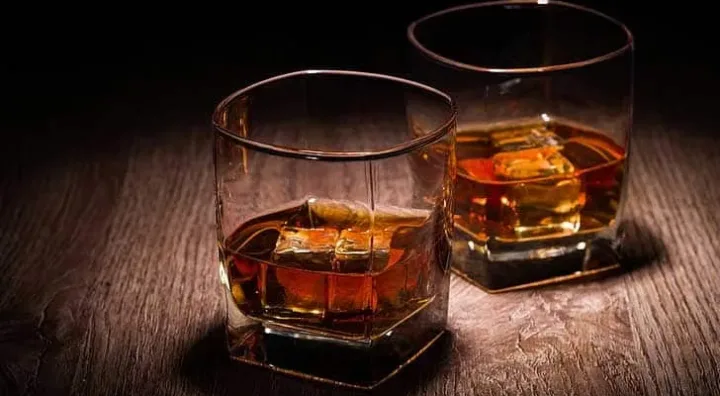
From its origin, grains and process, bourbon has important differences from Scotch whiskey
In the 1950s, Frank Sinatra gave unprecedented support to Jack Daniels whiskey by openly promoting it.
His love for this drink was so strong that, when he died in 1998, his last wish was to be buried with a bottle of Jack Daniel's and in tribute to the brand. dedicated a special edition to the singer.
The history of whiskey in the United States is very interesting, as the first tax that George Washington's government imposed was on whiskey, which sparked the Whiskey Rebellion of 1791.
The corn growers rebelled against this tax and an uprising broke out; whiskey, therefore, was one of the first crises of the recent American democracy.
The origins of American whiskey can be traced back to the drink called Moonshine, which was very popular in the 19th century, although it had a negative connotation due to its relationship with bootleggers during Prohibition.
Chris Fletcher, assistant master distiller at Jack Daniels, tells how Jack Daniels learned how to make whiskey from Dan Call, a local lay preacher and moonshine distiller in Tennessee.
It is surprising to discover that immigrants brought their own recipes from Europe and that moonshine was a very popular drink. In short, the history of whiskey in the United States is a path full of ups, downs and curiosities, but in the end, whiskey has always been a much loved and appreciated drink.
Although there are different theories about it, it is still not completely clear what was the origin of the name “bourbon” for American whiskey.
On the one hand, there are those who claim that the name comes from the Bourbon District in Kentucky, while others believe that its inspiration was the famous Bourbon Street in New Orleans. However, there is no doubt that the true source of inspiration was the French Bourbon dynasty, whose prestigious surname lent its name to this popular drink.
It is important to note that the tradition and prestige of the Bourbons of France have greatly contributed to the popularity of American bourbon. The name “bourbon” is associated with elegance and quality, and is closely linked to American history and culture. Therefore, it is understandable that it has been adopted as a name for this spirit that is so loved around the world.
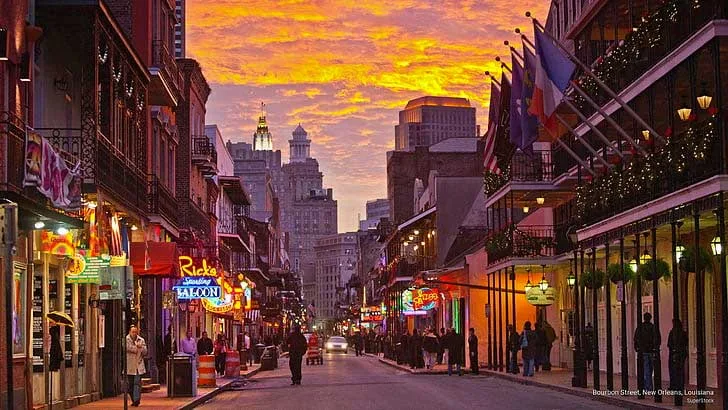 Bourbon Street Origin of the drink's name?
In short, although the true source of inspiration remains a mystery, what is certain is that the name “bourbon” is a tribute to the French Bourbon dynasty and a fundamental part of the identity of American whiskey.
The base of bourbon whiskey
In 1964, the United States Congress recognized Bourbon as the country's indigenous drink and established a set of clear and precise rules for its production.
To meet the requirements of being considered a Bourbon or American whiskey, the manufacturing process must be completed in the United States and must be composed of a grain blend that includes at least 51% corn, with the other ingredients being rye and barley.
The alcohol content of the distillate must not exceed 80% (180 degrees) and at the time of being transferred to barrels, the alcohol content must not exceed 62.5%.
Another important rule is that the manufacturing process can only include natural additives, that is, only water is allowed to be added.
The grain mixture is fermented by mixing it with a previous wort in a process known as “sour wort, ” which is similar to how yogurt is made at home.
The result of fermentation is distilled to obtain a clear spirit. Finally, before being bottled, water is added to the barrel spirit.
Wood in Whiskey
Most whiskeys produced in the United States do not reuse aging barrels once they have been used.
These barrels are usually sold and sent to other countries, such as Mexico to age tequila or to Scotland to make whiskey.
The dark color of the whiskey is due to its time in the barrel. The extreme climates of Kentucky and Tennessee, with hot summers and cold winters, also speed up the aging process, compared to the colder climate of Scotland.
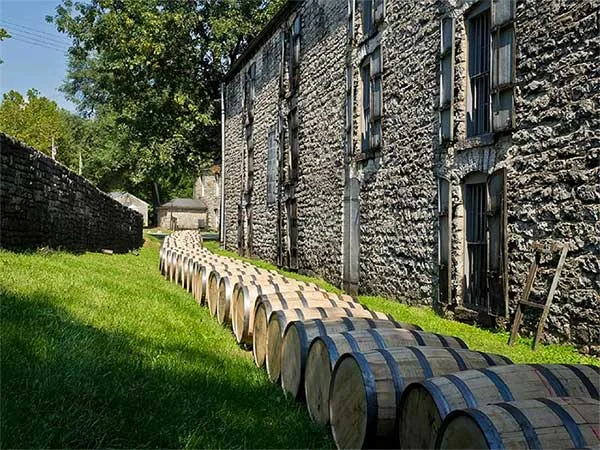 Wood plays a fundamental role in Bourbon
For this reason, one year of aging in a bourbon is roughly equivalent to three years of aging in a Scotch.
Under US regulation, all American whiskeys aged less than four years must include a label indicating the time they have spent in the barrels.
Tennessee Whiskey and the Lincoln County Process
The Jack Daniels factory has protected its unique filtration process, in which its whiskey is condensed through charcoal strips before being stored in barrels for aging.
The city of Lynchburg, formerly located in Lincoln County (now part of Moore County due to county restructuring), is the origin of the process's name. This process softens the flavor and texture of the whiskey significantly.
Any distillery tour begins in the sawmill, where two specialists burn maple wood to create the famous charcoal that gradually filters and sweetens the whiskey.
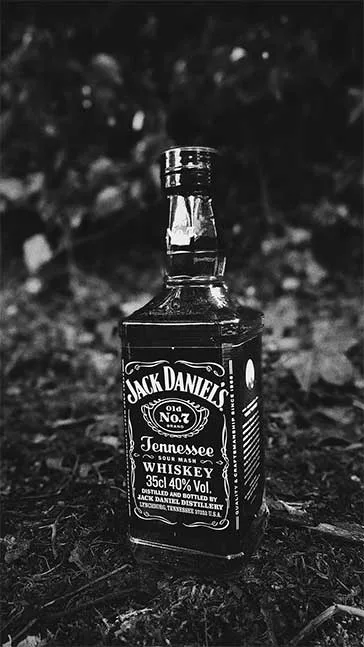 Jack Daniel's has a protected production different from bourbon
Although all Tennessee whiskey can be considered American whiskey, not all Bourbon is Tennessee whiskey. Interestingly, Moore County is a liquor-free zone, meaning that the Jack Daniels distillery is the only place you can try their drink.
In 2013, the Tennessee government enacted a law defining Tennessee whiskey. In addition to requiring a blend of at least 51% corn (similar to Bourbon), it also requires that the whiskey be aged in new barrels and go through the Lincoln County process.