
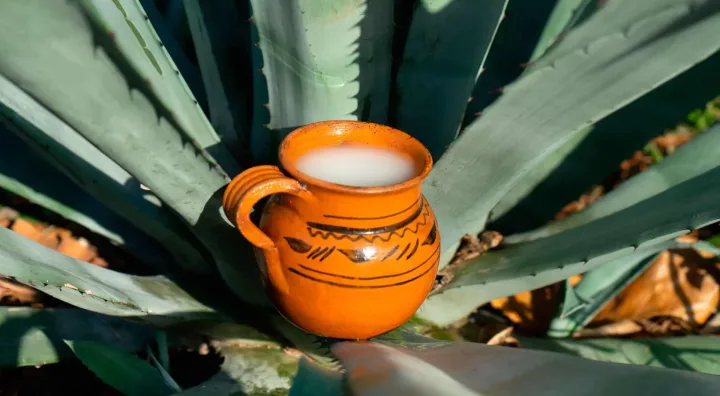
Pulque is emblematic and popular, and although attempts were made to label it as a symbol of poverty, it is also considered the drink of the gods
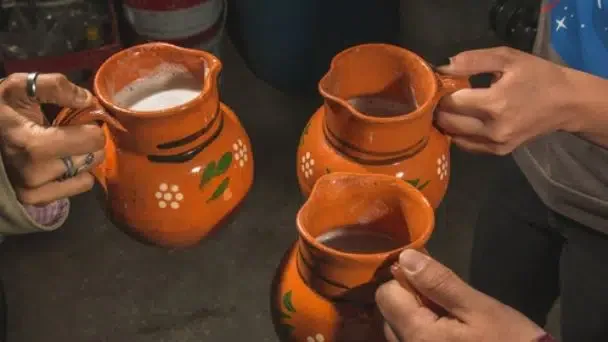
Pulque is a Mexican drink made from the fermented sap (aguamiel) of several types of agave.
Its origins go back to pre-Hispanic times and, at first, it was a ritual drink reserved for the nobility.
It has a whitish, milky appearance. It has also been described as a symbol of poverty and as something lacking refinement.
The origin of the word pulque lies in a term from the Atlantic islands meaning “rotten”, which the Spanish used pejoratively for octli, a word of Nahuatl origin. Octli is the original name and refers exclusively to the intoxicating drink and the rituals surrounding it, as reflected in the UNAM Great Nahuatl Dictionary
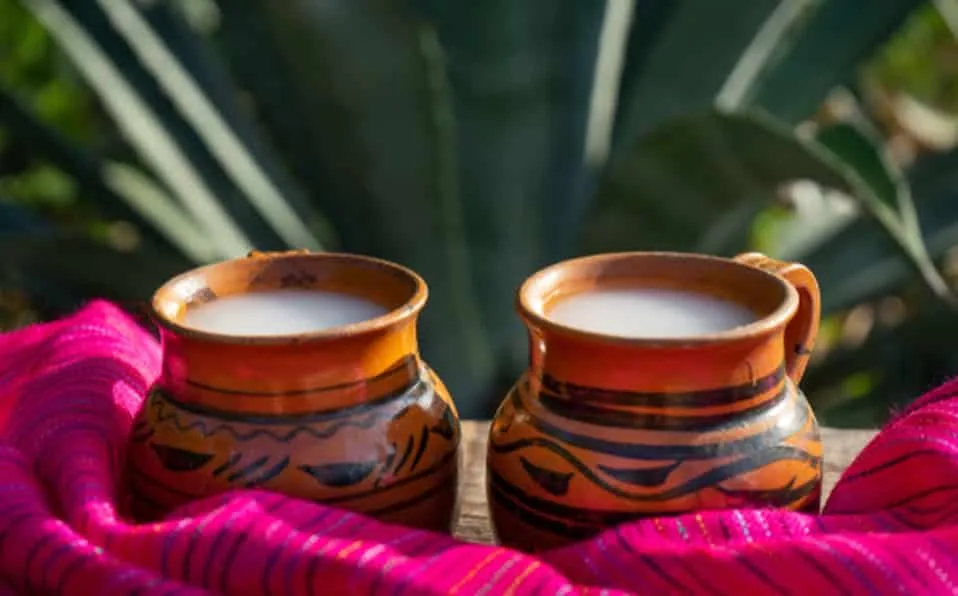
Doctors in Anthropology Patricia Fournier García and Lourdes Mondragón Barrios, in an article published in the magazine Arqueología Mexicana, explain: “Since the late Preclassic period (before 100 BC) in central Mexico, based on the discovery of pitchers and pots thought to have been used to transport aguamiel, which, because of the time spent in transit, fermented and became pulque; or through the presence of stone tools that may have been used to scrape the maguey so that the sap would flow.”
The oldest trace showing the consumption of pulque dates back 8,500 years and was found in Tehuacán, Puebla.
On the other hand, the pulque industry enjoyed its most prosperous period during the Porfiriato: “Thanks to the introduction of the railway, the producing haciendas of the plains of Apan —a region located between the Valley of Mexico and Tlaxcala— were able to carry pulque (a delicate drink that spoils quickly) even as far as coastal towns.”
The drink of the gods
Anthropologist and journalist Sonia Iglesias y Cabrera wrote in her article, Pulque, the Drink of the Gods, that “through the adoption of customs from conquered peoples, Aztec culture began to worship the drink produced in central Mexico and the intoxicating effects that accompanied it.”
As can be seen in the Codex Laud, “the Aztecs strongly incorporated into their religious tradition the figure of Mayáhuel, the Mixtec goddess of the maguey, and that of Patécat, the god of medicine and peyote, who ‘created pulque together’ and acquired a mystical and ritual meaning for most Mesoamerican peoples.”
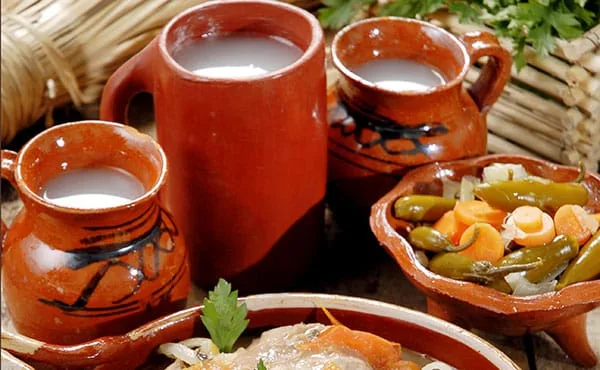
The consumption of pulque was considered worthy of the gods and formed a ritual symbol of both political and religious significance. It was restricted to priests, nobles and the elderly; however, during certain festivals and ceremonies, even children were allowed to drink it, Iglesias explains.
After the Conquest
After the Conquest, “pulque lost its divine character and became a widely consumed drink; its production became extremely important for the colonial economy and for the early years of independent Mexico.
The boom in pulque production in Mexico lasted for more than 200 years, and the industry did not decline until a few years after the Mexican Revolution.”
“The collapse of the pulque industry also occurred at a time when the State, in its drive toward modernization, branded pulque as an Indigenous, archaic and unhygienic drink, associated with criminality and social degeneration,” argues Rodolfo Ramírez Rodríguez, doctor in History and Ethnohistory, in his book The Dispute over Pulque.
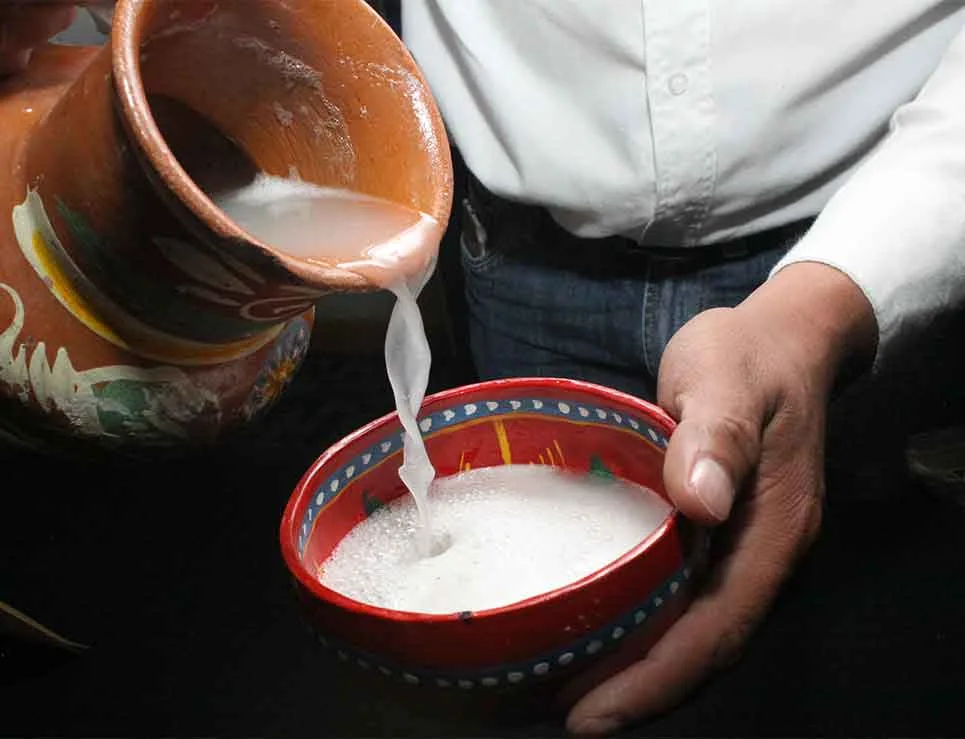
From being the drink of the gods, it then became a symbol of poverty and a byword for lack of refinement: “Pulque drinking was persecuted during the Cárdenas administration, which sought to eradicate alcoholism, but this only led beer, being easier to produce, to take its place in the social and economic sphere.”
At the beginning of the 20th century, pulquerías were lively meeting places where people would enjoy themselves talking about everyday life, playing guitar, playing Spanish cards or rayuela.
It is saddening to quote the INAH figures: “Despite the popularity pulque has gained in recent years, it is estimated that only around 50 traditional pulquerías now remain in Mexico City.”
 Across every category, from elegant establishments to working-class taverns, the city once had more pulquerías than bakeries.
By the 1990s, only about 900 remained. In 2015, 60 were recorded.
Today, the industry is gradually recovering and, although it may not regain the glory it enjoyed at the end of the 19th century, this drink has ceased to be “a relic” and has once again become part of everyday consumption.