
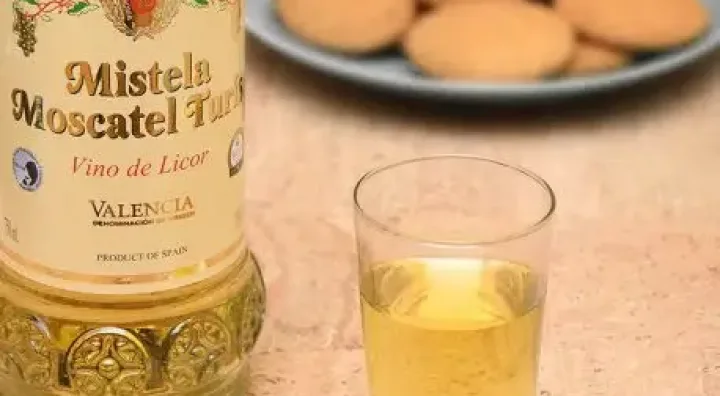
Mistela is a sweet alcoholic drink made from grape must and wine alcohol. Unlike wine, it is not the result of full fermentation: alcohol is added to the must to stop yeasts from turning the natural sugars into alcohol.
The drink therefore keeps much of the grape’s natural sweetness and primary aromas. This is why mistela has traditionally been served as an aperitif or with desserts, especially when a smooth, aromatic and sweet style is desired.

What defines mistela
In general terms, mistela is based on grape must fortified with wine alcohol, with a strength that may reach 18%. The must must provide a significant sugar content, either naturally, by concentration or through the addition of concentrated must.
By fortifying the must at the beginning, fermentation is halted. Sugar is not converted into alcohol in the usual way; instead, the original sweetness is preserved. The method also helped stabilise the drink, as alcohol acts as a natural preservative.
Typical ingredients and aromas
The base is usually grape must and aguardiente or wine alcohol. Depending on the region and recipe, sugar, honey, cloves, cinnamon, lemon or orange peel, coffee, herbs or spices may be added. When those added flavours dominate, the drink moves closer to an aromatic liqueur than to classic mistela.

Traditional production
In a traditional preparation, grapes are pressed to obtain clean must. It is then mixed with wine alcohol or aguardiente in the proportion needed to stabilise it. Some recipes add sugar and aromas such as coffee, cloves or citrus peel, then leave the mixture to rest for several weeks.
- Clean grape must is obtained by pressing or draining.
- Wine alcohol is added to stop or prevent fermentation.
- Natural aromas are included when the recipe calls for them.
- The drink rests, is racked to remove sediment and is bottled.

Pineau des Charentes and other styles
One of the best-known examples is Pineau de Charentes, produced in the Cognac area by blending fresh grape juice with brandy. It is usually enjoyed as an aperitif and shows how the same technical idea can produce distinctive regional styles.
Mistela in Spain
In Spain, mistela has a strong tradition in areas such as Valencia, Tarragona and La Mancha, regions historically linked to grapes, wine and distillation. Its appeal lies in the balance between must, sweetness, alcohol and local aromas.