
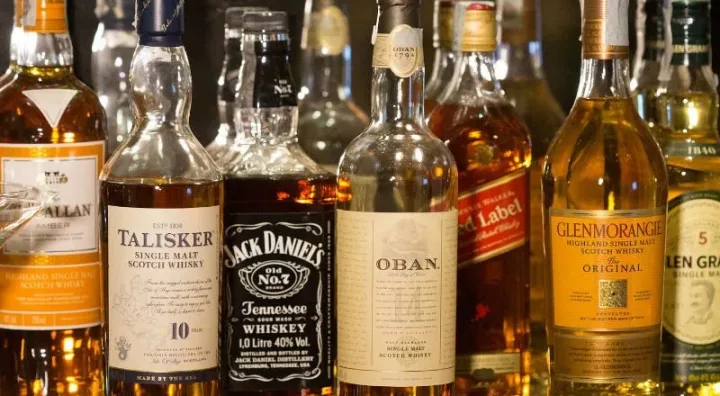
Liqueurs are growing in demand these days; let us see in 3 steps how they are made: distillation, maceration and preparation
Liqueurs are sweet or dry distilled alcoholic drinks, often flavoured with fruits, herbs or spices, and sometimes with cream. Their origins are documented in 13th-century Italy. At that time monks prepared them from medicinal herbs, and later their aromas and flavours were enriched through the use of certain woods, fruits or flowers, in water or alcohol, aguardiente, ethyl alcohol and added sugar, among other ingredients.
Some liqueurs can reach up to 70 degrees, such as Centerba degli Abruzzi, and dry liqueurs are often actually a mixture of aged rum, whisky or brandy diluted in water to 40% of the total volume, with a touch of ethyl alcohol added to create inexpensive substitutes for these drinks. They can be consumed neat, during or after dessert, or used in cocktails and in cooking.
#1: Liqueur distillation is carried out in a still and the process is divided into four stages:
1) Introduction of the mixture, consisting of a hydroalcoholic solution plus the material to be distilled, into the cucurbit of the still.
2) Resting.
3) Distillation, with heating in a bain-marie and release of vapours.
4) Cooling, with condensation of the vapours in the coil.
The distillate is then obtained. This distillate undergoes a second process to remove the phlegms, or unpleasant flavours. This second process is called rectification, and during it the first and last litres of the distillation are removed.
#2: The maceration process is divided into six stages:
Maceration: a cold extraction process. In this technique, the extracting agent, or liquid phase, is usually water, although other liquids are also used, such as vinegar, juices, alcohols, mainly ethanol, or vegetable oils. These may or may not be seasoned with different ingredients to modify the extraction properties of the liquid medium. The nature of the extracted compounds depends on the raw material used, as well as on the maceration liquid; in this case fruit is used.
1) Maceration of the fruit in a hydroalcoholic solution.
2) Punching down or mixing of the fruit.
3) Clear pressing, obtaining the first must.
4) Pressing of the remaining fruit, known as press must.
5) Blending of the first must with the press must.
6) Filtration.
#3: Finally, liqueur preparation is divided into six stages:
1) Dosing, with alcoholate, neutral alcohol at 96°, sugar syrup, demineralised water and possible colourings.
2) Mixing of the ingredients.
3) Resting.
4) Cooling.
5) Filtration.
6) Bottling.
Popular liqueurs:
 Apry: obtained by macerating apricot fruit in aguardiente or brandy.
—Apry: obtained by macerating apricot fruit in aguardiente or brandy. It differs from Apricot Brandy because of its higher quality and because it has a greater alcohol volume.
 Anise and Anisette: a very aromatic digestive drink made from anise seeds.
—Anise and Anisette: a very aromatic digestive drink made from anise seeds. It is sold in two styles, sweet and dry. Anisette is the same product but of French origin, denser than anise, although less aromatic.
 Pernod Absinthe: based on substances extracted from a shrub called wormwood.
—Pernod Absinthe: based on substances extracted from a shrub called wormwood. The flavour of derivatives of this plant is bitter, and to obtain a pleasant drink other substances are added, such as anise essence.
—Sambuca: Italian aniseed liqueurs from different regions. Notable examples include Sambuca Molinari, Ramazzotti and Romana. They are usually consumed as digestives. As a tradition, Italians drink them in a cordial glass with roasted coffee beans, flambéed, while making a wish.
—Apple Jack-Calvados-Apple Brandy: these three names identify liqueurs obtained from the distillation of fermented apple juice. They have a high alcohol content and a slightly sweet flavour.
—Akvavit-Aquavit: a white, colourless drink made in the Scandinavian peninsula, Sweden and Norway. It is obtained from potatoes and grains flavoured with caraway seeds.