
Curious to know which Japanese whiskies are most loved by Japanese drinkers themselves?
Japanese whiskies are enjoying a real boom and, although more and more brands are becoming available in Europe, the truth is that most of them remain unfamiliar to the average consumer.
A Japanese television series, “Massan”, which has been on air from 2014 to the present day, has helped drive the popularity of whisky among Japanese consumers in recent years.
A survey of Japanese consumers ranked their favourites in a TOP 20 list.
Japanese whisky has developed independently, drawing on the traditions of Scotch whisky and American bourbon. Today it is popular all over the world. Japanese whisky production involves not only the use of exceptionally pure spring water, but also native wood types such as Mizunara, raw materials sourced from the areas surrounding the distilleries, and sustainable cultivation practices that respect the traditional landscape of each region, among other factors.
If we add to this the fact that Japanese whiskies continue to win major international quality awards year after year, we are looking at a phenomenon that combines tradition and excellence, and helps explain the prices these products are currently reaching on the market.
 In this article, we list the 20 Japanese whisky brands, with their characteristics and prices in yen, since prices in Europe are rising every year.
TOP 20
No. 20 Japanese Whiskies: Suntory Red
Suntory Red is a recommended brand for those who are new to whisky, not just Japanese whisky, and want to enjoy a pleasant Japanese whisky for under 1,000 yen. Suntory Red, proudly produced by Suntory, Japan’s leading whisky producer, has a long history dating back to 1930.
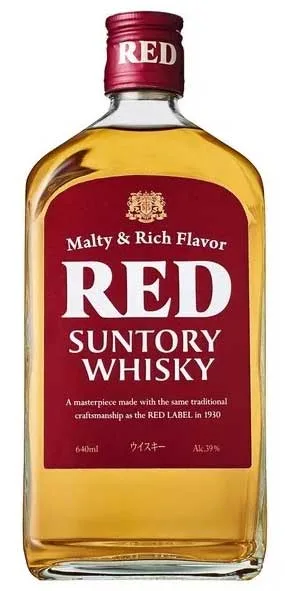
Suntory Red is known for having a lighter flavour than other popular brands, and with a price as low as 700 yen per bottle, it can certainly be described as a beginner-friendly whisky. If you are new to whisky and are not sure which brand to try, why not start with Suntory Red?
The only drawback is that it is difficult to find in Europe.
No. 19 Japanese Whiskies: Hi Nikka
Launched in 1964, Hi Nikka, or Hii Nikka, is an elegant whisky that reflects the style of Japanese whiskies from that era.
Hi Nikka regained popularity after its renewal in autumn 2015. Its flavour is easy to drink and very light, making it a good choice for beginners and for those who have grown tired of more eccentric whiskies.
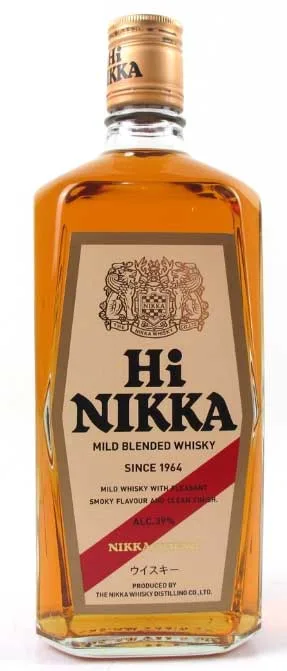
Japan has whiskies from several producers, but Hi Nikka stands out for its pronounced smoky aroma. On the other hand, the aftertaste has a stronger bitterness, so beginners are advised to add water.
It is quite difficult to get hold of in Europe.
No. 18 Japanese Whiskies: Suntory Kakubin
Suntory is one of Japan’s most popular whisky producers, and Suntory Kakubin is one of the country’s best-loved Japanese whiskies. Suntory Kakubi, often enjoyed as a highball not only in cocktail bars where a wide range of whiskies can be tasted, but also at home, can be described as one of the most popular whiskies of all.
Kakubi, created through trial and error by the founder of Suntory, which became a world-class whisky producer in 1937, is smooth and sweet, making it a very easy whisky to drink.
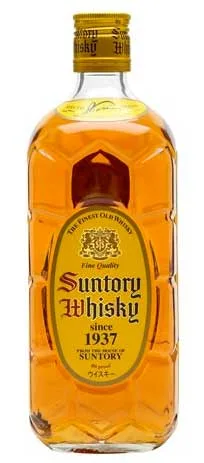
The appeal of Suntory Kakubin lies in how well it mixes with almost anything, although for beginners the most recommended way to enjoy it is still in a highball.
There are several popular whisky brands in Japan, but among the most standard Japanese whiskies, Kakubin is one of the standouts. It is moderately difficult to find in Europe and can be spotted in various retailers at an approximate price of around 35 euros. Perhaps a little high for a mixing whisky? Let’s not forget that it is an imported whisky.
No. 17 Japanese Whiskies: Torys Classic Torys Classic is known as one of the easiest whiskies to drink. Torys is a whisky created in 1946, shortly after the war, and it is a gem that has been loved by the Japanese for more than 70 years.
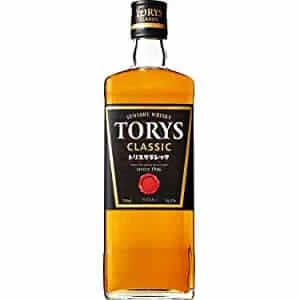
The classic bottle design is one of the reasons for its popularity, but its flavour is also very well balanced and perfect for those who are not used to whisky. That makes it especially appealing for beginners, as it is very easy to drink. Torys Classic is also commonly enjoyed as a highball.
Many people are hesitant about whisky because its flavour is more complex than that of soft drinks, but Torys is said to be the whisky brand Japanese drinkers are most familiar with. It is also recommended for those who have not yet fully developed a taste for whisky.
Quite difficult to find in Europe.
No. 16 Japanese Whiskies: Suntory Old
Suntory Old, famous for its rounded bottles, is a recommended brand for both beginners and experienced drinkers.
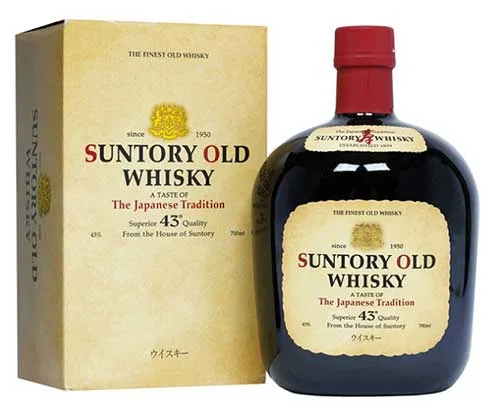
Since its launch in 1950, Suntory Old has been popular with many people as one of Suntory’s flagship whiskies, and its profile has changed with the times in response to changing tastes.
Its flavour has evolved to match the high-quality Japanese whiskies demanded by today’s drinkers while still preserving tradition, and it is particularly well balanced among blended whiskies.
Suntory Old is also known as Dharma, and while enthusiasts have a real fondness for it, even beginners can enjoy it in several different ways.
Very difficult to obtain in Europe.
No. 15 Japanese Whiskies: Nikka from the Barrel
Nikka From the Barrel is especially popular for its smooth aroma despite its high strength. The barrel yields a blend of aged malt and grain whisky, which is then returned to wood and stored for several months before being bottled with almost no reduction from its original alcohol strength.
This unique process creates an distinctive aroma and a rich flavour, and although it has a high alcohol content, it is not unusual to drink it neat, without adding water or ice.
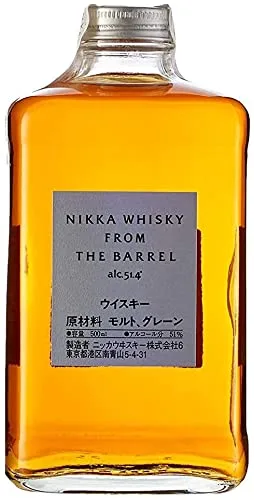
Because the proportion of water added before bottling is quite low, its alcohol content is set at 51%, considerably higher than whisky in general. That is why it has a deep flavour that sets it apart from other whiskies. Be sure to try it both neat and diluted; you will enjoy it both ways.
It is an easy product to find in Europe.
No. 14 Japanese Whiskies: Nikka Pure Malt
Nikka Pure Malt is an irresistible brand for lovers of malt whisky. Nikka markets two versions: Black and Red. They are “no age statement” whiskies, with no declared ageing period.
Nikka Pure Malt Black contains a fairly pronounced amount of peat, which lies at the heart of the whisky’s aroma. If you enjoy smoky whisky with water, you will find it an irresistible dram. It also stands out for its lingering flavour, making it a very satisfying pour.
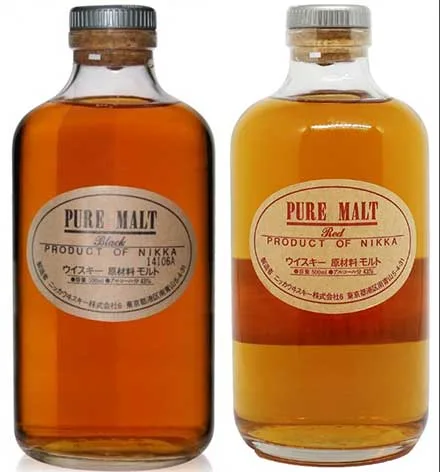
Nikka Pure Malt Red is known for its notably fruity profile, so why not enjoy how it differs from other brands?
At the moment, it is of low-to-medium difficulty to find in Europe, and its price has risen considerably in recent years.
No. 13 Japanese Whiskies: Black Nikka Rich Blend
Black Nikka Rich Blend lets you appreciate the appeal of sherry casks. It is a rich blend with a more elegant and fruit-forward impression than standard whisky, while the whisky’s sweetness is also part of what makes it so enjoyable.
It is a rich blend that can be bought in a 700 ml bottle for under 1,500 yen, but for beginners a highball is recommended, as the aroma can be enjoyed with soda. It has a fruity finish reminiscent of dried fruit, making it especially suitable for those who enjoy fruit juices, fruity beers and similar drinks.
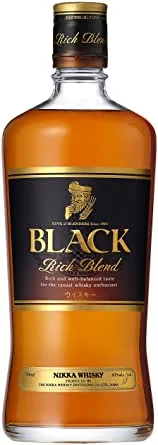
Many people choose Nikka Black for its elegant design, but it seems they come back to it because the quality is spot on. If you want to enjoy a whisky that is fruitier than the standard styles, why not try Black Nikka Rich Blend?
It is currently easy to find in Europe.
No. 12 Japanese Whiskies: Super Nikka
Super Nikka was launched in 1962 by Taketsuru as a tribute to his wife Rita. With it, he set out to create an aromatic, smooth whisky that is today highly appreciated by Japanese women.
A whisky that, as well as being popular, has won several awards.
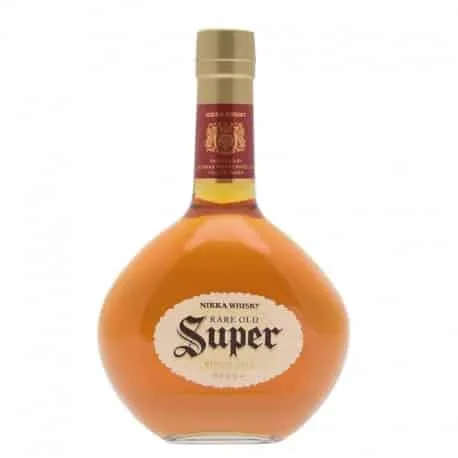
In 2015, the original formula was redesigned and some of the peat character was removed from its flavour.
From a sweet aroma reminiscent of vanilla to a glow of sweetness like cocoa, Super Nikka is perfect for anyone who wants to enjoy a sweet whisky with nuanced character.
Easy to find in Europe.
No. 11 Japanese Whiskies: Nikka Coffey Grain
There are two main types of whisky, malt whisky and grain whisky, but grain whisky is rarely used for anything other than blending because it tends to have less individual character.
Among the brands that allow you to enjoy grain whisky on its own, Nikka's Coffey Grain is especially recommended.
The sweet aroma created with a special still known as a Coffey continuous still is the source of Nikka’s distinctive blended whisky style, and this is a whisky to be enjoyed neat.
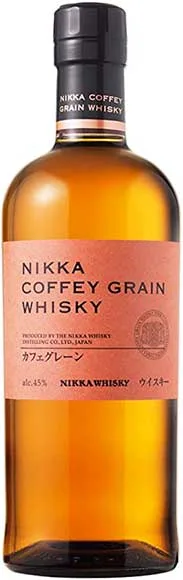
With a little water, this whisky is distinctive, smooth and easy to drink, but tasting it without added water will lead you to a deeper understanding of what it has to offer.
It seems there are many cases in which even beginners develop a taste for drinking this grain whisky.
Low-to-medium difficulty to find, but with a sharp price increase in recent years.
No. 10 Japanese Whiskies: Ichiro's
The Ichiro's malt, produced by Venture Whisky in the city of Chichibu, in Saitama Prefecture, is one of Japan’s most popular whiskies and has earned worldwide support from enthusiasts.
Unlike the major whisky producers, production volumes are limited and its value is high, so it is easy to understand why 7,400 bottles sold out in the blink of an eye at its launch in 2008, despite a price of 10,000 yen for 700 ml.
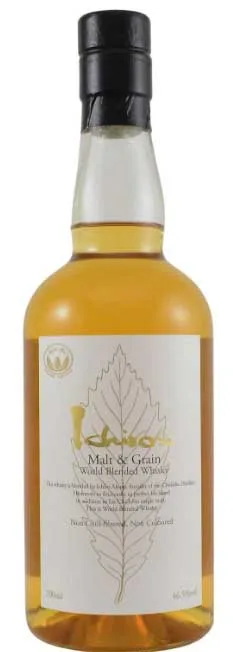
Its flavour is so rich that it is often described as pudding-like, and part of its appeal lies in how the aroma changes as you drink it. Given its price, it may not be the best choice for beginners, but as a world-class Japanese whisky, it is one you really should try.
Medium to difficult to find in Europe
No. 9 Japanese Whiskies: Kirin Fuji Sanroku (At the Foot of Mount Fuji)
Among Kirin whiskies, Fuji Sanroku stands out for its particularly high alcohol content at 50%, and it is the most popular whisky made at the distillery located at the foot of Mount Fuji.
Kirin Fuji Sanroku is defined by a distinctive flavour obtained through fermentation with carefully selected yeast from the original culture.
It is said to be rare anywhere in the world for everything from saccharification to bottling to take place in a single facility, but at Kirin, every stage is carried out at the Fuji Gotemba Distillery.
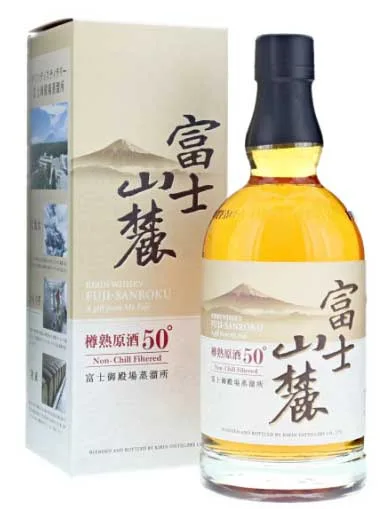
Kirin Fuji Sanroku can certainly be enjoyed in several ways, such as in a highball, on the rocks or with water, but the best approach is to relax and appreciate the aroma you can sense before drinking it neat, followed by the lingering glow that spreads after tasting it.
Kirin Fuji Sanroku is recommended for those who want to enjoy something special, made using a method different from other whiskies.
Medium to low difficulty to find in Europe
No. 8 Japanese Whiskies: Nikka Taketsuru
Nikka Whisky regained popularity thanks to the morning drama “Massan”, which became something of a social phenomenon. This Nikka whisky, named after the company’s founder, Masataka Taketsuru, is one of its most popular expressions. The sweetness that symbolises Nikka whisky and its solid flavour are essential to understand when exploring Nikka.
Taketsuru, which won a gold medal at the International Spirits Challenge 2016, has a distinctive profile built around a trinity that no other brand can quite offer: a smooth mouthfeel, fruity aromas and a clean, sharp finish.
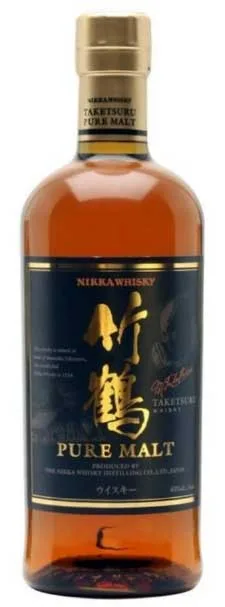
Taketsuru is attracting attention all over the world, but the version aged for 25 years can especially be considered one of the ultimate Japanese whiskies.
This whisky, filled with the passion of Masataka Taketsuru, who travelled alone to Scotland at the age of 24, is something you should experience.
Easy to find in Europe
No. 7 Japanese Whiskies: Miyagikyo
After training in Scotland, Masataka Taketsuru went on to create distinctive whiskies in different parts of Japan. Miyagikyo is a fragrant whisky with no additional ingredients, as the humid forest climate prevents the ageing casks from drying out.
Masataka Taketsuru also made efforts to protect the area’s rich natural surroundings and landscape by minimising tree felling during the construction of the Miyagi Gorge distillery. As a result, Miyagikyo has continued to produce high-quality whisky for many years and is still loved by many Japanese drinkers.
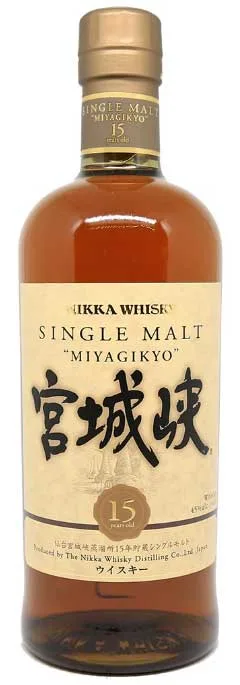
Among single malts, Miyagikyo is often compared with Yoichi, although it is usually described as smoother and more “delicate” than the powerful Yoichi. A tasting of Miyagikyo and Yoichi is a fine way to spend an afternoon, especially as both are easy to find in Europe.
No. 6 Japanese Whiskies: Akashi
Eigashima Sake Brewery, located in the city of Akashi, in Hyogo Prefecture, is renowned for sake, but its whisky contribution, made from 100% British malt, is a single malt with a reputation for exceptional flavour.
As the closest distillery to the sea in Japan, it is known for its refreshing character. This whisky can be enjoyed in different ways depending on the food pairing, but the Akashi experience seems to work especially well with snacks made using Akashi’s distinctive seaweed.
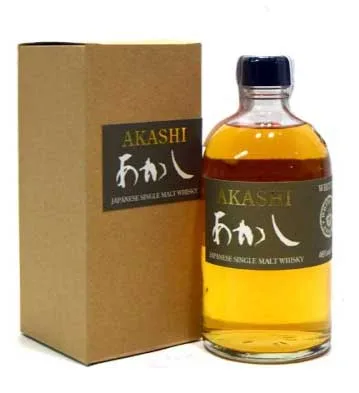
Eigashima Shuzo devotes considerable effort to products beyond whisky, so whisky production accounts for only a small part of its output. Even so, the result clearly has a personality unlike other whiskies in Japan. If you are looking for a rare whisky as well as one from an important whisky producer, Akashi is an easy choice.
No. 5 Japanese Whiskies: Suntory Chita
The whisky produced at the Chita distillery in Aichi Prefecture is made by blending three types of grain whisky. Grain whisky is rarely drunk on its own, but by combining three different flavour profiles, it rises above malt whisky.
Chita, with a smoothness and sweetness that malt whisky cannot quite offer, is the perfect whisky for anyone seeking a delicious grain whisky.
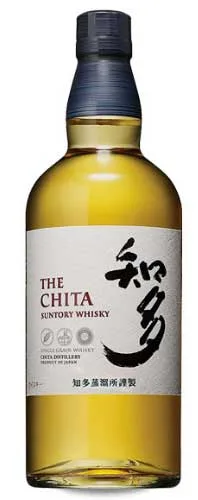
The Chita highball, which became a talking point in commercials as a “flavoured highball”, can also be enjoyed with yuzu and sudachi.
As a special highball that lets you enjoy its fruity aroma, it is also recommended for beginners.
Easy to find in Europe.
No. 4 Japanese Whiskies: Hakushu
Hakushu, which shares its popularity with Yamazaki, is a highly popular brand that Suntory is proud of. Produced at the Hakushu distillery in Yamanashi Prefecture, Hakushu is steeped in the forest imagery reflected in its design and is recommended for those who enjoy a refreshing style of whisky.
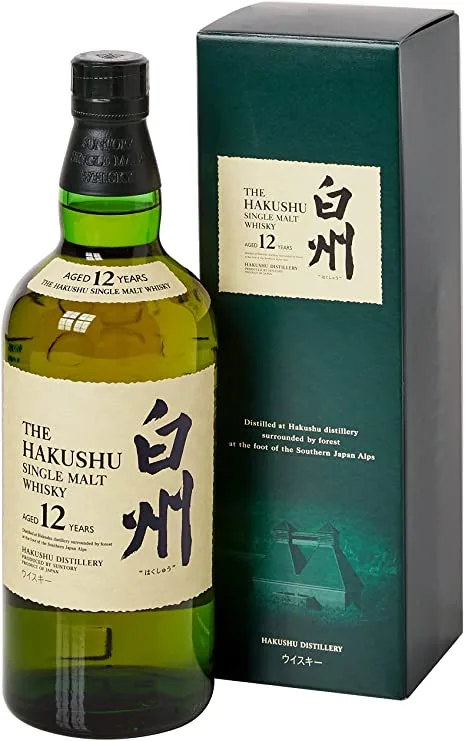
Compared with Yamazaki, Hakushu is marked by a fruitier profile, with even a refreshing aroma reminiscent of sudachi or mint. On the other hand, versions that have been aged for a long time are sublime, showing ripe fruit notes such as melon and mango. Comparing them is especially interesting.
Refreshing Hakushu is a good companion for food, but it is also recommended to sip it slowly over a little ice. As the ice melts, the flavour gradually changes, allowing you to enjoy its delicate and complex character.
Low to medium difficulty in Europe. It often experiences stock shortages during the year.
No. 3 Japanese Whiskies: Yoichi
Yoichi, in Hokkaido, famous for its climate that closely resembles Scotland’s, produces smoky, aromatic whisky that follows the tradition of orthodox Scotch whisky.
It has a particularly smoky aroma among Japanese single malt whiskies, and the use of a method known as direct coal-fired distillation is also part of the secret behind that character.
The flavour that can only be achieved in Yoichi, where elements such as glacial water, coal and a slow maturation process shaped by the cold climate all come together, is a surprising and genuinely moving experience.
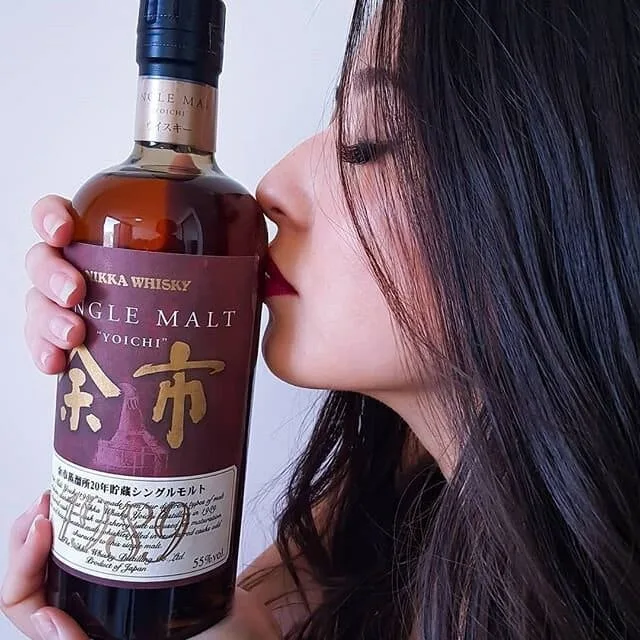
Alongside its powerful, deep body and smoky aroma, Yoichi also reveals the woody notes of sherry casks. It is recommended for beginners as a whisky that helps you discover several different sides of the category.
Easy to find in Europe.
No. 2 Japanese Whiskies: Hibiki
Hibiki is gaining popularity as a high-end name among Japanese whiskies. Hibiki is arguably Japan’s finest blended whisky, and is especially recommended for those who want to enjoy the blended whisky style. (Hibiki Harmony)
The 30-year-old Hibiki is a premium product that can be priced at 100,000 yen or more, but its more basic versions can be enjoyed for under 5,000 yen.
Many people are struck by Hibiki’s magnificent aroma, but also by how easy it is to drink, with a remarkably smooth mouthfeel.

It can show a honey-like sweetness and a long finish, making it enjoyable neat or over ice. Japan’s number one blended whisky is essential for a deeper understanding of Japanese whiskies.
The blended version is relatively easy to find, while the 17, 21 and 30-year-old expressions are very difficult to obtain due to lack of stock.
No. 1 Japanese Whiskies: Yamazaki
Yamazaki is recommended for both beginners and experts. It is Suntory’s most famous whisky and overwhelmingly popular among Japanese whiskies.
The Yamazaki area, where water with a hardness slightly higher than soft water can be sampled, is ideal for producing delicious whisky and has helped create a highly popular expression that stands apart from the rest.
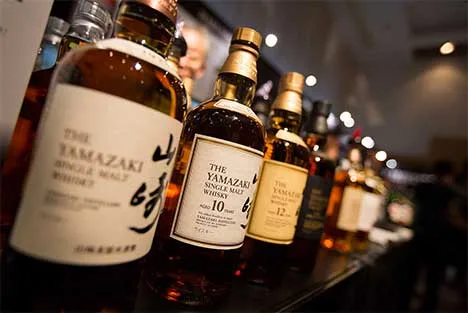
Yamazaki gains its deep flavour from several factors, including the collection of water data every morning. Known among single malt whiskies for its beautiful, gentle aroma, Yamazaki is also well suited to being enjoyed neat.
One of the most popular Japanese whiskies in Japan, it is something even those unfamiliar with whisky should try as a highball or mizuwari. After that, if you can compare and enjoy Yamazaki across different ages, you will experience the essence of Japan’s world-class products.
Depending on the time of year it can be very hard to obtain, with stock shortages extremely common.
The Summary...
What do you think of the ranking? It is a pity that many of these whiskies are either not sold in Europe or have such limited stock that they can only be purchased at specific times of the year, which also means prices keep rising.
As you have read, Japanese whiskies are much more than cereals and water: they are about respect for tradition and the environment. With the new rules for Japanese whisky, this artisanal product is now better protected so that this legacy of time cannot be altered. And although that may be reflected in the price in the short term, there is real satisfaction in knowing that, whether you like it more or less, you are drinking an “authentic” product.
With tonic, with a mixer, over ice, with water, in a cocktail... Japanese whiskies are so versatile they will suit you whatever your preference may be.
Related links
- Japanese Whisky: 100 Years of History - The New Rules for Japanese Whisky