
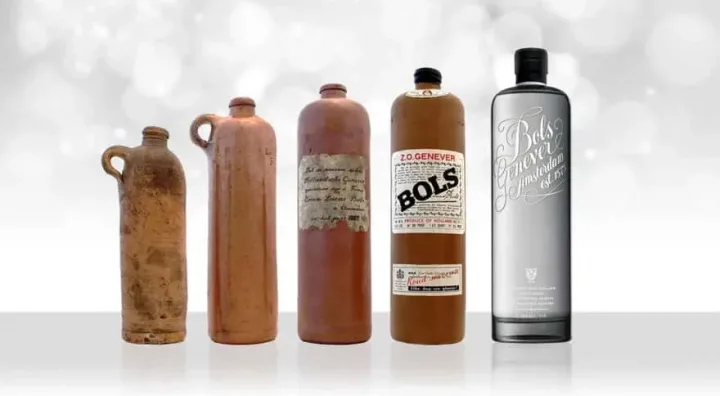
Gin Bols was born as a concoction and achieved success among other distillates, as it became a serious competitor for wines and beers.
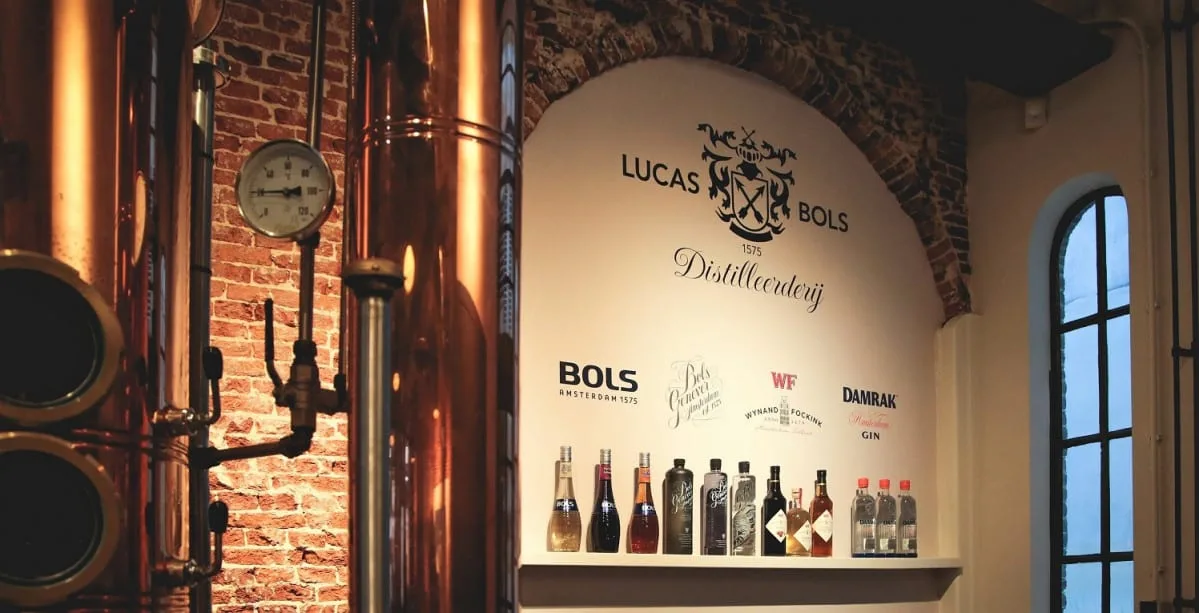
The Bols distillery It is about to celebrate its 450th birthday, today converted into a museum and with doors open to the public. This event also celebrates the birth of its flagship product: Bols Gin. As we can imagine, it has witnessed countless social events and has experienced its own history from ups and downs.
Its origins date back to 1575, when a family that emigrated to Amsterdam due to religious problems and embarked on a fruitful career in the world of spirits. They are the Bulsius, who over time adopted the surname Bols to accommodate the local pronunciation.
 The first official mention is in the year 1634 in the documents of the city of Amsterdam, where Pieter Jacobszoon Bols He is documented as an operator on the Rozengracht.
The first name of the family's migrant patriarch is unknown because no conclusive records have yet been found. It is known that in those years they lived in the city Peter and Jeroen Bols, but the parish records do not mention the activities they carried out.
The Bols built a simple wooden shed or shed in the suburbs, next to the Rose Canal (Rozengracht). There they prepared spirits, based on three ingredients: cumin, cardamom and orange.
It was not a time when conditions were easier, since in 1575 a law prohibited distilleries within the walls. That provision was modified in 1581, but it was too late. They were in an outdoor space and competitors emerged with more comfortable locations.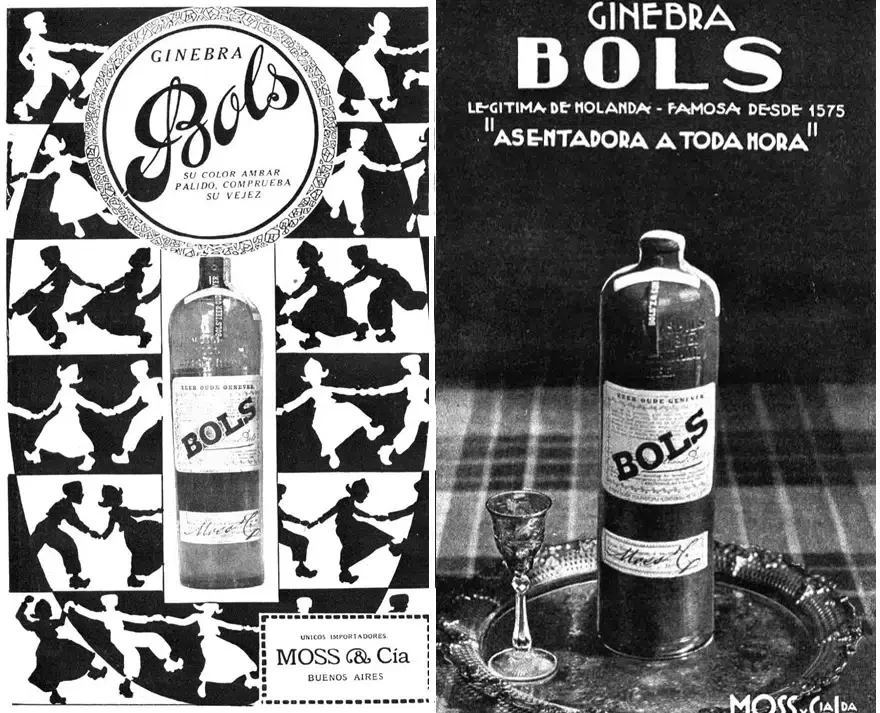 Gin Bols was born as a concoction and achieved success among other distillates. However, that place occupied by lovers of what would later become the Geneva Bols became a meeting center for sailors and also neighbors. They savored drinks based on natural elements such as fruits, flowers, herbs, roots and seeds.
They referred to the place as "Het Lootsje", which precisely means "small shed" and ended up being the official name of the tavern. In 1612, it was decided to widen the urban space and the Bols shed was incorporated into the internal layout.
The austere wooden construction did not lose its simplicity, but at least it was replaced by stones. Thus we arrive at 1640, the year in which, thanks to journalistic archives, the first name of one of the Bols, Pieter son of Jacobs, linked to the popular distillery, is rescued. Twelve years later he was born Lucas Bols, the true driver of family entrepreneurship.
The young man understood that the products they produced could have horizons further away than the humble drinks counter next to the Rozengracht.
The new representative of the family had to live in the exact place and time to expand.
Lucas Bols was among the main partners of the powerful Dutch East India Company, with enormous commercial influence in Asia and Africa.
While establishing new markets, he worked as a seasoned chemist in search of the perfect formulas, taking advantage of the spices and roots that arrived on ships.
At the end of the 17th century, the Bols distillery It had a menu of about two hundred drinks. But one formula stood out above the rest.
The Gin Bols
Made from 1664, it contained wheat, rye and American corn, plus other ingredients, fermented in alcohol and flavored with juniper berries.
The preparation was known as "malt wine."
This formula, with slight modifications, was used as a remedy for kidney infections.
Converted into a drink, it rose to the top of the Dutch preference. From the juniper obtained from the bush, the drink took its definitive name: jenever (in Dutch) or Geneva.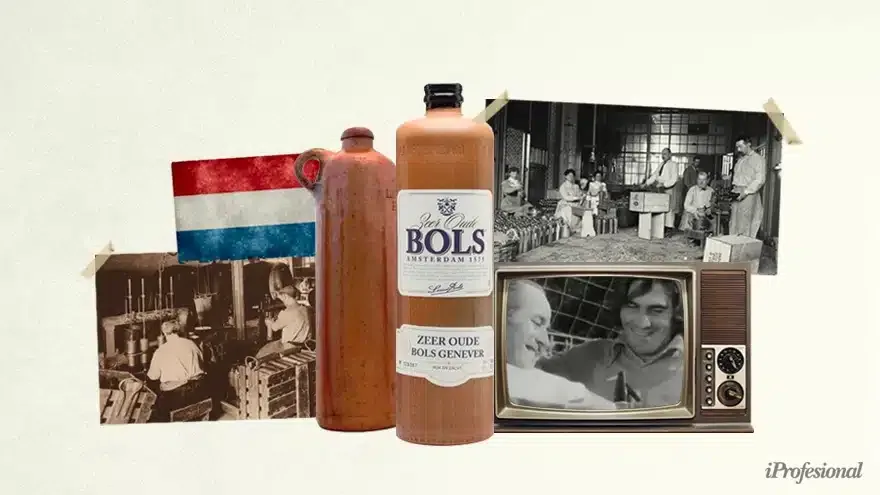 Bols Gin was made since 1664, it contained wheat, rye and American corn, plus other ingredients, fermented in alcohol and flavored with juniper berries (or junipers).
The preparation was known as "malt wine." The brew became a serious competitor to wines and beers due to its high alcohol content. It became the official drink of sea voyages.
This also allowed him to reach distant ports. The packaging also had its seal. Bols imposed theclay tubes that marked the identity of the product for centuries.
Those bottles arrived at Silver River at the end of the 17th century, in boxes containing fifteen units. Since then, it was among the spirits sold in the grocery stores.
We must clarify that these were also the usual containers for beers and whiskeys. Lucas died in 1719 and the company passed to his sons, Pieter and Hermannus.
The enormous growth of the firm is noted in a record from 1730.
There it is established that Bols had to pay almost a tenth of the total taxes paid by the ninety-five distilleries of the kingdom.
The family dynasty continued until 1816 when Lucas Bols, grandson of Hermannus and great-grandson of the famous namesake, was buried.
Historical data
In 1873 Bols he won a Medal at the 1873 World's Fair in Vienna and a year later became a supplier to the imperial court in Vienna and other monarchies around the world. After World War I, distilleries were started in:
- France (1921),
- Poland (1922),
- Switzerland (1929),
- Canada (1932),
- South Africa (1933),
- Belgium (1934),
- Argentina (1935),
- Spain (1935)
- United States (1947).
Bols It also grew through acquisition, including the firms of Hoppe and Wynand Fockink, its biggest competitor since 1679. In 1954, the last of the Moltzer family left the board of directors, and Bols Distilleries became a publicly traded company.
You may be interested in Bols Gin: