

Aromas in cocktail making: three techniques to extract them and build essential knowledge in contemporary gastronomy
Perfume has not only endured across different cultures; the methods used to obtain aromas have also been refined, earning them an essential place in both the cosmetics industry and gastronomy.
Today, in cocktail making, the three most common aroma extraction techniques are: 1) Enfleurage, 2) Distillation, and 3) Cold expression. We will look at each of them in more detail below: 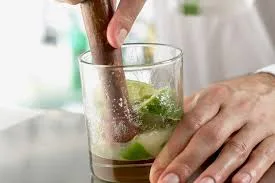 Perfume has not only endured across different cultures; the ways of obtaining aromas have also been perfected over time.
Enfleurage technique:
The aim of this technique is to extract the aroma from flowers that continue producing perfume after being cut.
It is advisable to pick the flowers in the early hours of the morning, avoiding exposure to high temperatures.
Thin layers of deodorized fat are spread out (coconut oil, for example, petroleum jelly, stearin, etc.), and the flowers are placed on top.
For this process, you can use a shallow box that can be sealed airtight, or a Pyrex tray that can be placed in the refrigerator.
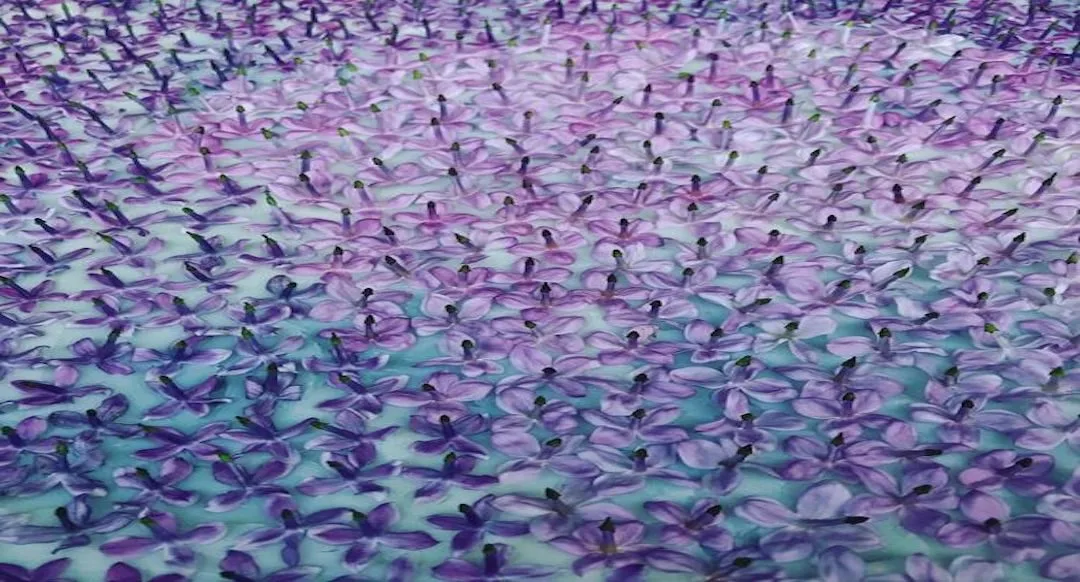
The flowers should be replaced every day until the fat becomes saturated with the fragrance of the flowers, which takes approximately two weeks.
The pomade obtained is poured into a sterilized glass jar, and ethyl alcohol is added to separate the solid fat from the volatile perfumed oil.
The separation can be carried out in two ways: a) The mixture is shaken for two weeks. b) The perfumed fat is melted in a bain-marie, alcohol is added, and the mixture is shaken. In both cases, the alcohol will separate from the fat, allowing the perfumed liquid to be recovered.
Distillation technique
Distillation: This technique is widely used and has been progressively refined over time.
One of the first attempts involved placing aromatic plants in contact with hot water, but it was not very effective. Later, the plants were placed in an upper vessel so that the steam formed below would pass through them and then be condensed in a coil. This gave rise to the still used for extracting aromas and essences.  Although the method proved successful, the Industrial Revolution transformed the still into an extractor in which plant material is placed in contact with steam generated in a boiler. That steam is then taken to a condenser and collected in a settling tank, where the essential oil and the water are separated.
Cold expression technique
This technique for extracting aromas consists of pressing fruit peels to obtain all their essential oil.
It is mainly used with citrus fruits such as lemon, orange, mandarin, or lime.
It is highly recommended because the result is free from any chemical modification, since the raw material is not exposed to high temperatures. However, it does come into contact with water, which means important water-soluble components may disperse.
It is a very simple method to put into practice: you only need to save the outer part of the peel when peeling the fruit, making the most of it. Then cut the peels into pieces and place them in a linen or cotton cloth. Next, crush them on a board as thoroughly as possible.
Finally, when wringing out the cloth, pour the resulting liquid into a small bottle, which should be sealed quickly and airtight to prevent the essential oils from evaporating.
See more details on aroma extraction in this video: