
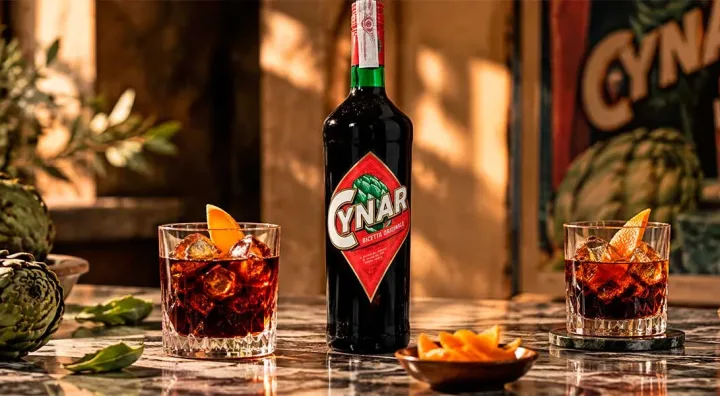
In the world of Italian amari, few names spark as much curiosity as Cynar. At first glance, its calling card seems rather unconventional: a bitter liqueur made from a blend of herbs in which artichoke plays the leading role. Yet behind that apparently eccentric idea lies a deeply Italian drink, closely tied to leisurely after-meal moments, reimagined classic cocktails, and the aperitivo culture that has turned bitterness into a distinctly adult pleasure.
Cynar belongs to a family of drinks that for decades were associated with traditional bars, cafés, and after-lunch digestifs, but in recent years have found a firm place in cocktail bars around the world. Its appeal is not only the unusual nature of its best-known ingredient, but also its ability to bring depth, vegetal freshness, and a bittersweet balance without ever feeling overly forceful.
What is Cynar and why is it associated with artichoke?
Cynar is an Italian amaro: a bitter-style liqueur made by macerating or infusing botanicals in an alcoholic base. As with many recipes of this kind, the full formula is not disclosed in detail, although the brand has always made artichoke its most recognisable element.
The name comes directly from Cynara scolymus, the botanical name for artichoke. That reference should not suggest a drink that tastes literally of cooked vegetables. In the glass, the result is far broader: herbal notes, an earthy backdrop, vegetal echoes, moderate sweetness, and a bitterness that lingers with persistence, though without the harshness of some more intense bitter liqueurs.
Within Italian tradition, Cynar is often linked to amari made from plants in the Asteraceae family, which includes artichoke, cardoon, and other species historically used in infusions and digestive preparations. That botanical dimension connects with an age-old custom: using roots, leaves, stems, and the less prized parts of plants to create drinks with a medicinal, gastronomic, or ritual character.
An amaro with Italian history
The development of Cynar belongs to the context of 20th-century Italy, when numerous producers began turning recipes inspired by regional herbal liqueur traditions into commercial products. Its origins are linked to Padua and to a circle of producers specialising in sweet, fortified, and aromatised drinks, a fertile ground for the birth of new aperitifs and digestifs.
The key to its success has been its ability to offer a recognisable personality without being difficult to drink. Compared with more sharply bitter amari or herbal liqueurs with a medicinal profile, Cynar occupies a middle ground: it has character, while retaining a gentle texture and a touch of sweetness that make it approachable both neat and mixed.
What does Cynar taste like?
Cynar’s organoleptic profile combines several layers. On the nose, it may show aromas of dried herbs, damp earth, citrus peel, dark caramel, and a vegetal touch that recalls the stem or leaf more than the flesh of the artichoke. On the palate, it is usually rounded at first, with restrained sweetness, followed by a bitter, herbal phase that lengthens the sip.
It is neither flat nor excessively sweet. Its appeal lies in contrast: it starts smoothly, gains structure on the mid-palate, and finishes with an elegant bitter sensation, ideal for those who enjoy drinks such as red vermouth, Italian bitter liqueurs, or aged spirits mixed with herbal ingredients.
As a general guide, its profile can be summed up as follows:
- Sweetness: present, but not dominant.
- Bitterness: medium, with a lingering finish.
- Aromas: herbs, vegetal notes, gentle spices, and darker nuances.
- Texture: silky, with medium body.
- Ideal use: aperitif, digestif, or cocktail ingredient.
How to drink Cynar
One of Cynar’s great strengths is its versatility. It can be served neat, chilled or over ice, especially as a digestif after a meal. In this style, it is best not served too warm, as a slightly lower temperature helps balance its sweetness and bitterness.
It also works very well as an aperitif when lengthened with soda, a gentle tonic or sparkling wine. In a Cynar spritz, for example, the result is darker and more herbal than a spritz made with more citrus-led bitters. It is an appealing choice for anyone looking for a less sweet aperitif with greater depth.
Another easy way to enjoy it is with cola or ginger ale, where its bitter notes add complexity without making service complicated. In some bars, it is even served alongside beer, as a short pour with a lager or sour beer, making the most of the contrast between freshness, bubbles and bitterness.
Cynar in cocktails: from the Negroni to the Manhattan
Contemporary cocktail culture has found Cynar to be a very useful ingredient for adapting classics without distorting them. Its moderate alcohol strength and aromatic intensity allow it to replace all or part of other bitter components or sweet vermouths, bringing in a more vegetal nuance.
In a Negroni, it can be used to create a more earthy version, especially when paired with a dry-style gin or even smoky spirits. In Manhattan-style drinks, it works well with rye whiskey or bourbon when the aim is a more herbal finish rather than a vinous one. It also integrates nicely into cocktails with mezcal, aged rum or coffee, where its bitterness rounds out the drink and adds a more grown-up layer to the mix.
A few bar-friendly ideas:
- Cynar Spritz: Cynar, sparkling wine and soda, served over ice with citrus peel.
- Vegetal Negroni: gin, red vermouth and Cynar in place of part of the bitter.
- Herbal Manhattan: whiskey, sweet vermouth and a touch of Cynar.
- Mezcal cocktail: mezcal, citrus and Cynar for a smoky, bitter profile.
- Espresso cocktail: coffee, a base spirit and Cynar to add depth.
Food pairings and occasions
Thanks to its bitter, vegetal character, Cynar pairs especially well with fatty, salty or intensely flavoured foods. It can accompany cured meats, semi-cured cheeses, preserved seafood or vegetables, olives, toasted nuts, or dishes featuring artichoke, aubergine and mushrooms. It is also an interesting choice after generous meals, where it works as an after-dinner closer without the weight of higher-strength spirits.
In gastronomy, amaros have regained prominence because they interact so well with complex flavours: smoky, toasted, spiced and umami. Cynar, in particular, offers a bridge between aperitif and digestif, which helps explain its growing presence on cocktail lists and in restaurants looking for alternatives to vermouth, bitters or traditional herbal liqueurs.
Why it appeals to amaro lovers
Cynar is an excellent entry point for anyone who wants to explore the world of Italian amaros without starting with overly extreme profiles. It has personality, history and a clear identity, yet remains easy to serve both at home and behind a professional bar.
Its secret lies in balance: enough bitterness to feel gastronomic, enough sweetness to remain approachable, and a vegetal dimension that sets it apart from other liqueurs. For cocktail enthusiasts, it is also a versatile tool for reinterpreting classics and building seasonal drinks. In a landscape where bitter flavours are gaining ground, Cynar proves that artichoke can also have a starring role in the glass.