
Mixology, a cutting-edge art, is setting new trends in gastronomy and especially in cocktail culture
New trends in gastronomy, and particularly in cocktail making, show just how far contemporary creative and avant-garde movements have evolved. It is now common for bartenders to discuss mixology as a deeper study of the art of mixing drinks.
This learning process is not about creating a rivalry over who is better, a bartender or a mixologist, but about adding skills to the profession in order to offer a higher-quality service.
Mixology goes beyond working behind a bar. This art, or science, has achieved remarkable results, with innovative flavours standing out through combinations of spirits with herbs, berries, exotic ingredients or little-known mixers. 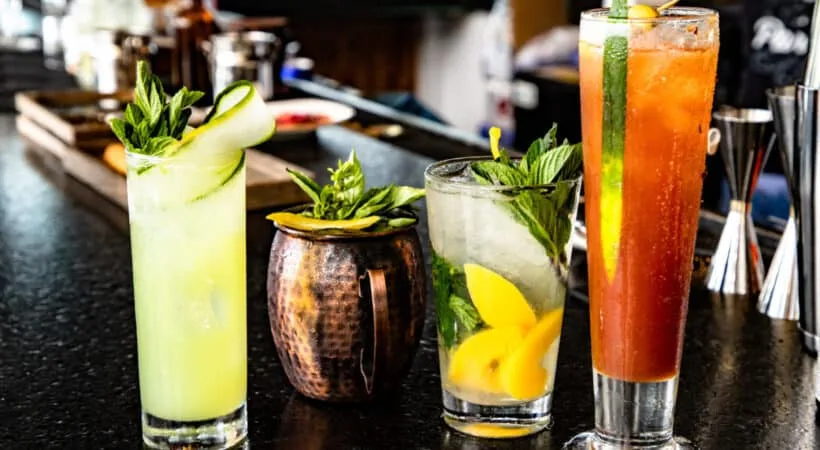 The term “mix”, meaning to combine, appeared in the world’s first cocktail book, The Bon Vivant’s Companion or How to mix drinksT, by Professor Jerry Thomas, published in 1862. Later, French scientist Hervé This and physicist Nicholas Kurti gave the terminology greater substance through the scientific analyses they carried out on ingredients, with the aim of achieving variety and nutritional contributions.
In recent years, mixology has become a more widely used term and is generally applied to refer to a higher level of study in the mixing of cocktails and drinks.
A mixologist must be a passionate innovator and a lover of research, because the role requires deeper knowledge. They analyse flavours, essences, spices, fruits, vegetables, aromas, textures, colours and densities, as well as alcohol-by-volume levels, in order to combine them and achieve balance and harmony in the final drink.
Despite differing opinions on how the work of a bartender and a mixologist should be valued, it should be clear that the latter complements the former, and that a mixologist’s knowledge can be extremely useful for a barman behind the bar. A bartender needs to know many common and popular cocktails, serve several drinks to different people at the same time, and think quickly.
The mixologist, for their part, focuses more on studying classic drinks and creating new, more exotic ones, exploring and expanding the boundaries of cocktail making. Today, it is increasingly common to find this figure behind the bar.
A highly exploitable market that goes beyond conventional cocktail culture: that is what cocktail lovers have found by bringing together science and gastronomy. Some say the secret lies in using quality spirits, freshly squeezed fruit juices or crushed herbs… Others defend the idea that, when mixing, sometimes “less is more”.
The Asociación de Cantineros de Cuba and the country’s Club de Sommeliers have kept their members up to date through courses, workshops and conferences on mixology, or the art of creating blends, a subject that has now become widespread across the hospitality sector.
Types of mixology
There are different types of mixology:
—Classic: This is the style found on the world’s leading cocktail menus and in cocktail books, and the one guests or customers are used to drinking regularly. Some examples include the Manhattan, Dry Martini and Kir Royal.
—Signature or avant-garde: This is cocktail making developed by bartenders with an original character linked to their workplace, country, region, and so on — in other words, rooted in its setting.
—Premium: In cocktail making, this refers to the use of highly sophisticated products as cocktail ingredients.
—Fusion: This is the interaction, within cocktail making, of ingredients from different cultures.
Molecular mixology
Molecular mixology is not only driven by the need to surprise guests; it is also rooted in experimentation.
Its origins date back to the early 19th century, when Antoine Peychaud created the first cocktail in the United States, the Sazerac, while experimenting with alcoholic blends for his friends in his New Orleans laboratory. He is also credited with the famous Peychaud’s Bitters, a staple in cocktail bars around the world.
As Peychaud was a pharmacist, he studied herbal and chemically modified ingredients, becoming a forerunner of the modern sciences of chemistry and pharmacology at a time when alcohol was already being used in medicinal tonics. 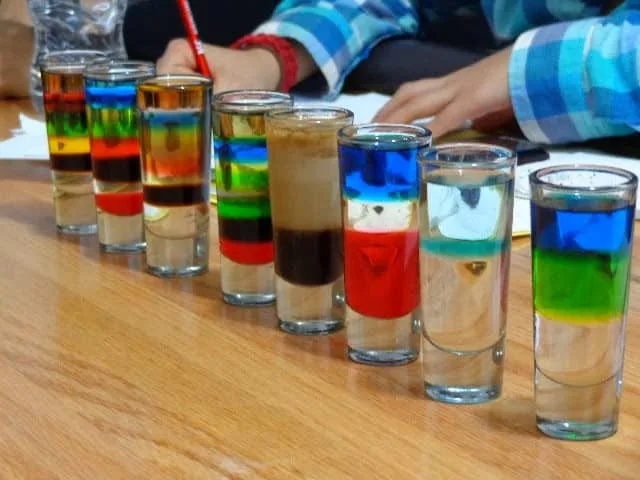 In that era of experimentation, alcohol was regarded as medicine and bitters were patented remedies, compounded by apothecaries from a range of plant materials chosen for their supposed medical or digestive benefits, as Dave Arnold explains in his book Liquid Intelligence: The Art and Science of the Perfect Cocktail.
Mr Jerry Thomas, for his part, wrote The Bartender's Guide, a book on how to mix drinks in which the Blue Blazer technique appeared for the first time; to this day, it remains one of the most theatrical cocktails a bartender can make.
These mixology professionals took the craft of creating new drinks very seriously, paving the way for new generations of bartenders, with experimentation at the heart of their work.
In the centuries that followed, cocktails emerged involving increasingly complex processes, from carbonation to the analysis of different types of acidity. These ideas broadened the multisensory concept of cocktail preparation. It is no longer just a simple drink, but an experience where unusual flavours, textures and aromas come together.
The foundations of molecular mixology lie in molecular gastronomy: the application of science to culinary creation.
There has always been a touch of science in the cocktail world, but here it is taken to another level, seeking—through analysis and scientific techniques applied to ingredients—results that are equally nutritious, natural and novel in flavour. 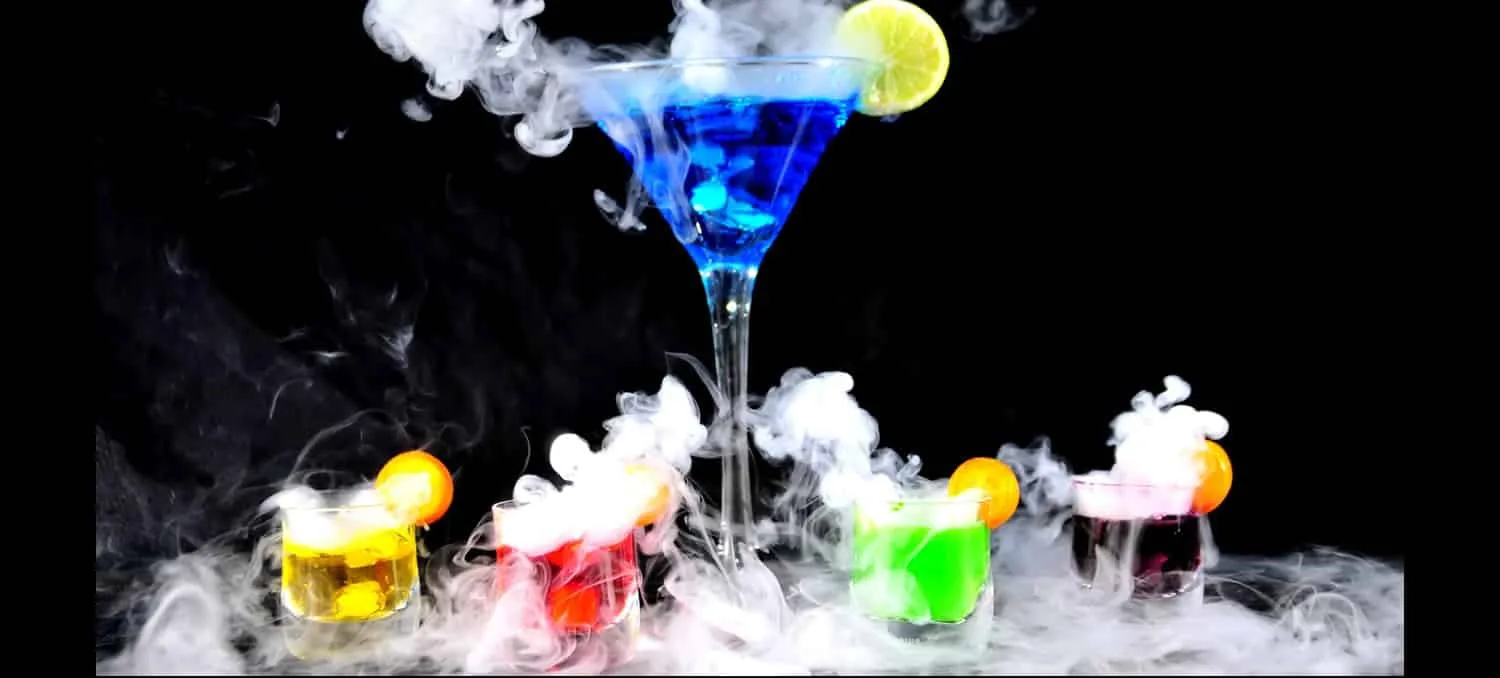 To achieve this, every property of the ingredients is used, such as density: liqueurs or spirits with a higher alcohol content weigh less than softer ones, so they are combined with syrups and lower-strength liqueurs.
The result is highly attractive, so do not be afraid of experimentation (the syrup goes at the bottom, brightly coloured lower-strength liqueurs in the middle, and spirits or lighter liquids at the top). And density is not the only useful tool in a mixologist’s hands; flavours are just as important.
For example, in a margarita, some experimenters have gone as far as replacing lemon juice with a lemon-flavoured pearl, offering a new perspective on an already familiar flavour.
These flavours are based on knowledge of the origins and chemical compositions of alcoholic drinks, as well as careful tasting, which makes it easier to understand which products work together, always seeking a balanced flavour profile with an avant-garde approach.
Also read: 5 high-demand cocktails you should try Jim Beam for your Christmas cocktails
You may also be interested in the latest trends in cocktail making and mixology: