
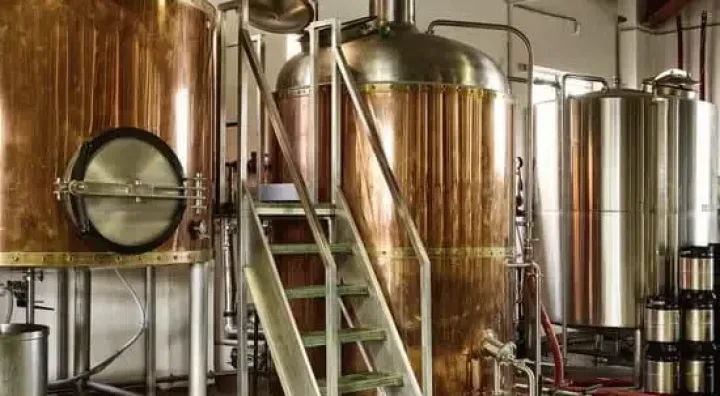
Industrial brewing process, a drink that for a long time remained hidden in the domestic sphere
Here we explain in a synthetic way the industrial process of brewing beer, a drink that is gaining followers every day. Furthermore, we must add to this that for a long time it remained hidden in the domestic sphere. This is a wonderful creation, which has currently been very studied and we will only review the phases through which this product goes to become exquisite and maddening crowds.
Today we can say that the science, industry, politics and, above all, the market They have put rules and put pressure on the brewing process, so over the years it has changed a lot. Technology makes unimaginable styles, aromas and flavors possible.
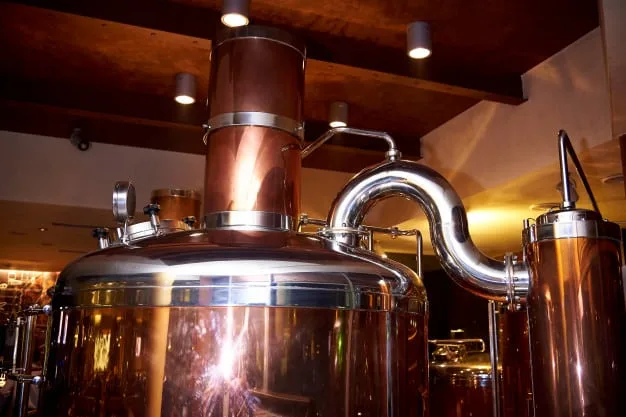 Today we can say that science, industry, politics and, above all, the market have set rules and put pressure on the beer-making process.
beer production It is concentrated in large companies, since the top five beer groups hold more than 90% of the national market. Barley is the main raw material used for the production of beer. The barley grain can be divided into three main parts: the germ (embryo), the endosperm (aleurone and starch endosperm), and the grain covers. Kernel coatings can be further divided into, from inside to outside, the seed coat, pericarp layers, and husk.
"Beer is a product that we can find in any supermarket, but this has required a series of processes that range from the germination of the cereal, through its maceration (enzymatic hydrolysis) to its cooking and fermentation. It is a very sensitive process and characterized by each and every one of the ingredients used, as well as the way in which its processes are carried out."
1) Reception and storage of raw materials
The reception of materials such as malt includes operations such as unloading, cleaning, storage and transportation of the raw material. The purpose of cleaning is that only good quality raw materials are used for production.
2) Malted
This operation consists of subjecting the cereal grains to germination and a subsequent drying phase (hot air flow at more than 70 °C for a few minutes). During the first part of this phase, dehydration of the product is basically achieved (drying), while at the end of it, and using hotter air, "roasting" occurs. Depending on the degree of roasting, lighter or darker malts will be obtained, which will add color to the beer.
Malting is carried out because cereal grains do not have the enzymatic systems to transform starch into sugars, necessary for yeasts to carry out fermentation.
"Some large breweries have their own malthouses and buy the raw grain directly from the producer to also take care of that phase of the production process, however, the majority of brewers, both professional and amateur, buy the malted grain, so malthouses are generally independent brewing industry facilities that supply many different breweries or whiskey distilleries."
The process lasts 6-7 days and during this time the growth of the malt rootlets occurs, the first by-product generated from the production, with various properties for reuse. These byproducts are separated from the grain or malt by means of special rollers.
3) Grinding and maceration
The milling process consists of grinding the malts to break the grain shell and separate them from the endosperm. At the same time it disintegrates so that it can be exposed for the enzymatic process during mashing. That is, a particle size is obtained that allows adequate maceration. In maceration, malt flour is mixed with water (more than 90% of the final product) and poured into vats, where the temperature is controlled and stabilized so that enzymes can transform starch into fermentable sugars and proteins into peptides and amino acids, which constitute the nitrogen source for subsequent fermentation.
4) Filtration of the wort
The maceration product (pomace) is filtered to obtain, on the one hand, the brewing wort and, on the other, the second by-product of this production, the bagasse.
5) Cooking
At this stage of the brewing process, the wort is hopped (giving it bitterness by boiling hops for at least 90 minutes). The must is inactivated and sterilized. In this process, the coagulation of proteins and tannins occurs and the formation of color and bitter flavor.
6) Clarification of the must, cooling and aeration
Next, it is necessary to separate the hop remains and solid particles generated during the boil from the rest of the wort. This process, called clarification, is carried out by imparting a centrifugal movement to the must contained within the macerator. It is then cooled to avoid undesirable flavors or oxidation and finally it is aerated, so that the yeasts have enough oxygen to grow.
7) Fermentation
Fermentation is the most significant process in brewing beer. Yeasts constitute the ferment that, carefully prepared before adding it to the wort, transform part of the sugars inside the fermentation tanks into alcohol and carbon dioxide, the gas that produces the foam of the beer and gives it its characteristic spiciness.
 Beer is a product that we can find in any supermarket, but this has required a series of processes that range from the germination of the cereal, through its maceration (enzymatic hydrolysis) to its cooking and fermentation.
Depending on how it is done, it will produce different results: the “ale” type, with top fermentation, and the “lager” type, with bottom fermentation. The fundamental differences between these two types of products lie mainly in:
- The yeast used for fermentation.
- The temperatures at which the must is fermented.
- In the way in which the yeast is collected to separate it from the fermented wort or young beer at the end of fermentation.
Thus, while in lager beer, yeast of the genus Saccharomyces carlsbergensis is mainly used, which settles at the bottom of the fermenter after fermentation, in ale beer, Saccharomyces cerevisiae is used, which floats on the surface of the liquid. Both yeasts, as described later, can be recovered and reused for different purposes.
Once the fermentation is over, which lasts between 8 and 10 days, the decanted yeast is separated and taken to special tanks for conservation.
8) Maturation
The beer is transferred to maturation tanks and stored to give it its characteristic stability, at temperatures between –1 and 4 °C. Lasts between 45 and 60 days.
9) Clarification
Filtration takes place over diatomaceous earth, the filter acting as a support for the filter cake, to obtain a beer with an optimal level of clarity and to delay the natural cloudiness of the beer from its production to its consumption.
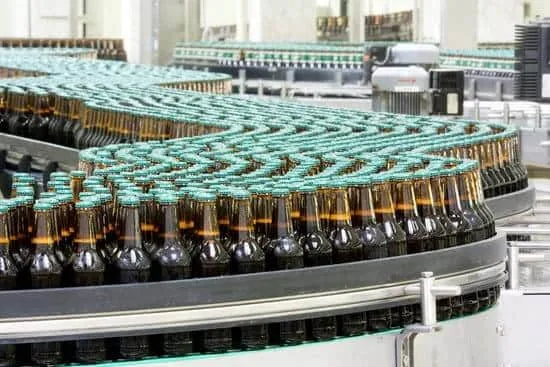 The final step is to package the beer on the bottling and keg lines.
10) Packaging
Before packaging, to guarantee the microbiological quality of the beer and its duration on the market in optimal conditions, pasteurization is carried out. The final step is to package the beer on the bottling and keg lines.
"Some factories bottle the beer already carbonated, others, however, carbonate inside the bottle, a process called 'refermentation'. In order to carbonate inside the bottle, it is necessary for the yeast to find something to metabolize, so either the beer is bottled before it finishes fermenting or carbohydrates are added to the beer, either in the form of unfermented wort, glucose... in this way, the yeast can continue working and produce the CO₂ that will carbonate the beer."
Some beers are carbonated using a refermentation inside the bottle and must remain resting for approximately a month at a temperature of around 18 °C for the yeast to work. Others, however, are ready to consume as soon as they are packaged.