
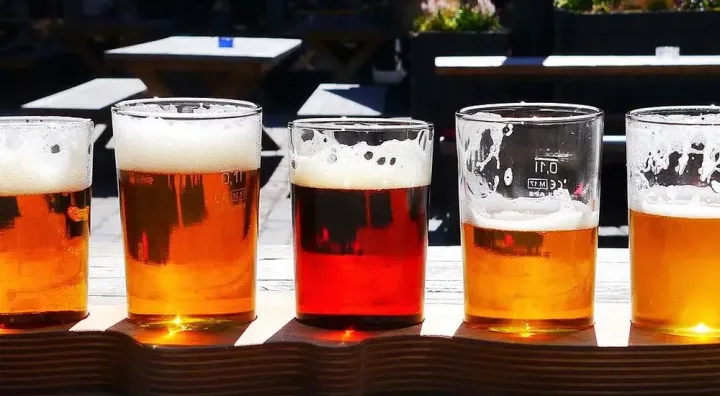
Differences between ale and lager beer: a look at the styles, production methods and flavour profiles that define their authenticity
Let’s look at the difference between ale and lager beer, some key style points, and a few of the production methods that set them apart.
The flavour profiles of a lager and an ale can vary, but ales are usually a little more fruity and bitter, with older, deeper and richer flavours. You could almost think of an ale as a Jackson Pollock, the painter who used to build up countless layers of paint on his canvas.
When we look at a lager, however, we tend to expect something clean, crisp and perhaps even easier to drink, although, of course, there are many similarities and many exceptions between the two.
One of the biggest differences is that lagers are typically produced at a lower fermentation temperature, fermenting cold. At this cooler temperature, they develop fewer flavour compounds, giving us a clean, crisp style.
Ales, on the other hand, are fermented at a higher temperature. This speeds up the metabolic rate, allowing a wider range of flavour profiles to develop, the very ones we have come to love in many different ale styles.
There are many different types of yeast used in the brewing industry, but we generally work with two main branches: one used for ales and another for lagers.
So, what is the difference between a beer that is perfectly clear and one that may be genuinely hazy or completely opaque?
One important reason is the yeast’s ability to flocculate, that is, to come together and settle. But let’s take it step by step...
What is an Ale beer?
Ale beer covers all top-fermented beers, which is what sets them apart from lagers, which are bottom-fermented. This means that in ales, fermentation takes place near the surface of the liquid, while in lager beers it happens closer to the bottom.
Ales ferment quickly at temperatures between 15 and 25 °C and are generally served at 12 °C or above.
For centuries, ales were the most popular type of beer, only recently being overtaken by lagers.
In general, ales have a higher alcohol content and a more complex flavour.
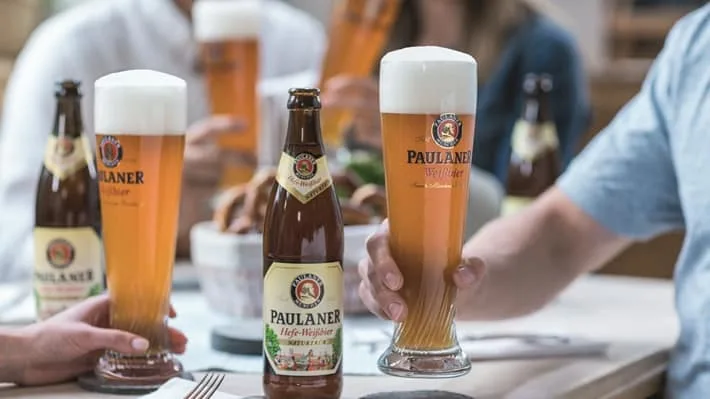
Types of Ale beer
There is a wide range of styles, usually classified according to their place of origin.
Anglo-American ales include styles such as amber ale, red ale, stout, porter, pale ale, barley wine, bitter, brown ale, India pale ale (IPA), old ale and extra strong bitter (ESB), among others.
- In the United States, the "Brewers Association" brings together more than 1,500 beer producers and has over 34,000 members. It has created a classification of the different beer styles found around the world, identifying a total of 82 ale beer styles.
- In Scotland, a distinctive style of ale emerged in the 19th century: Scotch Ale, known for having more body and sweetness, and less hop flavour and aroma than other British ales. This style has also become popular in North America.
- In Belgium, many styles were developed, including Belgian Ale, Belgian Strong Ale, witbier, oud bruin, bière de garde, saison and several styles famous for originally being brewed in abbeys, such as Dubbel, Tripel and Quadrupel. Among these is Trappist beer.
- In Germany, lagers predominate, but there are still several types of ales, such as Altbier, Hefe Weizen, Berliner Weissbier and Kölsch.
What is a lager beer?
Lager is a type of beer with a pronounced flavour that is served cold. It is defined by a slower fermentation process using special yeasts, known as bottom-fermenting yeasts, and by being stored in cellars in the final stages of production —or lagered, hence the name— for a period at low temperatures in order to clear residual particles and stabilise the flavours.
The most popular examples of lager-style beer are pale lagers or pilsners, also commonly referred to simply as lagers.
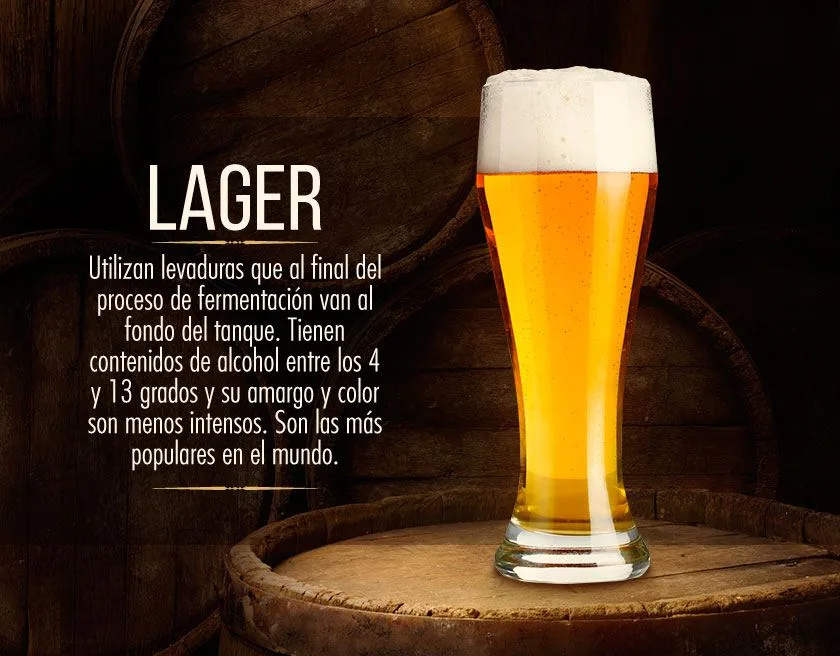
It is also known as blonde beer because of the colour of the most common types of lager, although lager shades can range from toasted amber to black.
In the United States, the Brewers Association, which brings together more than 1,500 beer producers and has more than 34,000 members, has classified the different beer styles found around the world, identifying a total of 67 lager beer styles.
Pale lager is a very pale to golden beer with a well-attenuated body and a bitter note from noble hops. The brewing process for this beer was developed in the mid-19th century, when Gabriel Sedlmayr brought pale ale brewing techniques to the Spaten brewery in Germany and applied them to the existing brewing methods.
This approach was taken up by other brewers, especially Josef Groll, who produced the first pilsner beer in history in Bohemia (now part of the Czech Republic): Pilsner Urquell.
The resulting pale, lean and stable beers were highly successful and gradually spread around the world to become the most widely consumed form of beer today.
Differences in the fermentation process
- Ale beer: it is made with top-fermenting yeast (in reality, it ferments throughout the wort), allowing for fast fermentation at warmer temperatures. Ale beer ferments at temperatures of 15 to 25 degrees C. Ales are matured for shorter periods and at warmer temperatures.
- Lagers: these are made with bottom-fermenting yeast, which ferments more slowly and at lower temperatures. Lager beer is brewed with bottom yeast, so called because it works at the bottom of the vat. Traditionally, bottom yeast ferments at cold temperatures below 10 degrees C. Today, fermentation takes place between 12 and 18 degrees C. This cold or deep fermentation allows the malt and hops to express their fine flavours more clearly.
Differences in flavour
- Ale beer is generally described as “robust, hearty and fruity”.
- Lagers, on the other hand, are characterised as “smooth, elegant, fresh and clean”.