

Where does Vodka come from?
Vodka is believed to be an alcoholic beverage that originated in Russia, although historically many manufacturers and nations have claimed to be the pioneers.
In the late 1970s, several American companies sparked a “lawsuit” over the priority right to use the name “vodka, ” attempting to challenge the hegemony of this drink by the Soviet Union. In this litigation, the United States tried to win the right to use the word by alleging that the production of this drink had occurred within the United States territory long before that in Soviet territory, finally they could not prove it and the case was dismissed.
Poland also seriously tried to appropriate the brand, justifying that the drink had been produced much earlier than in Russia, since Ukraine and Belarus were part of Poland at the time the brew is believed to have been invented.
The case reached International Arbitration: in 1978, a trial began for the primacy of the "vodka" brand.
The Soviet historian William Pokhlebkin took the solution to this problem and showed that vodka is of Russian origin, it was born in the 15th century, one hundred years before Poland, and this was due to the decline and death of the Byzantine Empire in 1453. Since 1982, following the decision of International Arbitration, the USSR won the right to label Vodka as originating from Russia.
Based on the results of his work, Pokhlebkin wrote a very interesting book “A history of Vodka”, in which he discovered many interesting facts and terms related to the origin of the product. He began his research by describing ancient Russian alcoholic beverages such as honey (mead), kvass, and beer.
Drinks before Vodka
The first alcoholic drink of which records are preserved in Russia dates back to the 9th century, it is mead, a drink whose main element was bee honey, which was fermented and left to age. The process of making mead was very long, up to 10 years, and very expensive for most Russians at the time, therefore it was consumed only by the highest nobility.
In the 9th century, grape wine began to spread, which, together with the adoption of Christianity in the 10th century, made this drink very popular as it was used obligatorily in rituals.
In the 12th century, there were other drinks for consumption by the common population: kvass and beer, for the production of which cheaper raw materials were used: rye, oats and additional vegetable raw materials (hops, wormwood, St. John's Wort, cumin).
Wort, like mead, was not boiled on its own, but was boiled with boiling water, which led to a long cooking process, but ensured a high and unique quality of the product. Since then, the word "kvass" has given rise to today's "kvass", meaning being a drunk.
The technology of distillation production in Russia (honey making, yeast and brewing) could not lead to the production of vodka by itself, the technology to produce alcohol was required. In 1386, in Russia, they became familiar with grape alcohol imported from Kafa and, probably, in the process of brewing malt for kvass and beer, accidental distillation of alcohol occurred.
The birth of the origin of vodka
Around the same time, a technology appeared in Russia, “tar smoking”, obtaining tar by dry distillation of pine and birch wood resin, which involved the elimination of tar through the gutters from one tank to another.

These gutters gave rise to the idea of distillation pipes. The manufacture of tar gave rise to the idea of distilling with pipes and cooling, which could not have originated in the production of mead or beer.
In the 15th century, a technology appeared to produce a new product: Bread Alcohol. This product was called Bread Wine, Boiled Wine, Burnt Wine and finally "Vodka", although until almost the end of the 19th century, it was traditionally called "wine".
The recipe for the preparation of vodka included rye wort with the addition of no more than 2-3% wheat, oats, barley or buckwheat grain, yeast, water and aromatic components of various forest herbs (St. John's wort, wormwood, anise, cumin). Hence the older term “bitter drinking”: drinking vodka, infused with bitter herbs.
The most important raw material component of the drink was water, it should have a softness of no more than 4 me / l. The quality of vodka largely depends on its mineral composition. For example, high-quality Stolichnaya could only be produced in Kuibyshev, where natural water, unique in its composition, was used in its preparation.
What is the origin of the word Vodka?
The origin of the term “vodka” is interesting. In its meaning, it is a derivative of the word “water” and comes from the ancient Russian custom of diluting any alcoholic drink with water, generated by the regulations of the Orthodox Church, to dilute grape wine with water according to the Byzantine tradition.
Due to its origin, vodka is a Russian alcoholic drink that is obtained by diluting the alcohol in bread with water.
The word “vodka” in the sense of “alcoholic drink” appears in Russian since about the 16th century, in 1533 in the Novgorod chronicle the word “vodka” was mentioned to denote a medicine, an alcoholic tincture.
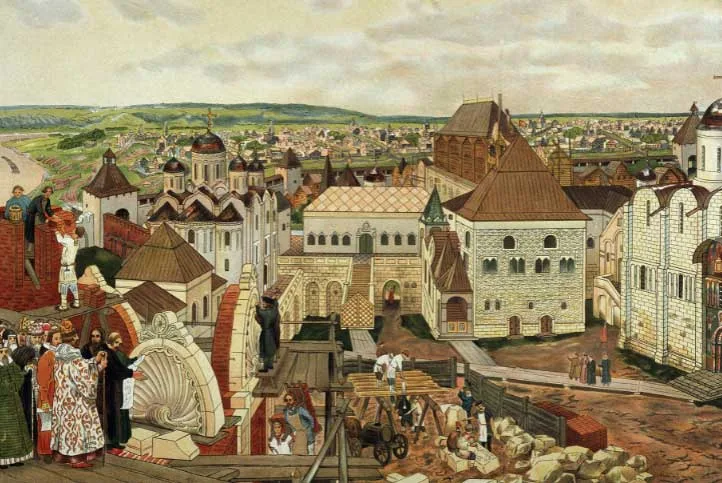
Since the mid-17th century there have been written documents where the word “vodka” is used to describe an alcoholic beverage. Since 1731, the term “vodka” has been widely used to refer to strong pure alcoholic beverages other than grape wines.
At the beginning of the 19th century, the word “vodka” meant exclusively flavored vodkas made according to the noble recipes of the 18th century. During the 19th century, the term “bread wine” was replaced by the term “vodka, ” and since the mid-19th century this term has been gaining its primary meaning in its current understanding and spread in the Russian language.
The production of the drink, due to extremely cheap raw materials and the high cost of the finished product, which exceeded the cost of raw materials tens and hundreds of times, attracted the interest of the state and repeatedly introduced a monopoly and excise taxes on its production.
Since Ivan the Terrible, the tsarist government maintained an incredibly lucrative monopoly on the vodka trade, with no less than a third of the powerful Russian empire's state income coming from the sale of vodka to its own people. Consequently, any temperance movement promoting the health and well-being of the peasantry was quickly stifled, lest the Tsar's income diminish.
The Zemsky Sobor (first Russian parliament) in 1652 introduced another monopoly on wine, the church was officially deprived of the opportunity to engage in distillation, all matters related to the drink were transferred to the "zemstvo huts", and private and illegal distillation was punished with whipping, and in case of a relapse in prison.
In the 18th century, the state abandoned the monopoly on the production of vodka, giving this right to the nobility. The decree of 1786 “On the permitted habitual distillation of nobles” completed the process of decentralization of the production of the drink, which had begun under Peter I.
At the same time, slang words appeared:
- "Petrovskaya vodka" and "vodka", derogatory from "water" - "sivukha" very low quality vodka, grayish in color - "smoke" bad vodka with burning - "Brandokhlyst" poor quality potato vodka, distorted from the word "whip", which is, induce vomiting, - "moonshine" unrefined bread wine, and that after the year 1896, the meaning of bread wine called the illegally produced distillate.
Vodka graduation
The graduation of vodka until the end of the 19th century was not regulated by anything and was very broad. In the 80s-90s of the 19th century, it was customary to call alcoholic beverages vodka, the alcohol content of which varied from 40 ° to 65 °, and liquids containing from 80 to 96 ° alcohol were called alcohols.
Since 1902, the rule has been established that vodka with an ideal ratio of alcohol and water in its composition can be called genuine vodka, that is, vodka containing exactly 40° alcohol.
The Russian scientist Dmitri Mendeleev, a genius of his time, actively participated in solving the problem of alcohol variations present in vodka, insisted on the introduction of the official name “vodka” and sought the ideal proportion of volume and the proportion of the alcohol and water parts.
 Dmitri Ivanovich Mendeleev is known for having discovered the periodic table of elements and for many he is the father of Vodka
It turned out that the physical, biochemical and physiological qualities of the mixtures were what he found significantly different. By mixing different volumes of water and alcohol, Mendeleev calculated the effect of the weight of water and alcohol. A liter of vodka at 40° should weigh exactly 953 g. With a weight of 951 g, the strength in a mixture of water and alcohol will already be 41 °, and with a weight of 954 g 39 °. In both cases, the physiological effect of such a mixture on the body worsens sharply, and both cannot be called Russian vodka.
As a result of Mendeleev's research, Russian vodka began to be considered a product that was bread alcohol diluted by weight with water exactly up to 40°. This composition of the drink was patented in 1894 by the Russian government as the national Russian vodka - "Moscow special".
The capacity of Vodka
The oldest unit of Russian liquid measurements was a bucket. This unit of volume has been common since the 10th century. The bucket had a volume of 12 to 14 liters, and the main alcoholic beverage, mead, was also counted in the buckets at that time.
Starting in 1531, the bucket began to be divided into smaller parts, into 10 stops (one-tenth of a bucket, 1.2 liters) and 100 glasses or glasses (one-hundredth of a bucket).
Since 1621, a "palace bucket" appears, it was also called "Moscow bucket". It was the smallest cube in volume and was equivalent to 12 liters. Everyone accepted it as standard.
In the 18th century, instead of a foot, they tried to introduce a Western European measure - a damask (1.23 l), but it did not take root. Another Russian commercial measure of the drink was a cup: one-sixteenth of a bucket (0.75 l). According to the decree of 1721 of Peter I, the soldier received a mandatory allowance: 2 cups a day of pure wine with a concentration of 15-18°.
For large volumes of vodka, a barrel containing 40 cubes was used, since 1720 it was called forty, and for higher grades there was a barrel with a volume of 5 cubes.
In the 80s of the 19th century, the foot became a 1.2-liter vodka bottle and a 0.6-liter half-bottle, 0, 5 and 1 liter bottles appeared in the late 20s of the 20th century.
From the old Russian measurements, the "quart" bottle was also preserved, which is a quarter of a bucket - 3 liters. Today in certain Russian towns you can still hear how they measure in quarters.
The state's fight against alcoholism
In the 19th century, the state aspired to introduce a complete monopoly on the production and sale of vodka, but, having no outlets in the form of taverns, it was quite difficult to implement it. To prevent speculation on state vodka, the government established a fixed price throughout the empire: 7 rubles per bucket.
The rescue system caused a rampant increase in drunkenness and, at the same time, a deterioration in the quality of the product, and the centuries-old existence of taverns without food aggravated this situation.
In 1881, a decree was adopted to replace alcohol-only taverns with taverns with food, where not only alcohol was sold, but you could also get a snack for vodka, which led to less manifestation of intoxication.
In addition, until 1885, vodka was sold to take away only in buckets, and bottles existed only for wines from foreign grapes, which came from abroad in these bottles.
The transition to the bottle trade of vodka made it possible to limit consumption outside the inn in quantities not as large as in buckets.
In 1902, the state monopoly on the product came into force throughout the country. Attempts to introduce "prohibition" in 1914-1924 and 1985-1987 were unsuccessful, the old traditions of drinking Russian alcoholic beverages (including vodka) took their toll with all the disadvantages, and these laws did not take root.
Vodka and the Russian Revolution
One of the historical causes of the Russian Revolution was the ban by Tsar Nicholas II of the vodka trade in 1914 as a result of the outbreak of the First World War. Virtually all belligerent countries, including Russia, restricted alcohol to preserve food and facilitate movement.
The serious crisis caused by the war and the collapse of income due to giving up its main monetary source was the seed that led to the Russian Revolution. It is for this reason that for many historians, Vodka was the underlying cause of the Bolshevik Revolution.
In addition to demanding sobriety and discipline in the midst of the October Revolution and the subsequent Civil War, Vladimir Lenin was ideologically opposed to building socialism on the livers of the proletariat. "We should not follow the example of capitalist countries and put vodka and other intoxicants on the market, " he argued, "because, no matter how profitable they are, they will lead us back to capitalism and not towards communism."
Curiously, after the Russian Revolution, Lenin tried to implement a dry law in Russia, but his successor, Joseph Stalin, revived the old tsarist monopoly on vodka, renamed with the hammer and sickle. The dynamics of alcohol policy in the Soviet Union were almost identical to those of the conservative empire that preceded it.
William Pokhlebkin, who we talked about at the beginning of the article, hardly consumed alcoholic beverages, but he is responsible for the fame and culture that Russian Vodka has today. He died at the age of 76 in the spring of 2000, murdered in his own apartment in Podolsk, near Moscow. From here our tribute to this great scientist and historian.
Source: Works of the Russian historian William Vasilyevich Pokhlebkin
 William Vasilyevich Pokhlebkin, historian and expert on Russian cuisine and vodka