
Whisky made in England has just taken a decisive step towards establishing itself as a category in its own right. The British Government has granted English Whisky geographical indication status, a protected designation that recognises its origin, defines its identity and creates a framework of assurance for both producers and consumers.
The news comes at a time of strong growth for English whisky, which in just a few years has gone from being a curiosity within the British drinks landscape to one of the most dynamic movements in the spirits sector. The recognition is not merely symbolic: it may also shape international reputation, protect the name against misuse and strengthen confidence among drinkers looking for whiskies with a clear provenance.
What a geographical indication means for English whisky
A geographical indication identifies products whose quality, reputation or characteristics are linked to a specific place. In spirits, this kind of protection is especially relevant because it helps bring order to categories, safeguard production traditions and prevent recognised names from being used in ways that could cause confusion.
In practice, protected status means that producers wishing to market their spirits under the English Whisky designation must meet certain requirements and be verified under the UK system applicable to spirit drinks. This adds an extra layer of control, similar in spirit to what already exists for other whiskies with official recognition.
English whisky therefore joins a map that already includes well-established categories such as Scotch Whisky, Irish Whiskey and Welsh whisky. The comparison is inevitable, although England’s challenge is not to imitate outside models, but to defend a voice of its own within an increasingly diverse family of spirits.
A young, diverse and expanding scene
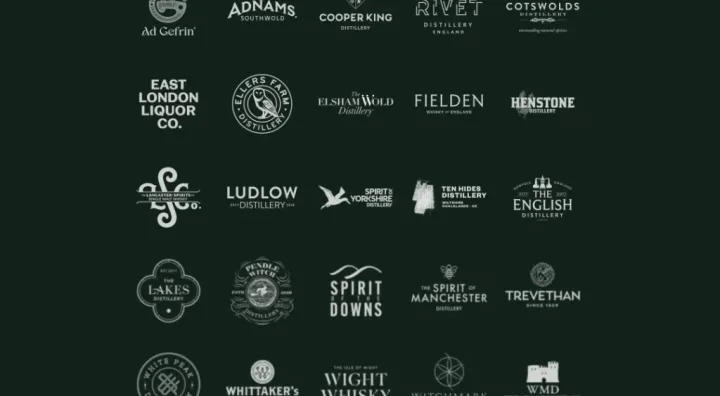
The English category has developed rapidly thanks to a new generation of distilleries spread across different counties, from the Atlantic south to the north of the country. The industry source behind the news notes that there are now more than 70 distilleries producing English whisky and that their bottles reach more than 30 countries, figures that help explain the scale the movement has achieved.
Unlike Scotland, where the classic whisky regions have a deeply rooted historical identity, England offers a more fragmented and experimental landscape. Some producers work with local barley, while others explore different yeast strains, longer fermentation approaches or maturation in unconventional casks. That creative freedom has been one of the keys to its appeal.
The gastronomic and agricultural context also plays a part. Many English distilleries maintain close ties with nearby farmers, regional maltsters and rural communities. In a global market where consumers place increasing value on origin and traceability, that sense of local connection can become a genuine competitive advantage.
From grain to cask: an identity still taking shape
Speaking of English whisky does not mean referring to a single organoleptic profile. The category covers a wide range of styles: single malt, grain whiskies, peated expressions, lighter spirits and versions with a marked wine influence depending on the cask used. The relative youth of the sector has encouraged a more open attitude towards experimentation.
Maturation is, precisely, one of the most interesting elements. The English climate, with notable differences between coastal areas, inland zones and northern regions, can influence the pace of ageing and the interaction between the spirit and the wood. Casks that previously held bourbon, sherry, red wine, port or other fortified wines often feature in the conversation around contemporary whiskies, although each distillery defines its own path.
This setting encourages a less rigid reading of whisky. Compared with highly codified categories, English whisky is still seen as a territory in the making, where consumers can find classic-style bottles alongside more adventurous releases. The geographical indication should not hold back that diversity, but rather provide a shared framework that protects origin without stifling innovation.
Why it matters beyond the United Kingdom
The recognition could have a particular impact on international markets. For importers, distributors, specialist retailers and enthusiasts, a protected designation makes the product easier to identify and reduces ambiguity. On shelves that are becoming ever broader, knowing that a whisky is tied to an origin and to verifiable rules helps position it more clearly.
It may also strengthen the positioning of English whisky against other emerging geographies in world whisky. Countries such as France, Sweden, Germany, Australia, Japan, India and Taiwan have shown that prestige no longer belongs solely to traditional regions. Knowledgeable consumers now readily accept that quality can emerge from very different places, provided there is technical rigour, good raw materials and a coherent project behind it.
England enters that conversation with an added advantage: it is part of a highly recognisable British whisky culture, while still having enough room to set itself apart. The challenge will be to communicate what makes the category distinctive without relying solely on the broader umbrella of British whisky.
A boost for producers and local communities
The protection follows a joint effort led by the English Whisky Guild, an organisation that has brought distilleries together with the aim of securing formal recognition for the category. Beyond regulating the use of the name, the measure could help attract investment, consolidate skilled jobs and strengthen distillery-related tourism.
Whisky tourism, traditionally associated with Scotland and Ireland, has clear room for growth in England. Distillery visits, tastings, food-led experiences and routes through rural areas could all benefit from a clearer collective identity. For many local communities, a distillery is not only a place of production: it can also serve as a showcase for the surrounding area.
The granting of the geographical indication does not automatically make every English whisky essential, but it does mark a before and after.
From now on, English Whisky has a legal and reputational tool to defend its provenance. What distilleries do with that opportunity will determine the true scope of this new chapter.