
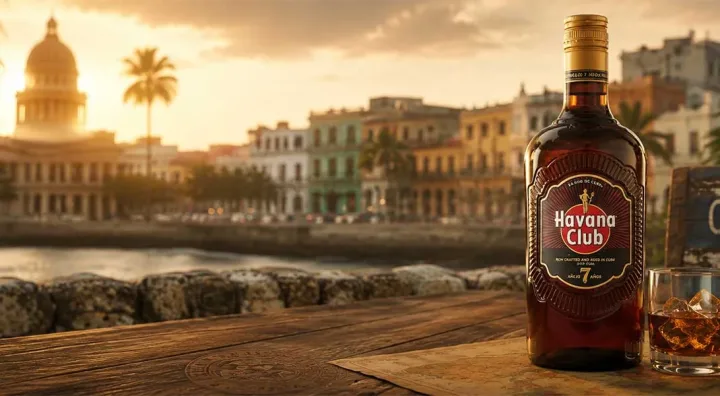
Havana Club has introduced a new look for its Añejo 7 Años, one of the most recognisable expressions in contemporary Cuban rum. The update affects the bottle’s exterior design, not the liquid, and aims to make the connection between the brand, the city of Havana and the tradition of the Maestros del Ron Cubano even clearer.
The refresh comes at a time when many historic spirits houses are rethinking their packaging to tell their origin story more effectively. In Havana Club’s case, the redesign draws on visual elements associated with the Cuban capital: Caribbean light, colonial architecture, the Malecón and an urban culture where rum is part of the social and gastronomic landscape.
A bottle designed to speak of Havana
The new design of Havana Club Añejo 7 Años incorporates graphic details and finishes intended to strengthen the link with its birthplace. Highlights include sun-inspired motifs, embossed details, golden finishes and an elongated label shape that evokes the world of Cuban tobacco, another of the island’s major cultural symbols.
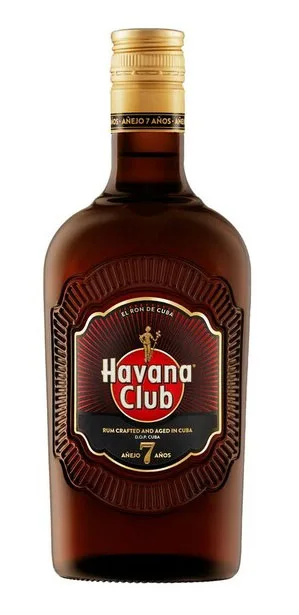 Beyond its visual appeal, the bottle gives greater prominence to the rum’s Cuban provenance. The D.O.P. Cuba mention and the Añejo 7 Años age statement now stand out more clearly across the packaging, a decision in line with the growing importance consumers place on origin, traceability and production methods.
In the world of rum, these mentions are not merely decorative. For years, the category has operated under very different criteria depending on the producing country, so indications of provenance and ageing help place each style in better context. In the Cuban case, the profile is generally associated with rums made from molasses, distilled with lightness in mind, aged in cask and blended to achieve balance, finesse and continuity.
The role of Añejo 7 Años in Cuban rum
Havana Club Añejo 7 Años has held a prominent place within the brand’s range for decades. It was conceived as an aged rum with enough structure to be enjoyed neat, yet with the versatility required for high-quality cocktails. That dual appeal explains part of its popularity: it works both as a slower sipping serve and in mixed drinks where more depth is desired than a white or young rum can provide.
The brand links this expression to the work of Don José Navarro, a key figure in the modern evolution of Cuban rum and in the consolidation of the ageing and blending methods that have shaped the style’s identity. In rums of this kind, maturation should not be understood simply as waiting in a barrel. The tropical climate accelerates the interaction between wood and spirit, while the hand of the master rum maker is decisive in selecting, marrying and maintaining a consistent profile over time.
The seven-year indication means that the youngest component in the blend has reached that minimum age, an important point for understanding the product’s structure. In the glass, aged rums of this profile often move through notes of vanilla, cocoa, ripe fruit, sweet spices, nuts and polished wood, although the final balance always depends on the house style and the selection of casks.
A category paying ever closer attention to design
The new image of Havana Club Añejo 7 Años also reflects a wider trend in the spirits industry: packaging has become a storytelling tool. It is no longer enough to protect the liquid or identify the brand; the bottle has to communicate provenance, perceived quality, tradition and drinking occasions within seconds.
In categories such as whisky, tequila and premium rum, redesigns often aim to update visual codes without breaking the consumer’s memory of the product. It is a delicate balance. If the image changes too much, it can lose recognition on the shelf; if it changes too little, it risks looking static in a highly competitive market. Havana Club appears to be taking a middle path: preserving the recognisable identity of its Añejo 7 Años while enriching it with more explicit references to Cuba.
This move also responds to the evolution of the rum audience. For years, the category was closely tied to simple mixed serves. Today, several ways of enjoying rum coexist: classic cocktails, long drinks, tasting in a glass and food pairings. An accessible aged rum with a clear identity can take part in all of these settings.
How to enjoy a Cuban-style aged rum
Havana Club Añejo 7 Años can be served neat, over one large ice cube or in cocktails where its ageing brings added complexity. In mixology, it works particularly well in recipes that welcome medium-bodied rums with spiced notes, such as a deeper take on the Cuba Libre, a rum Old Fashioned or Caribbean-inspired drinks with citrus and bitters.
To appreciate it more slowly, it is best to use a glass that concentrates aromas without closing them in too tightly and to pour a moderate measure. A brief rest in the glass helps bring out nuances of wood, caramel, dried fruit or spice. For pairings, aged rums often work well with dark chocolate, coffee-based desserts, nuts, mild aged cheeses and, for those who enjoy the classic after-dinner ritual, a good cigar.
A redesign with cultural meaning
The update to Havana Club Añejo 7 Años is not intended to present a new rum, but to renew the way one of the house’s emblems is communicated. Havana, with its architecture, music, coastline and blend of tradition and vitality, becomes the visual axis of the bottle.
For consumers, the change may help make it clearer what lies behind this expression: an aged Cuban rum, tied to a specific school of production and designed for different drinking occasions. In a market where rum is increasingly seeking recognition as a spirit of origin, not just a mixing base, reinforcing that identity is as important as preserving the consistency of the liquid.