

For years, the term “white rum” has been a convenient shortcut on cocktail menus, shop shelves and home recipes. It sounds like a simple category: a clear, light rum made for mixing. Yet that apparent simplicity hides an important issue for anyone who wants to understand what they are drinking, or make a good daiquiri, mojito or tiki cocktail with real intent.
Colour alone says very little about a rum’s origin, raw material, distillation or aromatic profile. Two clear bottles may have very little in common: one may have spent time in cask and then been filtered; another may be made from fresh cane juice; a third may be a blend of rums from several countries; and another may be a young molasses distillate with an intense, almost wild character. They may all appear on the shelf under the same commercial umbrella, but they are not interchangeable.
Colour does not define a rum’s character
In the world of whisky, it would feel odd to group bourbon, rye, Scotch single malt, Irish whiskey and Japanese whisky together simply as “brown spirits”. Each one reflects different traditions, regulations and sensory profiles. Something similar happens with rum, even if the market has taken longer to organise its language.
Rum is a broad family of sugarcane spirits. Within it, there are styles shaped by territories, raw materials and production methods: rums in the Cuban or Puerto Rican tradition, Jamaican rums, Guyana rums, rhum agricole from the French Antilles, Latin American cane spirits, and contemporary blends designed for cocktail making. Reducing all that diversity to “white” or “dark” impoverishes the category and can lead to poor choices.
Aged and filtered rums: clarity with time in cask
One of the most common groups among clear rums is molasses-based rum that has spent time in cask and is then filtered to remove much of the colour gained during maturation. At first glance, these rums may seem young or neutral, but ageing can bring notes of vanilla, coconut, gentle spice, light oak or ripe fruit, depending on origin and house style.
This type of rum is essential to understanding classic Caribbean cocktail culture. The daiquiri and the mojito, both associated with the Cuban tradition, find a natural ally in these rums: they add structure without overpowering the drink, preserve freshness and allow lime, mint or sugar to show in balance.
It is also worth remembering that in some rum-making traditions ageing is not unusual, but a requirement or a deeply established practice. So, just because a rum is clear does not necessarily mean it has never touched wood.
Blends from several origins: a modern tool for the bartender
Another increasingly visible group is made up of blends of rums from different countries or islands. These bottlings often combine complementary profiles: lighter rums with others of more pronounced character, sometimes including Jamaican, Barbadian, Trinidadian or other Caribbean and Latin American components.
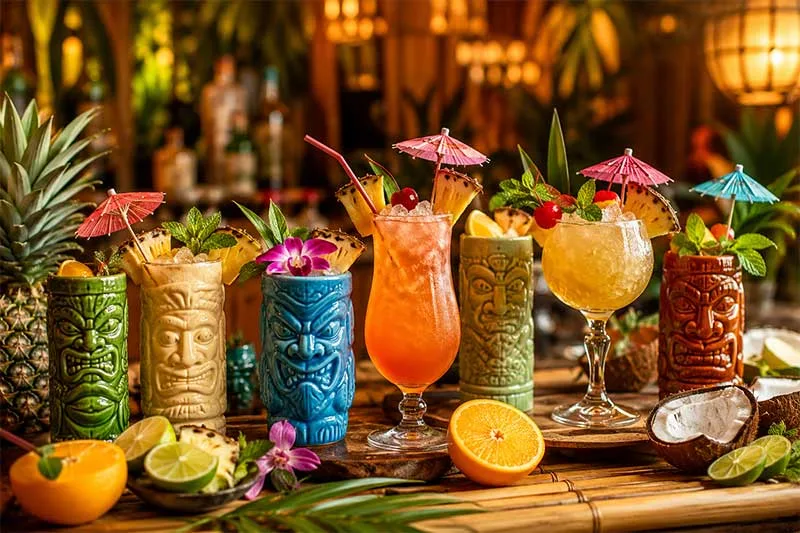
Their appeal lies in their versatility. They can work very well in cocktails where a broader aromatic range is desired than a light Spanish-style rum can offer. In a daiquiri, for example, they can bring tropical fruit, a touch of spice or a more pronounced intensity. In tiki cocktails, where rum blends have historically been used to build layers of flavour, this type of bottling fits naturally.
However, they should not be confused with aged and filtered rums from a single origin. Although both may be clear and suitable for mixing, their intention is different. One usually reflects the style of a distillery or country; the other aims for an aromatic structure built through blending.
Cane juice spirits: vegetal freshness and personality
A third family within transparent rums is made from fresh sugarcane juice rather than molasses. This includes many rhums agricoles, as well as other cane distillates produced in different regions. Their profile can surprise anyone expecting a light, neutral rum: depending on origin and distillation, they often show herbal, vegetal, floral, citrus, earthy and even saline notes.
These rums express the raw material directly and, in many cases, the place they come from. The cane has to be processed quickly after harvesting, tying production to the agricultural calendar and to the proximity between field and distillery. In cocktails, they shine in simple serves that respect their character, such as a ti’ punch or drier, more aromatic takes on lime-based drinks.
Simply replacing an aged and filtered rum with a sugarcane juice distillate can completely change the outcome of a recipe. It is not a question of quality, but of style.
Young molasses rums: intensity without ageing
There are also transparent rums made from molasses that have not spent time in cask, or have only rested briefly before bottling. Within this group, diversity is enormous. Some are light and straightforward; others, especially certain high-intensity Jamaican rums, deliver powerful aromas of ripe fruit, pronounced fermentation and highly expressive notes.
In many producing countries, these rums are part of local consumption and may be found under different traditional names or uses. For European enthusiasts, some can be striking for their aromatic energy and for the way they transform a cocktail with only a very small measure.
How to choose a transparent rum more wisely
Rather than asking whether a rum is white, it is better to look at what the label tells you and how you intend to use it. A few clues can help you find your way:
- Raw material: if it mentions cane juice, fresh cane or agricole, it will probably have a more vegetal and expressive profile.
- Ageing: terms such as aged, matured or filtered suggest time in cask, even if the rum is transparent.
- Origin: a single country or a specific distillery usually points to a more defined style; several origins indicate a designed blend.
- Intended use: for a mojito or classic daiquiri, a light aged and filtered rum is usually a coherent choice; for tiki or more intense cocktails, a multi-origin blend can add greater depth.
A more precise vocabulary for better drinking
The expression “white rum” will probably continue to be used for convenience. It is short, recognisable and commercially useful. But curious consumers, bartenders and enthusiasts can go one step further. Talking about aged and filtered rums, blends from several origins, sugarcane juice distillates or young molasses rums makes it possible to choose more precisely and enjoy the category more fully.
Rum is enjoying a moment of growing interest, with more information available and a new generation of drinkers who want to know what lies behind each bottle. In that context, looking beyond colour is a simple way to discover one of the most diverse spirits families in the world.