Anise is a spirit flavoured with green anise, star anise or fennel, with an alcohol content of at least 35% ABV. In Spain, it is distinguished primarily by its sugar content. Dry anise is around 40–50% ABV, sweet anise is about 35%, and Chinchón Seco Especial reaches 74%. Classic brands include La Castellana, Anís del Mono, Tenis, Chinchón and Cazalla.
You notice it most in December: it is the after-dinner drink, a staple of Christmas baking and the bottle that ends up making music alongside the carols. Here’s how the different types compare, which brands are available in our anise and liqueurs section, and how to enjoy each one.
| Type | Typical ABV | Sugar | How to drink it | At Licorea |
|---|---|---|---|---|
| Extra dry | 70–74% (Chinchón) | Up to 10 g/l | Neat, in a small glass | See Chinchón Seco Especial 74° |
| Very dry | 50–55% (Chinchón) | Low | Neat or with water | — |
| Dry | 40–50% | Low | Neat, over ice, as a palomita, or in coffee | Tenis, Salas, Cazalla, Chinchón Seco |
| Sweet | 35–40% | More than 200 g/l (Chinchón) | Neat, over ice, or in baking | La Castellana, Anís del Mono, Chinchón Dulce |
| Anise cream | Around 17% | Very high | Chilled, as an after-dinner liqueur | Crema de Anís del Mono |
The ranges for dry special, very dry, dry and sweet are the official classifications for Chinchón anise. Each brand has its own.
What is anise?
European spirits regulations (Regulation (EU) 2019/787) distinguish several anise-flavoured categories:
- Anise: a spirit flavoured with green anise, star anise or fennel, containing at least 35% ABV and using only natural flavourings.
- Distilled anise: at least 20% of its alcohol comes from distilling alcohol together with the seeds. This is the traditional method used for quality Spanish anise.
- Anise-flavoured spirit drink: the minimum is 15% ABV, so this category includes milder products that cannot be called “anise”.
That’s why an anisette such as Marie Brizard, at 25% ABV, is an anise-flavoured liqueur rather than anise in the strict sense.
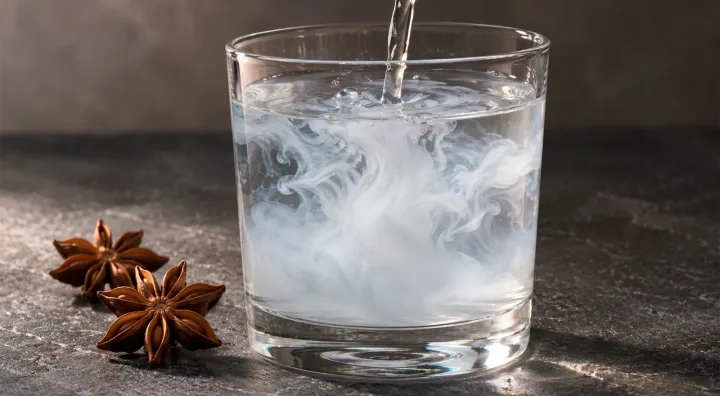
The flavour comes from anethole, the essential oil in anise. It dissolves in alcohol but not in water. That’s why adding water or ice to dry anise turns the drink milky and cloudy: it’s a sign that it contains real anise oil.
Dry, very dry, sweet and cream anise
There is currently no general Spanish regulation setting the sugar content for dry or sweet anise. The former rules were repealed, and European regulations set no sugar limits for anise. The best reference is the official specification for Chinchón anise, which does define them:
- Dry special: 70–74% ABV and no more than 10 g/l of sugar. It is the strongest you’ll find and is served in small measures.
- Very dry: 50–55% ABV.
- Dry: 40–50% ABV. This is the everyday anise: for coffee, for a palomita, for winter afternoons.
- Sweet: 35–40% ABV and more than 200 g/l of sugar. Smoother and easier to drink, it is also the most widely used in baking.
Anise cream is something different. It is a low-strength liqueur (Anís del Mono’s version is 17% ABV), sweet and rich in texture, served chilled as an after-dinner drink. To be called “cream”, European regulations require at least 250 g/l of sugar.
The best anise brands
These are the anise brands in our range that are searched for most often on Google, with the ABV of each bottle. Indicative prices as of 16 November 2026.
| Brand | Type | ABV | Size | Price |
|---|---|---|---|---|
| Anís La Castellana Dulce | Sweet | 35% | 70 cl | around €9.90 |
| Anís del Mono Dulce | Sweet | 35% | 70 cl | around €9.96 |
| Anís Tenis Seco | Dry | 48% | 1 l | around €13.95 |
| Anís Chinchón Seco | Dry | 43% | 1 l | around €13.60 |
| Anís Chinchón Dulce | Sweet | 35% | 1 l | around €11.75 |
| Anís Salas Flor de Anís Seco | Dry | 48% | 1 l | around €15.80 |
| Super Anís Orán | Dry | 45% | 1 l | around €15.55 |
| Cazalla Porthos | Dry | 47% | 1 l | around €12.95 |
La Castellana
One of the anise brands most frequently searched for on Google, La Castellana is a smooth, easy-drinking sweet anise spirit at 35% ABV. It’s the familiar bottle found at grandparents’ homes, brought out to accompany Christmas treats. If you’re looking for an anise spirit to serve after a family meal or use in cooking, it’s a reliable choice.
Anís del Mono
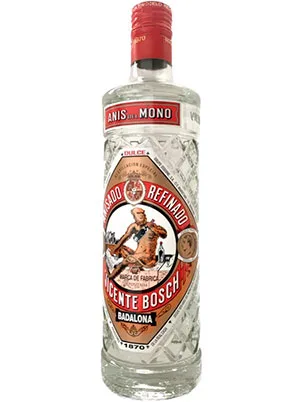
On sale since 1870, Anís del Mono was born in Badalona at the factory founded by the Bosch brothers. Its sweet version is 35% ABV and is another great Spanish Christmas classic, thanks in part to its textured bottle, which can be played as a musical instrument. Anís del Mono cream is also available; it’s smoother and best served chilled.
Anís Tenis
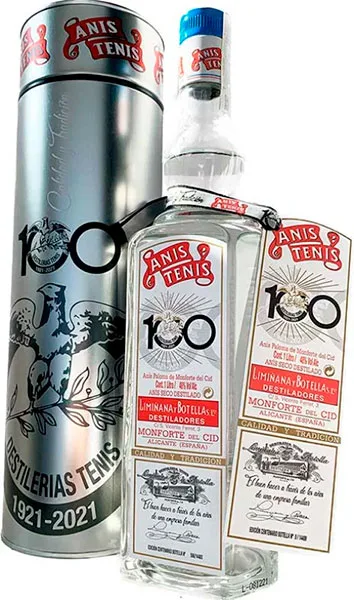
A dry anise spirit at 48% ABV from Destilerías Tenis in Monforte del Cid (Alicante). Intense and clean, it’s ideal over ice or added to coffee. It’s also available in a 10 cl mini bottle, a great way to try it, and as a 100th Anniversary edition that makes a thoughtful gift. It’s one of the favourite brands among “Cazalla” drinkers.
Chinchón
This is the only anise spirit with a geographical indication in the Community of Madrid, and it can only be made within the municipality of Chinchón. It is produced by distilling green anise with alcohol of agricultural origin. In 2025, just over 585,000 litres were produced there, all by a single distillery. We stock Chinchón Seco (43% ABV) and Dulce (35% ABV). Read about the 74% ABV Seco Especial in this article.
Salas and Super Anís Orán
Two Alicante dry anises with plenty of character. Salas Flor de Anís is 48% ABV, while Super Anís Orán is 45%. Both are made by Destilerías Monforte del Cid. These are anises for drinkers who already enjoy the dry style and want something more full-bodied than supermarket brands.
Cazalla
“Cazalla”, or “cassalla” in the Valencian Community, is the popular name for a strong, dry anise. It takes its name from the Seville town of Cazalla de la Sierra. Today, it is neither a designation of origin nor a geographical indication, but a style. Cazalla Porthos is 47% ABV and is also available in a 2-litre format.
Anise with a geographical indication: Chinchón and Monforte del Cid
According to the Spanish Ministry of Agriculture’s 2025 report, Spain currently has two geographical indications for anise-flavoured drinks:
- Chinchón (Madrid): available as special dry, extra dry, dry and sweet.
- Anís Paloma Monforte del Cid (Alicante): Monforte del Cid is a town with a long tradition of anise distilling.
Other familiar names, such as cazalla, Ojén and Rute, are not currently listed as geographical indications; they refer to styles or local traditions.
How to drink anise
- Neat: serve in a small glass, at room temperature if sweet and well chilled if dry.
- Over ice: dry anise turns cloudy straight away. This is the most refreshing way to enjoy it.
- Palomita: dry anise topped up with cold water, in whatever proportion you prefer. A lighter version to sip slowly.
- Sol y sombra: equal parts anise and brandy. A longstanding Spanish bar classic.
- In coffee: add a splash of dry anise to a black coffee.
- In cooking: sweet anise adds fragrance to rosquillas, pestiños, buñuelos and mantecados. It also pairs well with turrón and Christmas sweets after a meal.
Anise at Christmas: the Anís del Mono bottle
The Anís del Mono bottle has a patterned, embossed surface, which turned it into a Christmas carol instrument: scrape it with a spoon and it sounds like a ratchet. This is noted by the Autonomous University of Madrid in its December 2024 feature of the month. Few liqueur bottles have become part of a musical tradition, but this is one of them.
If the bottle comes out more for singing than drinking in your home, the 70 cl sweet anise is the one to choose. For a toast, there’s the 1-litre dry version.
Anise, pastis, ouzo, sambuca and raki: what’s the difference?
Across the Mediterranean, people drink anise in their own way:
| Drink | Country | What sets it apart |
|---|---|---|
| Anise | Spain | Dry or sweet; minimum 35% ABV. |
| Pastis | France | Minimum 40% ABV, contains liquorice and less than 100 g/l of sugar. Example: Pastis Ricard |
| Ouzo | Greece | The quintessential Greek aperitif. Example: Ouzo 12. Find out more in our article about ouzo |
| Sambuca | Italy | Sweet anise-flavoured liqueur. Example: Sambuca Extra Molinari (40% ABV) |
| Raki | Turkey | Grape spirit flavoured with anise. Discover raki, the king of Turkish drinks |
| Anisette | France | A lower-strength sweet anise liqueur. Example: Marie Brizard (25% ABV) |
If you’re looking for the “Greek anise liqueur” in a crossword, the answer is ouzo.
Frequently asked questions
What is the difference between dry and sweet anise liqueur?
Sugar content—and, with it, alcohol strength. Dry anise liqueur contains little sugar and is usually between 40% and 50% ABV. Sweet anise liqueur contains considerably more sugar (in Chinchón, over 200 g/l) and is around 35% ABV.
What is Anís Paloma?
It is the dry anise liqueur from Monforte del Cid (Alicante), protected by the geographical indication “Anís Paloma Monforte del Cid”. It is made by distilling green anise and star anise in copper stills, has an alcohol content of 40% to 55% ABV and contains no more than 50 g/l of sugar. Its name comes from the white cloud it forms when mixed with water: locals also call it nuvolet or palometa, and drink it with water, ice or lemon. In Alicante, “La Paloma” or “Palometa” is famously made with Anís Tenis and Anís Salas.
What is the alcohol content of anise liqueur?
To be classified as anise liqueur, it must have an alcohol content of at least 35% ABV. Sweet varieties are usually 35% ABV, dry ones range from 40% to 50%, and Chinchón Seco Especial reaches 74%.
What is Chinchón?
It is an anise liqueur with a geographical indication from Chinchón (Madrid), made by distilling green anise with agricultural alcohol. It comes in four styles: seco especial, extra seco, seco and dulce.
Is cazalla an anise liqueur?
Yes. It is the popular name for a strong, dry anise liqueur. It is not a designation of origin or a geographical indication.
What is anise cream liqueur?
A very sweet, low-strength anise liqueur, at around 17% ABV. It is served chilled as an after-dinner liqueur. Legally, it is not classified as anise liqueur because it does not reach 35% ABV.
How do you play the Anís del Mono bottle?
Hold the bottle and scrape its ridged surface with a spoon in time with the Christmas carol. It makes a sound like a ratchet.