
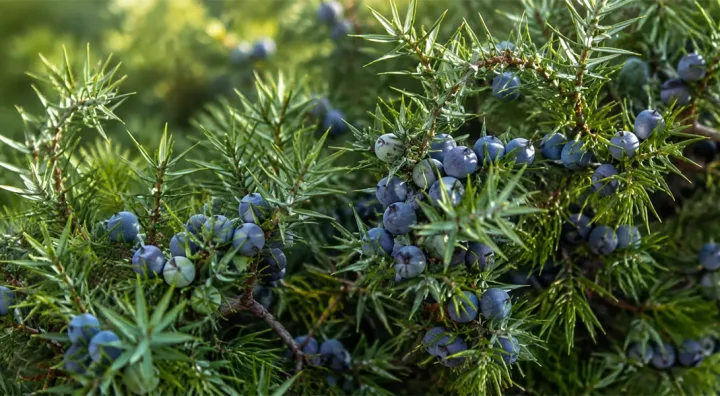
To talk about gin is to talk about juniper. Recipes may be lavish, botanicals exotic, citrus peels sourced from half a dozen places or flowers selected with great care, but if juniper does not define the aromatic core, the spirit loses its identity. In an increasingly creative market, it is worth returning to a basic idea: gin is not simply a neutral alcohol with flavouring added, but a sensory construction in which every ingredient has a role to play.
The rise of cocktail culture, signature gin and tonics and small distilleries has multiplied the styles available. There are dry, floral, spiced, Mediterranean, citrus-led and barrel-aged gins. Yet behind all of them lies a shared architecture: a neutral alcohol base, a selection of botanicals and an extraction method that determines how aromas are carried into the distillate.
Juniper, the starting point of every gin
The fruit of the common juniper, known botanically as Juniperus communis, is the ingredient that gives gin its recognisable character. Its berries bring resinous, balsamic, green and lightly spiced notes. That sensation reminiscent of pine, scrubland or fresh wood comes from a complex combination of natural aromatic compounds present in the plant.
Among them are molecules associated with resinous, herbal, citrus or woody profiles. In practical terms, the drinker perceives juniper as dry freshness, as a backbone that brings order to the whole. A good gin does not need juniper to be aggressive, but it does need it to be clearly present. When it disappears beneath an excessive layer of sweetness, perfume or flavourings, the balance suffers.
Juniper also has historical importance. Long before becoming the protagonist of modern gin, it was used in medicinal preparations and macerated drinks. The evolution towards today’s gin, especially in styles such as London Dry Gin, consolidated its role as a defining element rather than a simple aromatic complement.
Botanicals that do not compete, but build
The complexity of a gin rarely comes from a single ingredient. The merit of a well-designed recipe lies in making juniper interact with other botanicals without losing its leading role. Some bring brightness, others depth, aromatic texture or persistence.
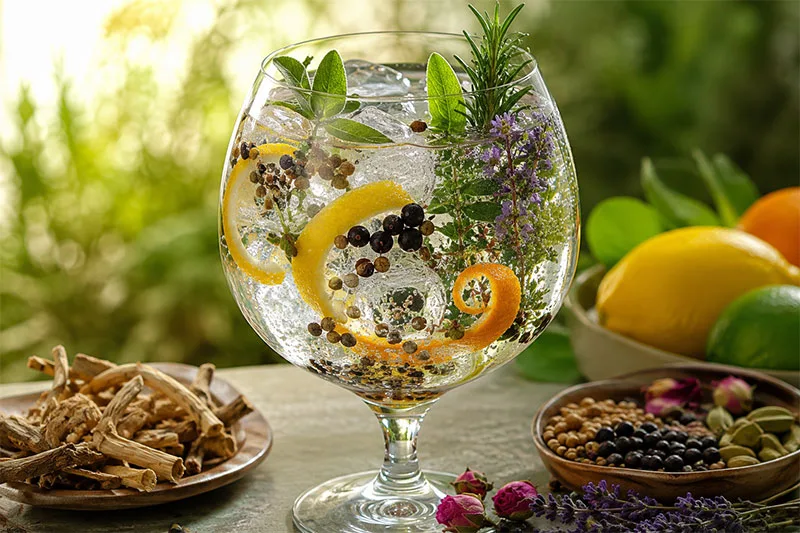
- Coriander seed: one of juniper’s classic allies. It adds citrus, spicy and lightly floral nuances. In many recipes it acts as a bridge between the resinous side of juniper and the freshness of citrus peels.
- Angelica root: offers earthy, dry and faintly musky notes. Beyond its aroma, it is valued for its ability to give structure and a sense of continuity to the whole.
- Orris root: usually used in small quantities. Its aromatic contribution is subtle, but it helps fix delicate fragrances and keep the blend cohesive.
- Citrus peels: lemon, bitter orange, lime or grapefruit are common in many formulations. They introduce a fresh, bright first impression, highly prized in both dry gins and more contemporary styles.
- Spices, flowers and herbs: cardamom, liquorice, lavender, rosemary, thyme, cinnamon or pepper can add layers of personality, provided they are dosed with precision.
Balance is essential. An overly dominant botanical can turn gin into a one-dimensional product. By contrast, a finely tuned recipe allows each layer to appear at the right moment: first the volatile, fresh aromas, then the herbal or spiced side, and finally a dry, persistent sensation.
Distillation: where the recipe becomes character
The choice of botanicals is only one part of the process. How those ingredients come into contact with the alcohol is decisive. Two gins with a similar list of botanicals can deliver very different profiles depending on the method used, maceration times, the type of still, or the cuts made during distillation.
In traditional methods associated with dry-style gins, the botanicals are usually macerated in neutral alcohol before distillation. This technique extracts essential oils and aromatic compounds with greater intensity, producing spirits that feel more integrated, fuller-bodied and deeper on the palate. The result can be especially well suited to classic cocktails such as the Martini or the Negroni, where the gin needs to hold its own against other powerful ingredients.
Another option is vapour infusion. In this case, the botanicals are not always immersed directly in the alcohol; instead, they are placed in a basket inside the still. Alcohol vapour passes through the blend, carrying more delicate compounds with it. The profile is usually cleaner, lighter and more perfumed, with an airy sensation that can work very well in long mixed drinks.
There are also gins made by adding extracts or essences to an alcoholic base. This approach can produce acceptable results when handled with care, although it is generally associated with less aromatic integration than distilling the botanicals together. The difference is most noticeable in persistence, harmony and the way the spirit evolves in the glass.
How to recognise a well-balanced gin
Beyond eye-catching labels or surprising ingredient lists, a quality gin should show coherence. On the nose, juniper should be identifiable, accompanied by notes that broaden the aromatic range without covering it up. On the palate, the alcohol should be well integrated, with a clean texture and a dry or balanced finish, depending on the style.
Persistence also offers clues. A well-constructed gin leaves an orderly impression: initial freshness, aromatic development and a clearly defined finish. If all that remains is an alcoholic sensation, artificial sweetness or a flat perfume, integration is probably lacking. By contrast, when resinous, citrus, herbal and spicy notes follow one another naturally, the recipe shows precision.
Serving and cocktails: respecting the gin’s profile
Choosing the right gin influences how it should be served. More classic styles, with prominent juniper and a dry finish, work well with neutral tonics and lemon peel, as well as in cocktails where structure is needed. More citrus-led gins can take fresh garnishes, but it is best to avoid excessive decoration that masks the spirit. Floral or herbal gins may benefit from a gentle tonic and minimal garnish, such as an aromatic leaf or a discreet twist.
In cocktails, juniper remains the compass. A Dry Martini demands clarity and aromatic tension. A Negroni benefits from a gin with enough body to stand alongside the vermouth and bitter. In a gin and tonic, the bubbles and carbonation amplify aromas, making any imbalance more obvious.
Gin’s identity lies in its balance
Modern gin allows enormous creative freedom, but that freedom works best when it starts from a clear foundation. Juniper is not just another ingredient: it is the centre around which everything else is organised. Coriander, angelica, orris, citrus, spices or flowers can enrich the whole, but their role should not be to erase the resinous signature that defines the category.
Understanding this architecture helps you choose better, serve with greater judgement and enjoy gin with a more complete perspective. Behind a balanced glass there is not only an appealing recipe, but also technical decisions that turn a collection of botanicals into a spirit with a clear identity.