
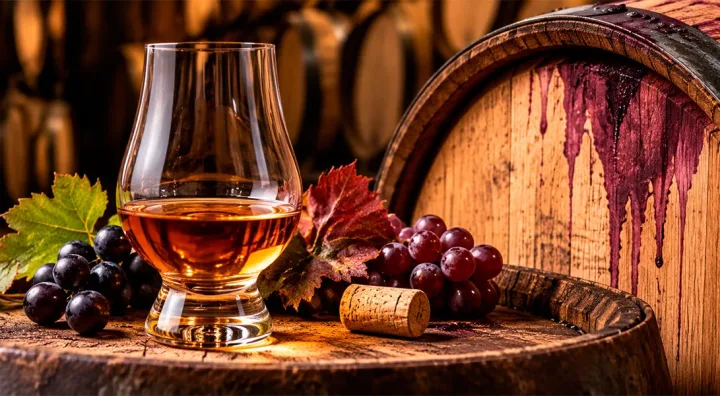
Whisky finished in a wine cask can offer a very different profile from a bottling matured solely in traditional wood. During finishing, the spirit comes into contact with a cask that previously held another liquid, picking up some of its nuances. The result depends on the wine, the condition of the wood and how those influences combine with the whisky’s original character.
If you’re new to this category, knowing the style of wine the cask held can be a useful clue, though it’s no guarantee of flavour.
Two whiskies finished in sherry casks, for instance, can differ because of the spirit used and the choices made during production. It’s best to treat these references as a guide when choosing, rather than an exact description of what to expect in the glass.
Sherry: from delicate dryness to intense fruit
Sherry holds a prominent place among the wines used to finish whisky. It comes from the area around Jerez in Andalusia and is made in a wide range of styles. This variety means the cask’s influence can range from dry, subtle notes to sweet, rich and concentrated flavours.
Casks associated with styles such as Fino or Manzanilla can suggest a lighter profile, with hints of nuts and a saline impression. Amontillado often brings to mind nuts, spices and dried fruit. Oloroso is linked with richer, more rounded sensations, such as walnut, toffee and sweet spices. Finishes associated with Pedro Ximénez can lean towards raisins, figs and dark chocolate.
The word “sherry” on a label isn’t enough to predict the result. When the information is available, knowing the specific style can help set expectations. It’s also worth remembering that finishing complements the whisky; it doesn’t automatically turn every spirit into a sweet or similar-tasting version.
Port and Madeira: fruit, warmth and balance
Port, made in Portugal’s Douro Valley, retains its sweetness because grape spirit is added during fermentation. In a cask that previously held Ruby Port, whisky may take on a fruitier character, with hints of cherry, plum or blackberry. The Tawny style, associated with more oxidative ageing in wood, may bring notes of nuts, caramel and cocoa.
Madeira offers a different profile. This wine from the Portuguese islands undergoes a heating process that is part of its identity. In whisky finishes, it can add notes of toasted nuts, toffee and citrus peel. Its characteristic acidity may help keep the sweetness from feeling flat, although the final balance depends on the whisky as a whole.
Other fortified and aromatised wines
Sicilian Marsala can steer the profile towards luscious fruit and caramel. Sweet vermouth casks are also used in experiments, potentially adding red fruit, herbs, spices and bitter orange notes. These options may be less familiar to many drinkers, but they show that finishing goes beyond the best-known styles.
In this group, the wine previously held in the cask can leave both an aromatic and a flavourful imprint. Herbs and spices, for example, can change how the whisky is perceived without necessarily masking its cereal or woody notes. That’s why it’s worth taking your time and noticing how the glass develops as it breathes.
Still wines: structure and a different range of nuances
Red wine casks are also used to finish whisky. Cabernet Sauvignon, Merlot or Zinfandel can be associated with firmer, softer or more ripe-fruit-led impressions, respectively. The wine’s tannins and structure may translate into a spicier feel or hints of cocoa and oak.
Finishes in white wine casks are less common, but can offer an interesting alternative. Chardonnay, for example, may bring a creamy texture and notes of vanilla or citrus. In lighter-profile whiskies, this influence can add roundness without making the overall character intensely sweet.
Sweet wines: a more indulgent glass
Sauternes, Tokaji, Ice Wine and Moscatel are among the sweet wines whose casks may be used to finish whisky. Made from grapes with a high concentration of natural sugar, these wines are often associated with rich, luscious profiles. The spirit may show notes of honey, apricot, peach and tropical fruit, along with a silkier feel.
The result may bring dessert to mind, but not every whisky finished in a sweet wine cask is necessarily cloying. The intensity of the finish, the original whisky and the time spent in the cask all influence the balance. A tasting note can be helpful, but trying the whisky is the only way to find out how it suits your personal preferences.
How to choose and enjoy wine-cask-finished whisky
If you already enjoy wine, you could start with a cask linked to a style you know: Port for exploring fruit, sherry for dry and oxidative notes, or a sweet wine if you’re after a more luscious impression. If whisky is your point of reference, compare the finish with the category’s usual character and notice what it contributes without assuming the cask takes over completely.
Pour it into a glass that concentrates the aromas and begin with a small sip. First, focus on the spirit, then look for notes that may come from the wine: fruit, nuts, spices, herbs or sweetness. That way, the cask becomes more than a label detail and offers a clue to understanding the drink’s profile.