
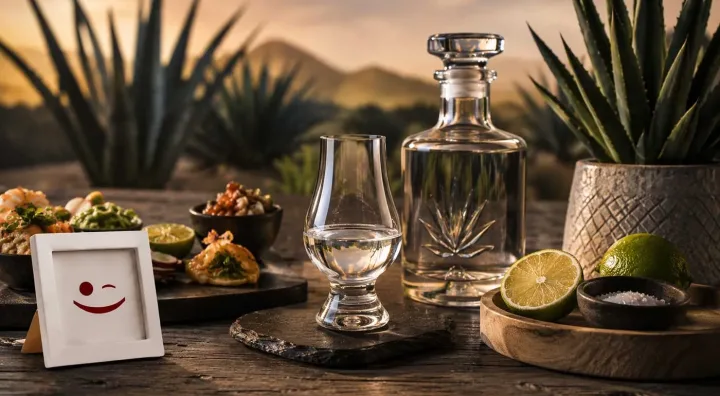
For years, tequila has been boxed into the image of the quick shot, salt on the hand and a wedge of lime as a safety net. That ritual, more about celebration than gastronomy, explains many bad experiences, but it says very little about what a good tequila can offer. When we talk about 100% agave tequila, especially one made from blue agave, we enter a category with an identity of its own, closely tied to place, to the plant’s maturation and to production choices that make a noticeable difference in the glass.
Drinking it attentively does not mean making things complicated. It means slowing down. Just as you would not approach a serious wine like a long drink, a quality tequila benefits from the right temperature, a glass that focuses its aromas and a tasting pace that lets you pick out nuances of cooked agave, citrus, herbs, spices, wood or minerality.
The first step is on the label
Before serving, it helps to know what is in front of you. The mention 100% agave is key to identifying a tequila made entirely from sugars sourced from blue agave. The market also includes mixto tequilas, in which part of the fermentable sugars may come from another source. This is not about demonising any option, but about understanding that, if you are looking for agave expression and a cleaner tasting experience, 100% agave tequila is the logical starting point.
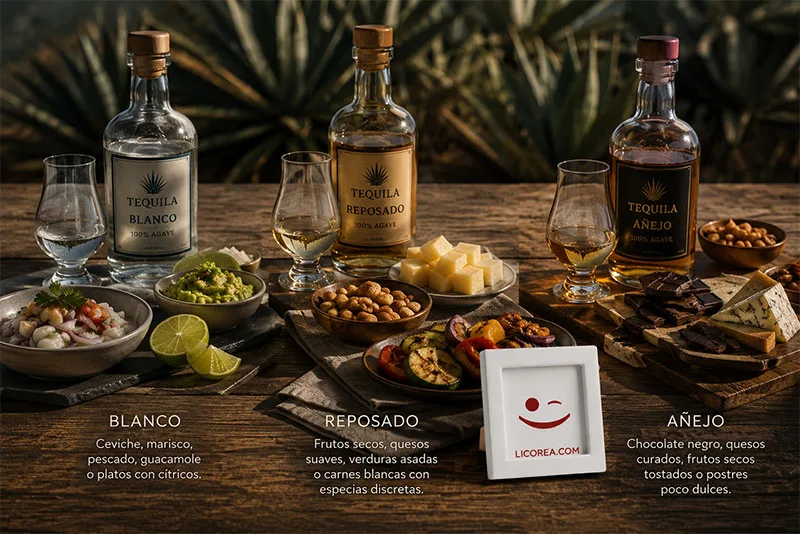
The category matters too. A blanco shows the spirit in its most direct form, with agave at the forefront and a profile that can range from citrusy to vegetal or spicy. A reposado spends time in wood, which softens the alcoholic sensation and adds notes of vanilla, sweet spices or light toast. In añejos and longer-aged expressions, the barrel becomes more present, bringing deeper tones of cacao, nuts, caramel, tobacco or oak, provided the wood does not mask the character of the plant.
Jalisco, agave and style: why they do not all taste the same
Tequila is born within a regulated geographical framework, with Jalisco as its historical and cultural heartland. Within that world, the origin of the agave influences the final perception. Broadly speaking, agaves grown in highland areas are often associated with sweeter, more floral and fruit-driven profiles, while those from the valleys tend to offer earthier, more herbaceous or mineral sensations. It is not a mathematical rule, because the distillery, cooking, fermentation and distillation all play a role, but it is a useful clue for anyone starting to compare bottles.
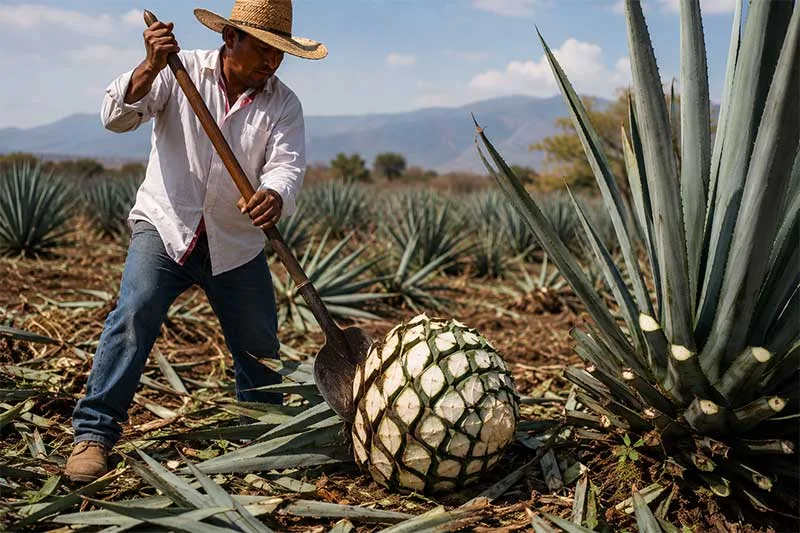
The age of the agave at harvest, the way the piñas are cooked, how the juices are extracted and the type of fermentation all help shape the final result. That is why two blanco tequilas can be radically different: one fresh and sharp, another rounder and more generous; one driven by citrus and pepper, another by herbal notes and damp earth.
The glass matters more than it seems
A shot glass is practical if you want to drink quickly, but it does little for assessing aromas. Nor is a wide tumbler with ice the best tool if your aim is to appreciate the spirit. A small copita-style glass, a glass with a slightly narrowed rim or a tulip-shaped glass helps concentrate the aromatic compounds and guide them towards the nose.
The idea is not to fill the glass. A small measure is enough for the tequila to open up without the alcohol taking over. A narrower rim makes it easier to detect aromatic layers with greater precision: cooked agave, lime or grapefruit peel, flowers, fresh herbs, white pepper, salinity, oak, vanilla or spices, depending on the style.
Temperature: neither freezer-cold nor too much ice
Serving tequila too cold can make it easier to drink, but it also dulls its nuances. Cold reduces aromatic volatility and narrows the expression on the palate. For a relaxed tasting, it is best served at room temperature or just slightly chilled, avoiding the freezer.
Ice makes sense in cocktails, where dilution is part of the recipe. In a margarita, a paloma or a long drink, the balance between acidity, sweetness, bubbles and freshness depends on that integration. But if the aim is to taste tequila neat, adding ice can over-dilute its texture and blur the details, especially in delicate blancos and reposados.
How to smell and taste tequila properly
Approach the nose slowly. A gentle swirl of the glass is enough to release aromas; there is no need to shake it as if it were a cocktail. It is best to inhale in short intervals with your mouth slightly open, a simple technique that softens the sharp sensation of alcohol and helps you perceive the nuances more clearly.
In a basic tasting, you can look for several aromatic families:
- Cooked agave: sweet, vegetal and lightly honeyed notes.
- Citrus: lime, grapefruit, orange peel or a sense of fresh fruit.
- Green and spicy: herbs, pepper, white pepper or subtle aniseed hints.
- Mineral and earthy: impressions of wet stone, clay or salinity.
- Wood: vanilla, cinnamon, cocoa, nuts or toasted notes in aged tequilas.
On the palate, it helps to start with a very small sip to prepare your mouth. Then, a slightly larger second sip allows the tequila to travel across the tongue and reveal texture, sweetness, bitterness, spice and persistence. After swallowing, exhaling gently through the nose amplifies the finish and uncovers notes that do not always appear on first contact.
Simple pairings that do not overpower the spirit
A good tequila does not need food, but a few bites can enhance its profile. The key is to avoid overly aggressive flavours that dominate the glass. With a blanco, fresh preparations work well: ceviche, grilled seafood, fish, moderately seasoned guacamole or dishes with citrus. Reposado pairs naturally with nuts, mild cheeses, roasted vegetables or white meats with discreet spices. Añejos can handle richer combinations, such as dark chocolate, mature cheeses that are not too salty, toasted nuts or desserts that are not overly sweet.
Drinking tequila slowly does not make it any less enjoyable; quite the opposite, it broadens the experience. It reveals that behind a category often oversimplified there is agriculture, terroir, technique and a vast diversity of styles.
Swapping the shot glass for the right glass is probably the simplest gesture to start understanding it.