
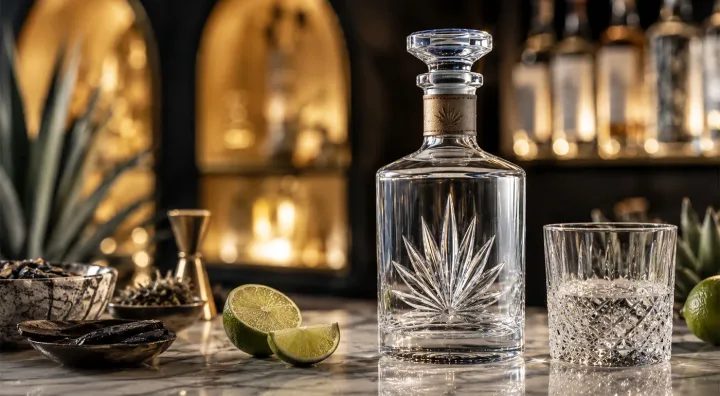
Cristalino tequila has become one of the liveliest talking points in the world of agave spirits. For some drinkers, it offers an easy-going introduction to aged tequila; for others, it is a debatable trend that softens the spirit’s character too much. What is clear is that its presence in bars, cocktail lists and specialist retail shelves has grown rapidly, driven by major brands and by consumers looking for clean, silky profiles with striking visual appeal.
Unlike a blanco, which usually sees no barrel ageing or only a very short period, cristalino starts life as an aged tequila. It may be a reposado, an añejo or even an extra añejo, depending on the base chosen by each producer. The key lies in what happens next: a filtration process designed to remove much of the colour gained during maturation, along with certain tannins and bitter notes from the wood.
The result is a transparent, or only lightly tinted, tequila that still carries echoes of vanilla, caramel, sweet spices or cooked agave typical of barrel ageing.
A style born between tradition and innovation
Tequila, as a protected category closely linked to Jalisco and other authorised regions of Mexico, has gone through several phases of international expansion. The popularity of the Margarita, the rise of 100% agave tequilas, growing interest in premium spirits and the arrival of celebrities in the sector have all helped place it in a privileged position.
In that context, cristalino has emerged as a contemporary response to two market demands: smoothness and versatility.
Its appeal is easy for consumers to grasp: a tequila with the appearance of a blanco, but with some of the roundness of a spirit aged in wood. That duality explains much of its success. It also explains the debate. Filtration can bring clarity and soften rough edges, but when applied intensively it can also strip away depth, texture and distinctive notes from the barrel or from the agave itself.
How cristalino tequila is made
The starting point is always Weber blue agave, cooked, fermented and distilled in accordance with the rules of the tequila denomination. From there, each house defines its own style: type of ovens, milling, yeasts, stills, number of distillations, agave origin and ageing regime. The barrel may be American oak, French oak or from other origins, new or used, and its influence will depend both on time and on its aromatic intensity.
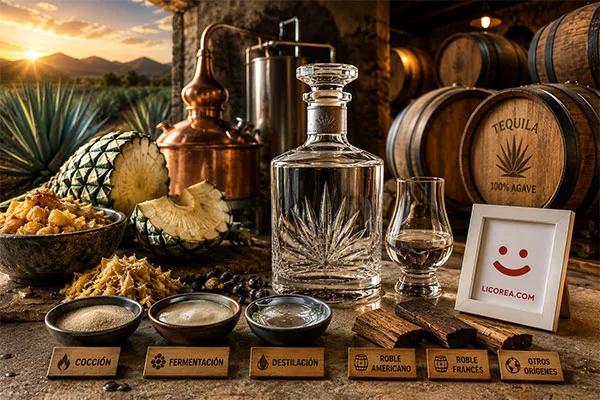
After maturation comes the defining stage: filtration, usually with activated charcoal. This material works by retaining compounds responsible for colour and certain tannic nuances. Not all producers filter in the same way. Temperature, charcoal particle size, contact time, flow rate and the level of intervention all shape the final profile. A more delicate filtration may preserve more body and character; a more aggressive one may aim for near-total transparency and a lighter sensation.
It is worth remembering that cristalino does not mean a single recipe. The term covers very different tequilas: some close to an aromatic blanco, others with a clear añejo footprint, and others designed for a sweeter, smoother and more accessible drinking experience.
What it brings to the glass
On the nose, many cristalino tequilas combine citrus, cooked agave, vanilla, soft honey, light caramel and white flowers. On the palate, they tend to aim for a gentle entry, with less dry wood sensation than a traditional añejo and a polished texture. Pepper, the vegetal touch of agave, hints of ripe fruit and a moderately warm finish are common traits, although not universal.
The style’s main appeal lies in its balance between freshness and the sweetness of ageing. For newcomers to tequila, it can feel less demanding than an añejo strongly shaped by oak. For seasoned enthusiasts, the key question is whether the filtration has preserved the spirit’s personality or left it too neutral.
Major brands and different approaches
The rise of cristalino has been driven in large part by highly visible international brands, which have launched their own versions based on reposado or añejo tequilas. Don Julio, Patrón, 1800 and José Cuervo Tradicional are among the most recognisable names for global consumers, each offering a different interpretation of the style. Some focus on a very clean, direct sensation; others aim to retain more barrel notes, spice or cooked agave.
Beyond specific brands, what matters for the buyer is to consider three aspects before choosing:
- The base category: a cristalino made from a reposado will not have the same depth as one derived from an añejo.
- The filtration profile: the more intensive it is, the more likely you are to find a light, transparent spirit, but also a less complex one.
- The house style: some distilleries prioritise agave character; others pursue smoothness, sweetness and easy drinking.
How to drink cristalino tequila
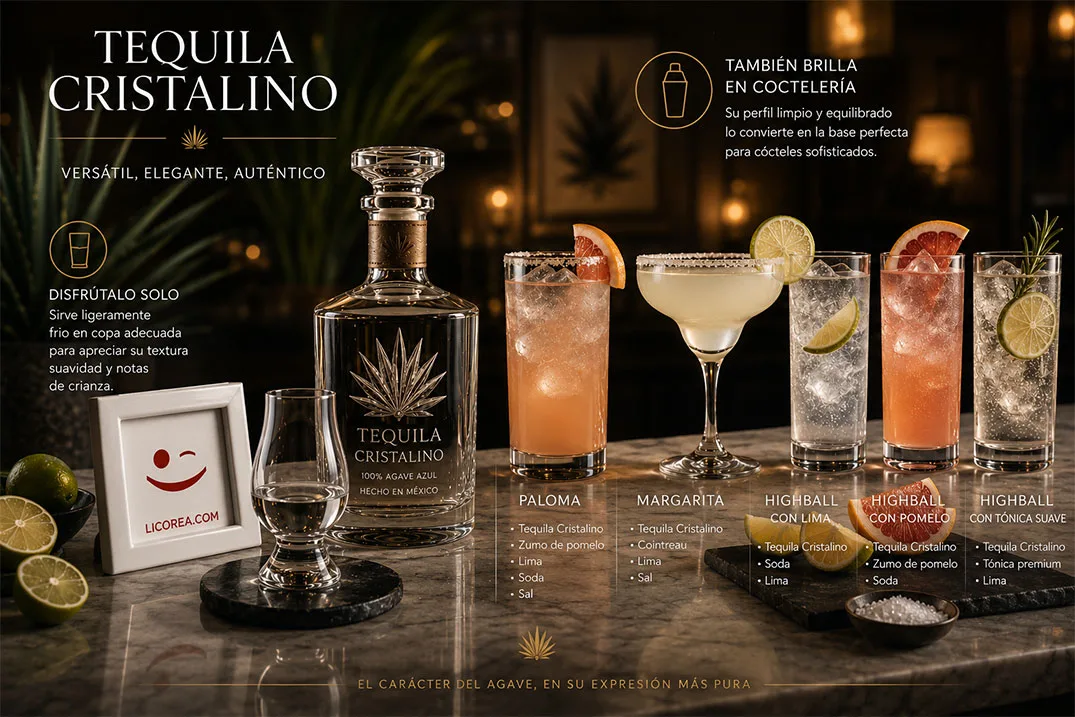
Cristalino tequila works well neat, served in suitable glassware and slightly chilled, especially when you want to appreciate its texture and ageing notes without the colour intensity and tannic weight of a classic añejo. Even so, its clean profile also makes it appealing in cocktails.
It can be used in refined versions of a Paloma, Margarita or highballs with soda, grapefruit, lime or a gentle tonic, provided the ingredients do not completely mask the agave character.
 In food pairing, it usually goes well with dishes of moderate richness, controlled heat or citrus elements. Fish tacos, ceviches, mild aguachiles, grilled chicken, semi-cured cheeses or even desserts with vanilla and citrus can find a good counterpoint in a balanced cristalino.
Passing trend or a new gateway into tequila?
The debate around cristalino tequila is unlikely to disappear soon. Its growth reflects a real trend towards more polished spirits: visually clear and easy to fit into different drinking occasions. At the same time, it raises the question of how much character can be removed in the name of smoothness.
Perhaps the fairest way to understand it is not to compare it too rigidly with a traditional blanco or a classic añejo. Cristalino occupies its own space: less rustic than some unaged tequilas, less oak-driven than many añejos, and designed for a consumer who values clarity, texture and versatility. When well made, it can offer a modern, attractive reading of tequila. When it is reduced to an exercise in image, it becomes just another curiosity.
For Licorea, the best approach is to come to this category with curiosity, but also with discernment. Checking the label information, considering its origin, the type of tequila used and the brand’s style helps distinguish between a merely decent cristalino and one capable of showing that innovation can still respect the soul of agave.