
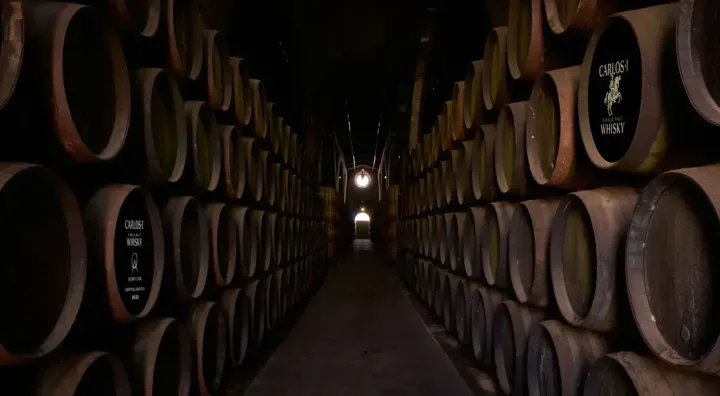
The line between whisky and the world of fortified wine has been producing some of the category’s most compelling results for years. Casks that once held oloroso, amontillado or pedro ximénez are now coveted by distilleries across the globe, especially when the aim is aromatic depth, texture and a more spiced profile. In this context, the arrival of a Carlos I single malt whisky is a particularly meaningful move: it is not simply about using wine-seasoned wood, but about building a whisky from the bodega culture of Jerez.
The idea behind it is clear: to bring into whisky part of the character associated with Brandy de Jerez and Osborne’s historic casks. The result is a malt distillate made, aged and bottled in Spain, with maturation that combines casks previously linked to Carlos I and a subsequent finishing period in VORS casks from Jerez. It is a Spanish interpretation of single malt, looking less towards imitating Scotch models and more towards the identity of its own territory.
A Spanish single malt rooted in bodega heritage
The term single malt means that the whisky comes from a single distillery and is made from malted barley. It is a category deeply established in Scotland, Ireland and Japan, but in recent years it has also grown in other countries, driven by consumers increasingly open to local styles. Spain, with its tradition of fortified wines, brandies and liqueurs, has a clear advantage: a highly developed culture of wood and ageing.

In the case of Carlos I, that legacy is expressed through the use of casks that are far more than neutral containers. Wood that has held Sherry wines and brandy for long periods builds up aromatic layers that can have a decisive influence on the distillate. In whisky, this kind of maturation often brings notes of ripe fruit, nuts, cocoa, sweet spices, old wood and a broader sensation on the palate.
The brand thus creates a direct connection with El Puerto de Santa María, in Cádiz, one of the historic centres of the Sherry Triangle. There, humidity, temperature and proximity to the Atlantic have shaped bodega work for centuries. This landscape is not just decorative detail: it affects the pace at which wines and spirits evolve, the way casks breathe and the sensory profile that extended ageing can achieve.
The importance of Jerez casks
One of the project’s key elements lies in its journey through different types of wood. First, the distillate rests in casks associated with Brandy Carlos I, woods that had previously been connected to Osborne oloroso and amontillado wines. The whisky then moves into VORS casks, an acronym for Very Old Rare Sherry, a designation reserved for Sherry wines with a very high certified average age.
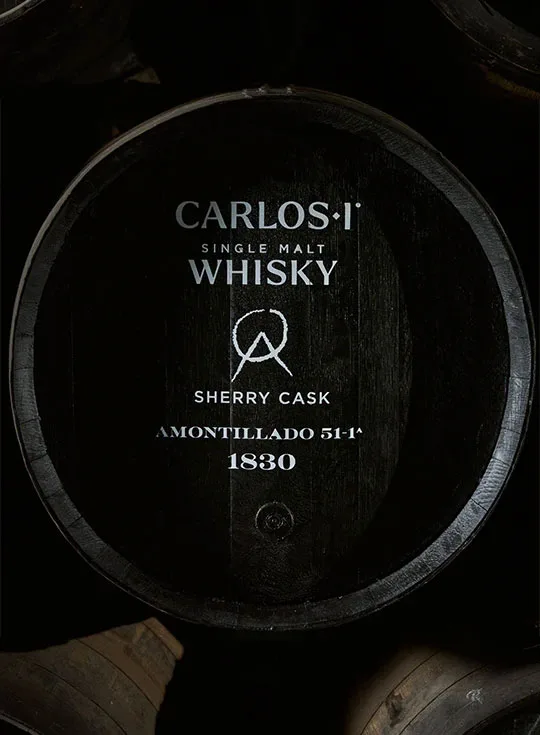
This second stage of finishing is especially relevant. VORS wines represent one of the most complex expressions of traditional Sherry: long ageing, concentration, controlled oxidation and a very distinctive personality. When a cask with that history holds whisky, it can contribute nuances that are difficult to achieve with younger or less deeply seasoned wood.
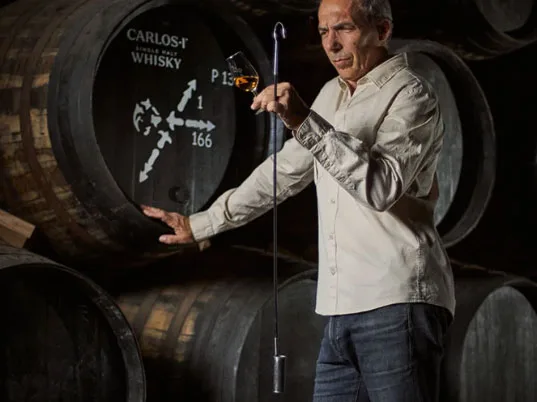
In tasting terms, the brand highlights a profile with echoes of prunes, candied fruit, chocolate, spices, pastry and fine woods. These descriptors are consistent with the influence of casks that have held oxidative wines and brandy, although they should be understood as a sensory guide rather than a fixed formula. The final experience will also depend on the glass, serving temperature and the sensitivity of each taster.
Malt distillation and a double journey through wood
The whisky is made through double distillation in copper pot stills, a classic method in single malt production. Copper plays an essential role because it helps purify the distillate and encourages a cleaner, more defined profile. The quality of the malt, fermentation, the shape of the stills and the distillation cuts are all factors that, even before the spirit enters the cask, shape the character of the future whisky.
In this case, however, maturation takes on particular importance. Time spent in brandy casks provides a first layer of integration with the Carlos I tradition. Subsequent contact with VORS casks adds greater depth, linked to very old wines from Jerez and to the criaderas and solera system, a dynamic method in which withdrawals and refreshings preserve continuity across generations of wine.
Unlike conventional static ageing, the world of solera works with the idea of liquid memory. Each cask retains part of what it once held and receives the new without completely breaking the identity of the whole. Applying that sensibility to whisky reinforces the uniqueness of the project: it is not only time that matters, but the biography of the wood.
How to enjoy a whisky of this style
Because of its connection to Jerez and brandy casks, this single malt is especially well suited to slow, unhurried service. A tulip-shaped glass or tasting glass helps concentrate the aromas and makes it easier to appreciate its evolution. Serving it slightly below room temperature can help prevent the alcohol from dominating and allow notes of dark fruit, spice and wood to emerge.
Those who want to explore its texture can add a few drops of water, not automatically, but gradually. In whiskies with a marked maturation profile, water can open up aromatic layers and soften the first impression on the palate. Ice, by contrast, will reduce aromatic intensity, although it may appeal to drinkers looking for a fresher and more approachable experience.
At the table, its profile suggests pairings with foods of a certain intensity:
- Dark chocolate or cocoa-based desserts, especially when they are not overly sweet.
- Toasted nuts, such as walnuts, almonds or hazelnuts.
- Mature and blue cheeses, where salinity contrasts with the sweetness of the wood.
- Game dishes, spiced stews or reductions with a toasted base.
- Butter pastries, puff pastry or preparations with dried fruit.
A sign of the new Spanish whisky
The launch of a single malt under the Carlos I umbrella reflects a broader trend: growing interest in whiskies with a sense of place. For decades, the category was dominated by very specific regions, but today’s consumer readily accepts that good whisky can be made elsewhere, provided there is technical rigour and a coherent proposition.
Spain has a heritage of bodegas, seasoned casks and ageing expertise that can bring a distinctive voice to whisky. It is not about competing by replicating styles from elsewhere, but about making the most of differentiating assets. In that respect, the link with Jerez is a particularly strong card: few regions have such a recognisable tradition around oxidation, time and the complexity of wood.
Carlos I Single Malt Whisky sits precisely at that crossroads. For brandy enthusiasts, it offers a route into whisky through familiar codes. For single malt lovers, it proposes a different reading of sherry cask influence. And for those following the evolution of Spanish drinks, it confirms that dialogue between categories can open up highly evocative new territory.
Buy Carlos I Single Malt Whisky for just EUR 23.99