
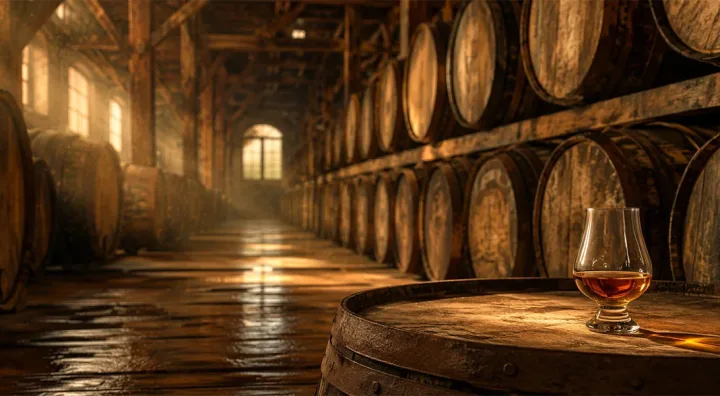
For years, rum has often been described as a category without clear rules, a kind of free territory compared with the regulatory precision of Scotch whisky, Cognac or tequila. The reality is far more nuanced. Across the rum world there are numerous geographical indications, denominations and protection schemes that define how a spirit must be made, aged and presented in order to carry a specific name of origin.
The debate has gained momentum following recent changes to Jamaica’s rum geographical indication, particularly around two points: the requirement that ageing must take place on the island and the restriction on the size of maturation vessels. Beyond the Jamaican case, the discussion raises a broader question: what exactly does a geographical indication protect in rum, and to what extent does it shape the style of each country?
What a geographical indication means in rum
A geographical indication is not merely a marketing tool. It is a legal framework that links a product to a territory and to recognised practices. In the case of rum, it may regulate aspects such as raw material, fermentation, distillation, ageing, wood type, minimum age or place of bottling.
Its scope, however, depends on each jurisdiction. A national rule protects the product within the country that approves it, but international recognition requires agreements or registration in other markets, such as the European Union. That is why some geographical indications from the Caribbean, Latin America or French overseas territories carry significant weight in export trade, while others operate on a more limited basis.
What makes these rules particularly interesting is that they do not follow a single model. Each region designs them according to its history, economy and understanding of rum. A territory with a strong agricultural tradition may emphasise the origin of the cane or cane juice. Another, with a highly developed culture of blending and ageing, may focus more on the stages that follow distillation.
Ageing, the new battleground
Historically, a significant share of rum was distilled in tropical regions and then shipped to Europe or North America for maturation, blending or bottling. This model still exists and has been crucial for many international brands and independent importers. But as premium rum gains prestige, producing countries are seeking greater control over the added value created by maturation.
Ageing rum at origin is far from a minor detail. The tropical climate accelerates the interaction between the spirit, the wood and oxygen. Evaporation losses are usually higher than in temperate climates, but the resulting aromatic profiles are also different, with greater concentration, more pronounced wood notes and a distinct evolution of esters and volatile compounds.
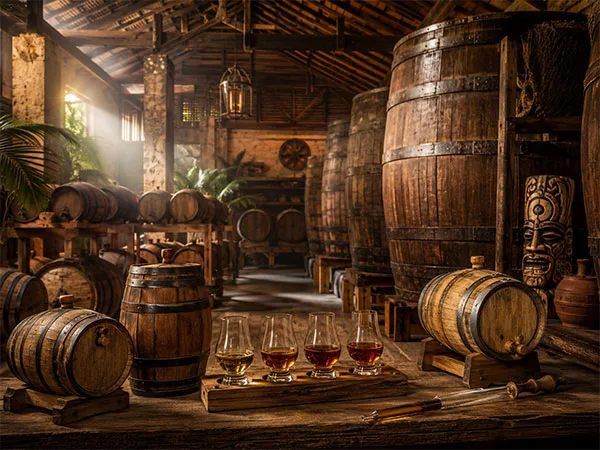 That is why many geographical indications require maturation to take place within the defined territory. It is not only an economic issue, although it is that as well. Maturation is part of rum’s sensory identity. A Jamaican, Cuban, Guyanese or French Caribbean agricole spirit can change markedly if it is aged in another climate and under different cellar practices.
Jamaica and cask size
The case of Jamaica is especially relevant because its rum has one of the most recognisable profiles in the world: aromatic intensity, fermentative character, the presence of esters and a tradition shaped by pot stills and highly distinctive styles. The update to its geographical indication reinforces the idea that Jamaican rum must be aged in Jamaica if it is to benefit from that protection.
The limit on ageing vessel size to 250 litres has raised further questions. In most producing regions, the rules allow casks that are relatively standard in the wine and spirits industries, or they simply do not set strict limits at all. Jamaica, however, has chosen a more restrictive approach. That decision may affect how brands that used to buy unaged rum to mature it off the island operate, as well as certain independent bottlers.
It also raises a technical issue: the size of the vessel changes the ratio between the volume of liquid and the surface area of wood. In smaller casks, the wood influence can be faster and more intense. In larger vessels, maturation tends to progress more slowly. Regulating this point effectively means shaping the type of ageing permitted under a geographical indication.
This requirement contrasts with the absence of a mandatory minimum time in cask
Not all regions regulate in the same way
A broad comparison of rum geographical indications reveals a wide range of criteria. Martinique, Guadeloupe, Réunion and French Guiana, closely linked to the world of rhum agricole and to the French regulatory tradition, commonly distinguish categories such as white, élevé sous bois or vieux, with specific resting or ageing requirements. In these cases, oak plays a central role, especially in the more mature categories. These rums normally require a minimum of 6 months’ ageing in oak.
Cuba, Venezuela and the Dominican Republic, by contrast, reflect a Hispanic tradition in which ageing, blending and the work of the maestro ronero carry considerable weight. In these styles, consistency of profile, the selection of base rums and the management of solera systems or reserves are part of the product’s identity, although each country expresses this through its own rules. Cuba and Venezuela require a minimum of 2 years in oak casks, while the Dominican Republic allows just 1.
Guyana, with Demerara rum, offers another interesting approach. Its reputation is tied both to molasses and to a unique heritage of historic stills, including wooden equipment rarely found in today’s industry. Its categories do not follow exactly the same pattern as those of the French or Hispanic territories, showing that a geographical indication can adapt to very different production realities. In the case of Demerara, ageing depends on the type of rum: Cask Aged has a minimum of 3 years, Special Reserve a minimum of 12, and Grand Special Reserve a minimum of 25 years.
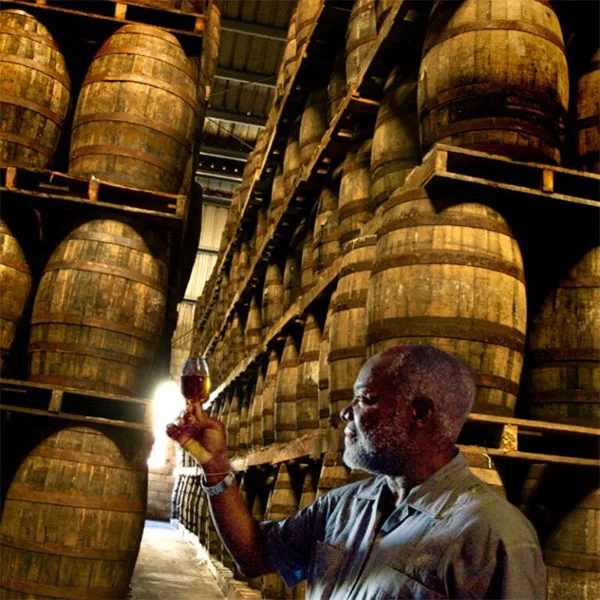
Wood, age and label statements
One of the main aims of these rules is to prevent confusion on labels. Terms such as reserve, old, extra old and similar expressions have commercial value, but they can also be misleading if they are not clearly defined. Geographical indications help establish when a given statement may be used and what minimum age the rum must meet.
Wood is another key point. Most rum regulations that address maturation mention oak, both because of tradition and because of how it behaves in contact with spirits. American oak, often from casks that previously held bourbon, has been fundamental to the development of modern rum. Casks that have held fortified wines, cognac or other spirits are also used, provided the relevant regulations allow it.
Some indications, however, leave the door open to other woods suitable for food contact. This nuance may become important at a time when rum producers are exploring maturation in local or less common woods to differentiate their aromatic profiles.
Bottling: tradition, logistics and sustainability
It may seem logical to assume that a rum with a geographical indication must always be bottled in its country of origin. In practice, however, many regulations allow all or part of the bottling to take place outside the territory. The reason is not purely commercial. Logistics, industrial costs and the availability of materials also play a role.
On many producing islands, bottles, closures and packaging have to be imported. Shipping empty glass to the Caribbean only to export it again, this time filled, to Europe or the Americas makes the process more expensive and increases the transport footprint. That is why some producers choose to ship rum in bulk to destination markets, where it is bottled under supervision and in accordance with the applicable regulations.
This balance between protecting origin and ensuring economic viability is one of the major challenges facing contemporary rum. Regulation that is too loose can dilute regional identity. Regulation that is too rigid can exclude historic players or drive costs up to levels that are hard to sustain.
A category with rules, history and a future
The existence of multiple geographical indications shows that rum is not an lawless drink. On the contrary, it is a category with increasingly relevant regulatory frameworks, even if they are less uniform than in other spirits. That diversity is part of its richness: there is no single way to make rum, but rather national and regional traditions that coexist under the shared umbrella of cane spirits.
For consumers, understanding these rules makes it easier to read a label properly. Knowing where it was distilled, where it was aged, what wood was used or what an age statement really means allows rum to be assessed with greater discernment. For producers, geographical indications are a tool for defending origin, but also a statement of identity.
In a market increasingly interested in authenticity, traceability and styles with personality, rum ageing rules are set to take centre stage. They will not only tell us where a bottle comes from. They will also explain why it tastes the way it does.