
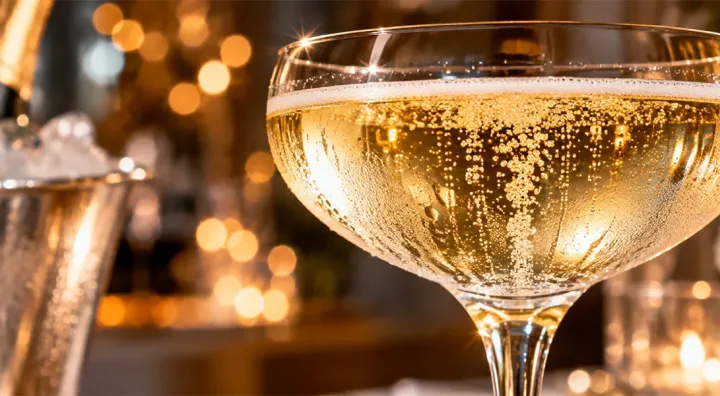
Cava and Champagne share the same method: the traditional method, with a second fermentation in the bottle. What sets them apart is their origin, grapes and ageing. Champagne can only come from the French region of Champagne and must be aged for at least 15 months. Cava is a Spanish DO, made mainly with Macabeo, Xarel·lo and Parellada grapes, and aged for at least 9 months.
If you're looking for a bottle for the festive season, you'll find both in our sparkling wines section. Here's a quick comparison to help you choose:
| Cava | Champagne | |
|---|---|---|
| Origin | DO Cava: four regions of Spain | Champagne region (France) |
| Main grapes | Macabeo, Xarel·lo and Parellada | Pinot Noir, Chardonnay and Meunier |
| Minimum ageing | 9 months (Cava de Guarda) | 15 months non-vintage; 36 months millésimé |
| Categories | Guarda, Reserva, Gran Reserva and Paraje Calificado | Non-vintage and millésimé (single-vintage) |
| Serving temperature | 6-9 °C | 8-10 °C |
| Price at Licorea (75 cl) | From around €6 | From around €40 |
What they have in common: the traditional method
The bubbles in Cava and Champagne are created in the same way. Both are made using the traditional method, known in Champagne as the méthode champenoise.
The process starts with a still base wine. Yeast and a little sugar, known as the liqueur de tirage, are added before bottling. A second fermentation then takes place inside the sealed bottle, trapping carbon dioxide in the wine.
The wine is then aged on its lees, or dead yeast cells. The longer it rests, the more complex it becomes. That's why ageing is the detail worth checking most closely on the label.
Finally, the bottles are gradually turned to move the sediment into the neck: this is riddling. The neck is frozen, the bottle is opened and the sediment is expelled. This is disgorgement. Before the bottle is sealed with its cork, the liqueur d'expédition is added, determining whether the wine is brut nature, brut or demi-sec.
So it's not quite right to call Cava “cheap Champagne”. The method is the same. What changes is where the grapes grow, which varieties are used and how long the wine is aged.
The differences, one by one (origin, grapes, ageing, categories and price)
Origin
Champagne can only come from the French region of Champagne. It is an appellation tied to a specific territory and cannot be produced elsewhere.
Cava works differently: it is a Spanish DO spread across four regions: Comtats de Barcelona, Valle del Ebro, Viñedos de Almendralejo and Requena. In other words, Cava is produced not only in Catalonia, but also in Extremadura and Valencia. If you're interested in Cava from Barcelona, explore our selection of Catalan Cava.
Grapes
Cava is made mainly from three white grapes: Macabeo, Xarel·lo and Parellada. The DO also authorises Chardonnay and Subirat Parent. The authorised red grapes include Garnacha, Trepat, Pinot Noir and Monastrell, the basis for rosé Cavas.
Three varieties dominate in Champagne. According to regional figures, the vineyards are planted with Pinot Noir (38%), Chardonnay (31%) and Meunier (31%).
Chardonnay and Pinot Noir appear on both lists. Macabeo, Xarel·lo and Parellada are the grapes that give Cava its distinctive profile.
Ageing
This is one of the most useful differences to consider when choosing. Non-vintage Champagne must be aged for at least 15 months. A millésimé, made from a single harvest, requires 36.
Cava starts at 9 months in its basic category, Cava de Guarda. It then moves up through the tiers: 18 months for Reserva, 30 for Gran Reserva and 36 for Paraje Calificado.
The result is not widely known: a Cava Gran Reserva must be aged for at least twice as long as a non-vintage Champagne. Comparing “Cava” with “Champagne” without looking at the category tells you very little.
Categories
Cava is classified by ageing time, with the four categories outlined above. Champagne is distinguished mainly between non-vintage wines, which blend several harvests, and millésimés made from a single vintage. Both use the sweetness scale shown below.
Price
The price difference is real. At Licorea, a non-vintage Champagne such as Moët & Chandon Imperial or Mumm Cordon Rouge costs around €40. Veuve Clicquot Ponsardin is about €53, while Bollinger Special Cuvée costs around €59.
For Cava, a young brut nature such as Rigol Brut Nature costs around €5. Segura Viudas Reserva Heredad is about €16. Browse all our French selections in the Champagne section.
Are Moët, Freixenet and Codorníu Cava or Champagne?
This is one of the most searched questions, and the answer is simple.
Moët & Chandon: Champagne
Moët & Chandon is a Champagne house in Épernay, founded in 1743. Its Moët & Chandon Imperial is Champagne, not Cava. Take care not to confuse it with Chandon, without “Moët”: that brand produces sparkling wines in other countries, which are not Champagne.
Freixenet: Cava
Freixenet is a Cava winery in Sant Sadurní d'Anoia. Bottles bearing the DO Cava designation are Cava, never Champagne. The brand also sells sparkling wines that are not Cava, so check the label.
Codorníu: Cava (there is no such thing as “Codorníu Champagne”)
Codorníu is a winery in the DO Cava. According to the DO itself, it made the first bottle of Cava in 1872. Its Anna de Codorníu Brut Nature, at around €9, is often searched for as “Anna Champagne”. It is Cava.
The same goes for Segura Viudas. Many people search for “Segura Viudas Champagne”, but it is Cava too.
Is there Spanish Champagne?
No. Champagne is a protected name that can only be used for wines from that French region. A Spanish sparkling wine made using the traditional method can be Cava, Corpinnat or another quality sparkling wine. But it cannot be Champagne.
Brut nature, brut or demi-sec: the sweetness scale
Sweetness is determined by the dosage liqueur. European legislation (EU Regulation 2019/33) sets the following ranges in grams of sugar per litre:
| Designation | Sugar (g/l) |
|---|---|
| Brut nature | Less than 3 |
| Extra brut | 0-6 |
| Brut | Less than 12 |
| Extra dry | 12-17 |
| Dry | 17-32 |
| Demi-sec | 32-50 |
| Sweet | More than 50 |
Two details often cause confusion. First, “extra dry” and “dry” are sweeter than brut, despite what their names suggest. Second, the lower ranges overlap, so a brut nature and an extra brut can contain almost the same amount of sugar.
Brut nature or brut is the usual choice for aperitifs and meals. Demi-sec has more fans than you might think. The most popular sparkling wine at Licorea last Christmas was a demi-sec rosé: Castell d'Ordal Rosado Semi Seco, at around €4. Note that it is neither Cava nor Champagne, but a sparkling wine, even though it is made in the Cava region of Alto Penedés. Its sweetness makes it a better fit for after-dinner drinks than for an aperitif.
Cava Reserva, Gran Reserva and Paraje Calificado (and what Corpinnat is)
The Cava DO classifies its wines by minimum ageing time:
- Cava de Guarda: 9 months.
- Cava Reserva: 18 months.
- Cava Gran Reserva: 30 months.
- Cava de Paraje Calificado: 36 months, from a specific site.
When you see “Reserva” or “Gran Reserva” on a bottle of Cava, the term guarantees a minimum ageing period. It’s the most reliable way to compare two bottles at a similar price.
What is Corpinnat?
Corpinnat is a designation for traditional-method sparkling wines created outside the Cava DO. In 2019, nine wineries left the DO to establish it. Its rules require organic grapes, hand harvesting and at least 18 months of ageing.
By April 2026, it had grown to 22 wineries. The latest to join was Juvé & Camps. Since then, its bottles no longer carry the Cava DO designation. This includes Juvé & Camps Gran Reserva, which costs around €30: it is now Corpinnat, although it has kept its name. You’ll find the rest of the range in our Corpinnat section.
Which should you choose for Christmas?
It’s less about “Cava or Champagne” than the occasion and your budget. Here’s a practical guide:
- A toast with a crowd: a young brut nature Cava. Rigol or Anna de Codorníu will fill plenty of glasses without pushing up the cost.
- A long lunch or dinner: a Cava Reserva or Gran Reserva. For less than the price of an entry-level Champagne, you get twice the minimum ageing time.
- A gift: a non-vintage Champagne, such as Moët & Chandon Imperial or Veuve Clicquot Ponsardin. Find more options in our Cava and Champagne gift ideas.
- A dinner for two: Mumm Cordon Rouge 37.5 cl, at around €20. It’s half a bottle of Champagne, enough for two or three glasses.
- A special occasion: a vintage Champagne, with a minimum of 36 months’ ageing. Dom Pérignon Vintage 2015 costs around €236. If you’re looking to spend more, take a look at the 10 most expensive Champagnes in the world.
- Dessert: a semi-dry sparkling wine, such as Castell d'Ordal rosé sparkling wine.
Serve Cava at 6–9 °C and Champagne at 8–10 °C. An ice bucket filled with water and ice will keep it within that range throughout the meal.
Frequently asked questions
Is Champagne better than Cava?
Not by definition. They come from different regions and use different grapes, but are made using the same method. Compare them by category: Cava Gran Reserva has a minimum ageing period of 30 months, twice that of non-vintage Champagne.
Why can’t Cava be called Champagne?
Because Champagne is a protected designation of origin that can only be used for wines from that French region. Cava has its own DO, with its own areas, grapes and ageing rules.
Is Moët & Chandon Cava or Champagne?
Champagne. Moët & Chandon is a Champagne house based in Épernay, founded in 1743. It has no connection to the Cava DO.
What is Corpinnat?
It’s a designation for traditional-method sparkling wines, established in 2019 by nine wineries that left the Cava DO. It requires organic grapes, hand harvesting and a minimum ageing period of 18 months. In April 2026, it comprised 22 wineries.
What temperature should Cava be served at?
Between 6 and 9 °C. Champagne is served slightly warmer, between 8 and 10 °C, according to the Comité Champagne. An ice bucket filled with water and ice will keep it within that range.
Is Prosecco the same as Cava?
No. Prosecco is an Italian sparkling wine made from the Glera grape. It usually undergoes its second fermentation in a tank rather than in the bottle, using the so-called Charmat method. That means it isn’t made using the traditional method, unlike Cava and Champagne.